

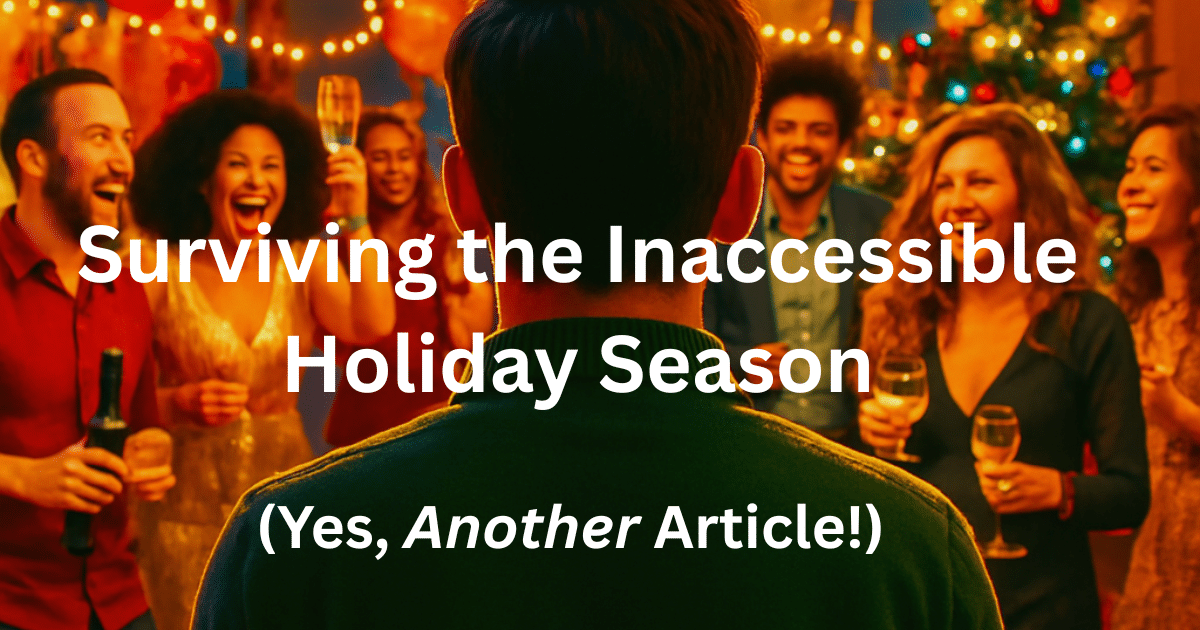
Every year, hearing health advocates write meant-to-be helpful articles (this is another one) on how people with hearing loss can make it through the holidays without wanting to murder their family and friends.
And yes, those people, the ones who love you, but apparently not enough to remember what you need, even though you reminded them, like, five minutes ago – proximity, face to face, one person speaking at time, minimizing music and other background noise, and amping up the ambient lighting. While communication challenges exist year-round, the holiday season can be an emotional obstacle course, a supremely social time of music, special events and large dinners.
To us, beautiful sound becomes noise. Overlapping voices cause confusion. Laughter is forced and fake because we don’t know what we’re laughing about. And memories of when we could hear better are painful. How can we resist this frustration-driven desire to punch someone?
Acceptance. Acceptance of ourselves as people with hearing loss, acceptance of the communication glitches that will always happen, and acceptance of other people who try to change their ingrained habits but often fail because they are human. Changing how we behave is a mammoth task that takes time and effort.
This doesn’t mean that we stop asking for accessibility. Perhaps we need to redefine what our holiday accessibility looks like. If the goal is to be involved in the conversation with fewer pardons and less bluffing, try keeping the party small, eight people or fewer, with minimal background music and lighting that is pretty but bright. Arrange seating with sightlines of all faces, making it easier for one person at a time to speak.
But that’s the party that you throw; you’re the host, you control the narrative. What about other people’s dinners and parties?
Do the best you can. Ask for lower noise and higher lights in advance or when you arrive. What you can’t control is that humans insist on being humans. When they are joyful and perhaps a little wine-fueled, they get noisier, speaking and laughing more loudly. They forget stuff, such as they’re supposed to face you.
But you possess some brilliant self-advocacy tools. Your speechreading skills jump in to play with the ‘cocktail party effect’ where your brain works to block out background noise. Stay near the person telling the story. Try a touch on the arm and a pointed look into the talker’s eyes, a gentle reminder that you are speechreading their face (which you may also be very close to punching).
One-on-one conversations are communication magic. Invite your friend to a quieter area – a corner, a hallway, on the stairs? At a large dinner party, accept that it’s tough to follow the conversation. Sit with the best possible sightlines, remind everyone, perhaps with a toast, that they are all fabulous and could they kindly do their best to be inclusive. Even then, you may end up talking solely to the person next to you, so choose your seatmates well.
Staying social and sharing joy with others has long term benefits for our mental and physical health. This holiday season, find ways to decrease your frustration and increase the joy, accepting at least for now the imperfect communication caused by hearing loss.
Let’s make the inaccessible more accessible – and keep reading these helpful articles!