

Last week, I gave one of my favorite types of presentations – to first year Audiology university students.
My goal is always the same – let these future audiologists know about all the other stuff that we, their future clients, need to know. These chunks of knowledge, nurtured over time, will make journey with hearing loss easier. Stuff like:
Navigating life and relationships in a world geared to hearing people is challenging.
Our turbulent emotions are real.
While hearing aids – our glorious, amazing, transformative hearing aids – will help us hear better, they must be supported by other strategies to help us communicate better.
Those strategies, such as shaking up our attitudes and changing our communicative interaction with other people, can be learned and perfected.
At the beginning of my presentation, these audiologists in the making said they were cranked up and excited about hearing aids. I launched into my presentation, talking about the attitudinal shifts and game-changing communication behaviours that would make their clients’ hearing loss journeys more successful. Then I asked them if they had any questions.
“Can we see your hearing aid? And your cochlear implant sound processor?”
Sigh. Look, I get it.
I understand why hearing care professionals are excited about hearing aids. But this hyper-focus on technology shortchanges their clients if attention is not also given to the emotional and behavioral aspects of their clients’ hearing journeys.
Years ago, at the dawn of a new era in assistive technology, I was a participant in a speechreading instructor training program. One session took us to the technical devices store of a hearing services agency. We went a little crazy, like kids let loose in the toy store. Twenty hard of hearing and deaf adults playing with the remote microphones, pretending to type on TTY phones, setting off all sorts of vibrating devices. We were joyous!
But these same people introduced me to the other stuff.
We shared our emotions and fears as people profoundly affected by hearing loss. We learned how hearing works and what might make it not work. We learned new behaviours. We felt our long-held inner beliefs that we were somehow lesser than, slip away. We learned that we could get better at having hearing loss, at being deaf.
Most people with hearing loss won’t have the learning opportunity that I did. But we do have our hearing care professionals – these scientific, techie types who also care about helping people who are crucial to our communication success.
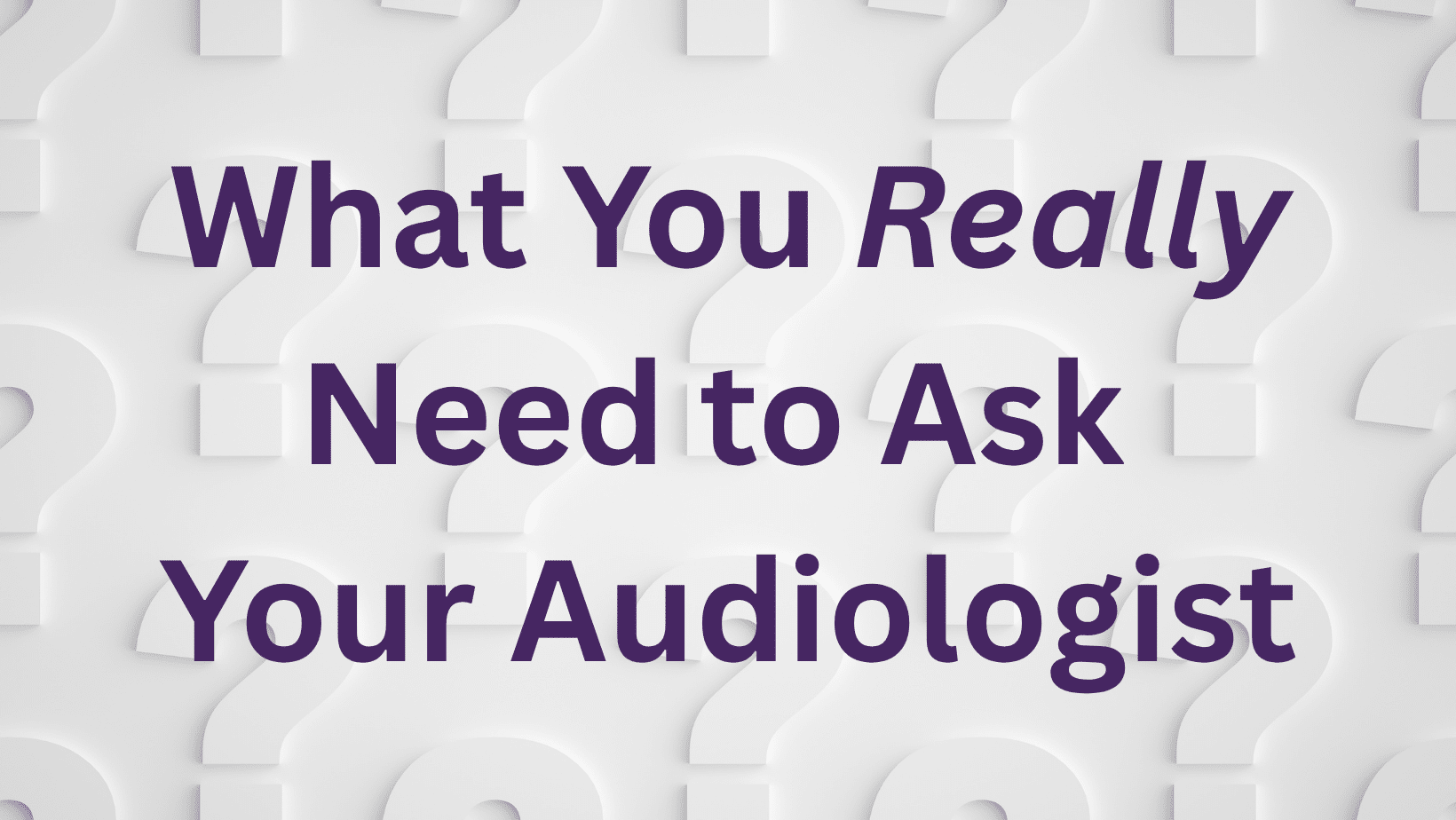
If you are working with an audiologist or hearing instrument specialist, you can and should ask them questions that go beyond hearing aids.
How can I tell other people about my hearing loss?
Could you explain my type of hearing loss to me, especially why I can hear someone but not understand them?
I feel frustrated, even angry when I can’t understand people. Is this normal? What can I do about it?
Can you recommend some helpful books on living with hearing loss?
Can you connect me to other people like me?
Would it be OK if my spouse (or child, or friend) came with me to an appointment?
This is the other stuff, the stuff we need to know. It will even help us love our hearing aids more.