

The 10 most used words in the English language are the, be, to, of, and, a, in, that, have, and I.
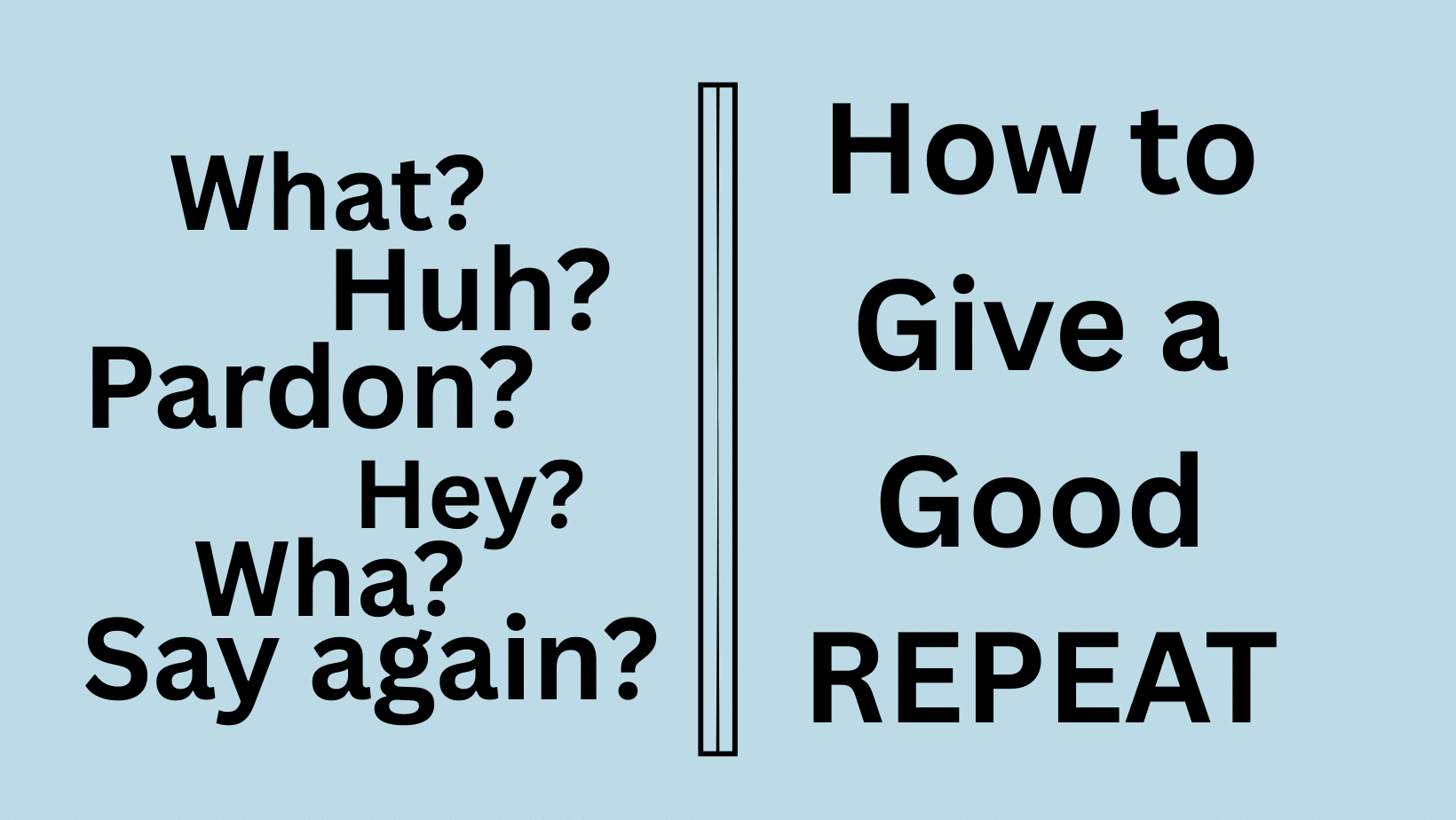
For people with hearing loss, however, this list might include the words pardon, what or even huh – yes, it’s in the dictionary! We use them frequently because we ask people to repeat themselves frequently.
What? Wha? Huh? Hey? Pardon? Sorry? Hmm? All of these can are often accompanied by an upward thrust of the chin, raised eyebrows and a small head tilt to favor a better ear. With people we know well, we use a questioning grunt-noise or give a long stare as we try to process what was said in hopes of getting it right.
Just as we have different ways of asking for repeats, how people comply is equally diverse, but not all repeats are appropriate or even effecxtive.
In the following five examples of ‘repeat styles’, the first two demonstrate good communication style. The others not only have the potential to irritate us, we may judge you as insensitive, impatient and you should count yourself lucky if we ever waste time talking with you again.
- Straight Repeat: Repeat the words in the same tone of voice, same facial expressions and same rate of speech. In short, exactly how you said it the first time. This is often sufficient, but not always.
- Let’s Try Another Way. If you’re asked a second time to repeat what you said, rephrase with different words and in a different order but convey the same message. (I prefer a straight repeat first, followed by this, if necessary, because I may be confused by the second iteration if I’ve caught most of the first one.)
- Long Pause Response. Slight roll of the eyes which, trust me, we can see because we are speechreading geniuses. And we can also sens that major ferris-wheel eyerolling inside your head! You might give a little sigh which we may not hear, but we see the slight intake of breath and long exhale that says, oh-gawd-not-again…before you give the repeat.
- Dramatic Repeat (sometimes known as the AI approach): You pause to consider how you’re going to do this, visibly gather your strength, and then you reply in a louder voice and/or with significant weight given to each word, with eyes boring into ours.
- Over the Top. Your head moves forward and your lips contort into odd shapes as each word leaves your mouth. You are borderline yelling. This is off-putting and unhelpful. Also, frightening.
People with hearing loss need to negotiate good communication with friends, family and colleagues. While we can’t always control the listening environment or the spontaneous speech of others, we can use ‘teachable moments’, with as much grace as we can muster. Thank you but there’s no need to yell. Can you face me? Just speak normally or just a smidgen slower?
If you’re not sure what to do when asked for a repeat, just ask us!