

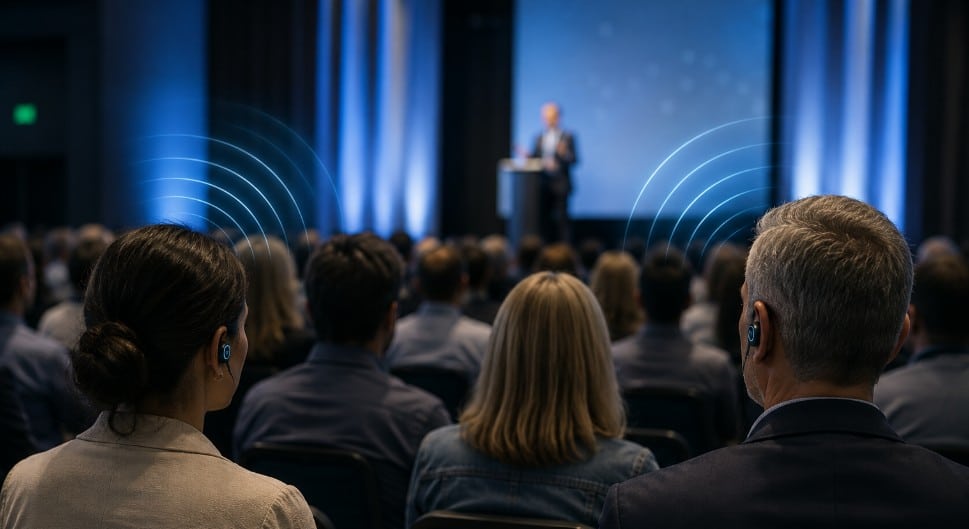
Auracast is the likely future of hearing access in public spaces. While questions remain about the timing of venue rollout and the speed of the hearing aid replacement cycle, the direction is increasingly clear: Auracast will provide clean, clear sound in movie theaters, airports, lecture halls, jury rooms, conference rooms, performance venues, houses of worship, and more.
People with hearing loss will arguably benefit the most. But the primary driver of adoption may not be accessibility alone—it may be the better listening experience Auracast provides for everyone, including people with typical hearing.
I saw the case for this firsthand in Seoul.
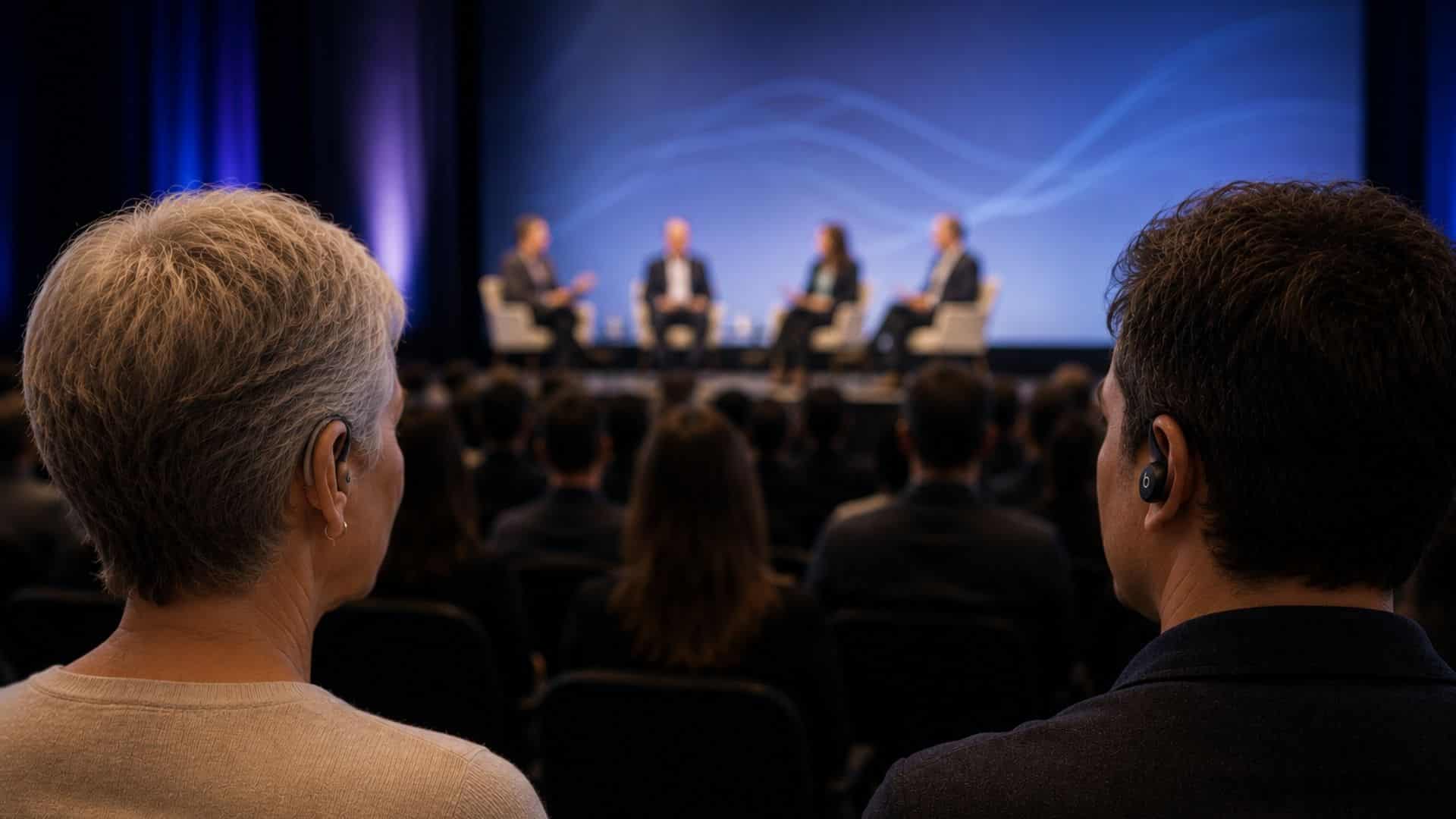
At the World Congress of Audiology in May, GN Hearing hosted an evening K-pop event followed by a panel discussion. It doubled as a test case for Auracast. The event was held in a large, reverberant hall—the type of challenging listening environment where even people with typical hearing struggle.

Sound bounced off the hard surfaces, conversations overlapped, and I found myself doing what I always do: leaning forward, straining, working hard. But when I tapped into the Auracast stream, the difference was immediate. The panel discussion came through cleanly—clear, direct, effortless.
My husband, who has typical hearing, also tried the Auracast stream. He turned to me with wide eyes. “That’s remarkable.”
And that, right there, is the real reason Auracast could finally change hearing access for the better.
Because People With Typical Hearing Prefer It Too
Assistive listening technology has always been framed as something for people with hearing loss. But what impressed my husband wasn’t accessibility—it was quality. Perfect fidelity at a volume he chose. He could actually turn it down because, when the background noise disappeared, he didn’t need to crank up the volume to compensate. That kind of control over his listening experience was something he had never experienced in a loud public space.
His one complaint? Once the headphones went on, it was hard to turn to the person next to him and have a side conversation. But that’s a social behavior adaptation most of us with hearing loss have long since learned to navigate.
What struck me most, sitting beside him, was the fact that we were having the same experience. Not him accommodating me, not me struggling to keep up—the same experience. That is powerful.
Auracast Is Universal Design
Universal design is the idea that features built for people with disabilities often end up benefiting everyone. The classic example is the curb cut: ramps installed for wheelchair users that are now used constantly by people with strollers and rolling luggage.
Nobody fights for curb cuts anymore. They’re just how streets work.
Auracast has the makings of a curb-cut moment for hearing. When people with typical hearing start reaching for the same solution we use, the technology stops being a niche accommodation and becomes mainstream infrastructure. And mainstream infrastructure gets installed everywhere—not because venues are required to provide it, but because the general public demands it.
Accessibility mandates can move the needle, but slowly. Consumer demand moves it fast.
Not So Fast
Progress is underway—real venues such as the National Theatre, Shakespeare’s Globe, and even the Sydney Opera House are installing it—but there are several caveats.
Device compatibility is still uneven. Older hearing aids don’t have it built in, and not all new hearing devices include Auracast capability. Plus, Apple has not yet enabled Auracast on any of its devices.
The international IEC standard governing Auracast assistive listening installations isn’t expected until late 2027, leaving interoperability and ADA compliance questions open.
And, of course, the number of venues that have installed Auracast remains small. Having an Auracast-compatible hearing aid today is a bit like owning an electric vehicle before a widespread charging network existed.
While we wait for progress to take its course, it is crucial that hearing aid manufacturers and hearing care professionals continue to support existing solutions, including telecoils. We can all be enthusiastic about the future without abandoning people who rely on today’s technology and use it successfully.
The Bottom Line
For decades, people with hearing loss have hoped the world would build better listening environments. Auracast’s greatest promise may be that it makes better listening something everybody wants.
When technology designed to help people with hearing loss starts improving the experience for everyone—as my husband discovered in Seoul—the world pays attention. And when the world pays attention, change can happen faster than we expect.

Shari Eberts is a passionate hearing health advocate and internationally recognized author and speaker on hearing loss issues. She is the founder of Living with Hearing Loss, a popular blog and online community for people with hearing loss, and an executive producer of We Hear You, an award-winning documentary about the hearing loss experience. Her book, Hear & Beyond: Live Skillfully with Hearing Loss, (co-authored with Gael Hannan) is the ultimate survival guide to living well with hearing loss. Shari has an adult-onset genetic hearing loss and hopes that by sharing her story, she will help others to live more peacefully with their own hearing issues. Connect with Shari: Blog, Facebook, LinkedIn, Twitter.