


by Harvey Abrams, PhD.

Harvey Abrams PhD
“Peeling the Onion” is a monthly column by Harvey Abrams, PhD.
I participated in two events this week. One informed the other. The first event was the Federal Trade Commission (FTC) Workshop held in Washington DC on April 18th. The other was the March for Science which, in my current geographical location, took place in St. Petersburg, FL.
Now Hear This
The FTC workshop, subtitled “Now Hear This”, was convened to explore issues associated with competition, innovation and consumer protection in hearing health care and, specifically, to:
“…examine ways in which enhanced competition and innovation might increase the availability and adoption of hearing aids by those consumers who need them. In addition, the workshop will examine how to balance consumer health and safety issues with consumer interests in greater competition and innovation, and ensure consumers have access to truthful and non-misleading information about hearing health products and services.” [italics mine].
It would appear that the FTC came into this meeting with some preconceived ideas about the industry – ideas concerning the untrustworthiness of hearing health care that do not appear to be supported by any evidence that I could find on its Bureau of Consumer Protection website. For example, when I entered the key words “hearing aids” into the site’s search feature the only relevant “hit” I was able to identify was an action taken by the FTC against a hearing aid manufacturer over 20 years ago.
Stakeholder Panels
The FTC workshop consisted of presentations by invited stakeholders sitting on four different panels:
- Innovations in Hearing Technology
- Innovations in Hearing Health Delivery
- The Costs and Benefits of Hearing Health Care Regulations
- Informing Consumer Choice in Hearing Health Care. T
The panelists represented the professional community, industry, researchers, policy makers, and the consumer. In addition to brief opening remarks, the panelists were asked questions by the moderating FTC staff. As a researcher and one who values evidence-based policy making, I was struck by the number of remarks made by several panelists that represented anecdotal “evidence”, assumptions, or provocative statements unsubstantiated by existing evidence.
Without refuting each of the following statements by citing contradictory evidence or by identifying a lack of evidence (I think the readers of HHTM can easily identify the flaws), here are some examples:
- Cost is the key reason that people with hearing loss do not have hearing aids.
- “Information costs” are unusually high, and the consumer doesn’t have opportunity to try hearing aids or specific features.
- Competition does not exist at any level – more choices and “better access” will drive down prices.
- PSAPs and hearing aids are the same; the only difference is regulatory.
- PSAPs are safe and effective.
- The current FDA standards apply to just 6 companies.
- Eyeglass/contact lens industry is an appropriate model for hearing aids.
- Many websites are set up by manufacturers to trick consumers.
So Many Agencies, So Little Evidence
So, here we have a third agency, FTC, following closely behind the PCAST, NASEM, and FDA, examining issues associated with hearing health care. While the FTC hasn’t weighed in yet, would anyone be surprised if they follow the recommendations of the others (in the name of competition) to support a separate classification of hearing aids that can be dispensed without professional involvement; i.e. OTCs?
FTC’s recommendation will mean that a Presidential advisory task force and three separate agencies are recommending a significant modification to a medical device regulation designed to protect consumer safety with almost a complete absence of evidence to support the change. The only reputable study to examine the efficacy of OTCs was recently reported by Humes et al. (2017). While this research represented a well-designed and executed study, it is just one study and the generalizability of the results are limited for the reasons I identified in my last post.
If we apply what we currently know about the efficacy of OTC hearing aids based on all published studies (and/or the lack thereof), the overall assessment of the strength of the evidence would be considered “Low” by the Agency for Health Care Quality (AHRQ). A “Low” level of evidence is interpreted to mean that
“We have limited confidence that the estimate of the effect lies close to the true effect for this outcome [i.e., the outcomes of OTCs are at least equivalent to conventionally fit hearing aids]. The body of evidence has major or numerous deficiencies (or both). We believe that additional evidence is needed before concluding either that the findings are stable or that the estimate of effect is close to the true effect.”
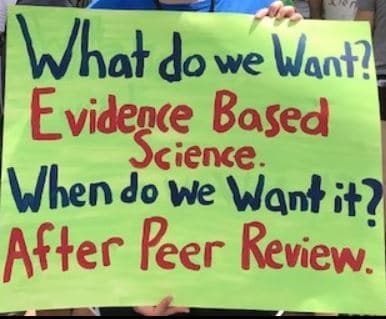
Figure 1. My favorite sign at the March for Science rally.
So Many Audiologists, So Little Evidence-Based Practice
Recall that I participated in a second event this week – the March for Science. Unlike the atmosphere at the FTC meeting, in St. Petersburg I was surrounded by like-minded scientists, researchers, students, administrators, consumers and policy makers who value the power of data in making evidence-based policy decisions.
I’d like to think the audiology community shares in that ethic but, unfortunately, we are not completely without guilt here. We need to seriously consider if PCAST’s, FDA’s and FTC’s lack of a rigorous adherence to evidence-based policy decision-making for hearing health care is partially based on our own careless engagement in evidence-based clinical practice. For example,
- Are we consistently conducting a thorough needs-assessment for each patient?
- Are we selecting hearing aid features on the basis of those needs and not just on the audiogram?
- Are we routinely conducting speech-in-noise speech recognition testing?
- Are we appropriately conducting cognitive screening tests?
- Are we verifying our fittings with probe microphone measures for each patient, for each hearing aid?
- Are we validating our treatment with standardized outcome measures?
- Are we routinely offering post-fitting rehabilitation services?
Unless we can say “yes” to each of the above, how can we demand FDA or FTC to say “yes” to evidence-based hearing health care policies.
References
Humes LE et al. (2017). The Effects of Service-Delivery Model and Purchase Price on Hearing-Aid Outcomes in Older Adults: A Randomized Double-Blind Placebo-Controlled Clinical Trial. Amer J Aud, 26, 53-79.
Harvey Abrams, PhD, is a consulting research audiologist in the hearing aid industry. Dr. Abrams has served in various clinical, research, and administrative capacities in the industry, the Department of Veterans Affairs and the Department of Defense. Dr. Abrams received his master’s and doctoral degrees from the University of Florida. His research has focused on treatment efficacy and improved quality of life associated with audiologic intervention. He has authored and co-authored several recent papers and book chapters and frequently lectures on post-fitting audiologic rehabilitation, outcome measures, health-related quality of life, and evidence-based audiologic practice. Dr. Abrams can be reached atharvey_abrams@starkey.com
Feature image by Ross Land/Getty