


A secondary analysis of the Aging and Cognitive Health Evaluation in Elders (ACHIEVE) trial suggests that hearing intervention may significantly slow cognitive decline in older adults—particularly those at greatest risk. The findings, published May 14, 2025, in Alzheimer’s & Dementia, show a 62% reduction in the rate of cognitive decline over three years among individuals with the highest predicted risk, highlighting the importance of targeting hearing care interventions to those with multiple risk factors.
The ACHIEVE trial, a landmark randomized controlled study, originally found limited overall cognitive benefit from hearing intervention across a broad sample of older adults. However, this new analysis underscores that one-size-fits-all interpretations may obscure critical subgroup effects—particularly among older adults with compounding vulnerabilities.
Risk-Responsive Benefits of Hearing Intervention
In this study, researchers used data from the Atherosclerosis Risk in Communities (ARIC) cohort to create a predictive model for cognitive decline based on factors including age, chronic conditions, depressive symptoms, physical function, and cognitive baseline measures. This model was then applied to the 977 participants enrolled in the ACHIEVE trial to estimate individual risk profiles.
Participants were randomized to receive either a hearing intervention or a health education control. Among those in the top quartile of predicted cognitive risk, hearing intervention was associated with a 61.6% slower rate of cognitive decline compared to control (95% CI: 33.7%–94.1%). This effect was especially pronounced in tests of language function, although patterns also emerged in memory and executive function domains.
“The effect of hearing intervention on reducing 3-year cognitive decline was greatest among individuals with multiple baseline risk factors,” the authors wrote, suggesting that hearing care may mitigate the interactive burden of factors that otherwise accelerate cognitive deterioration.
Understanding the Population and Methods
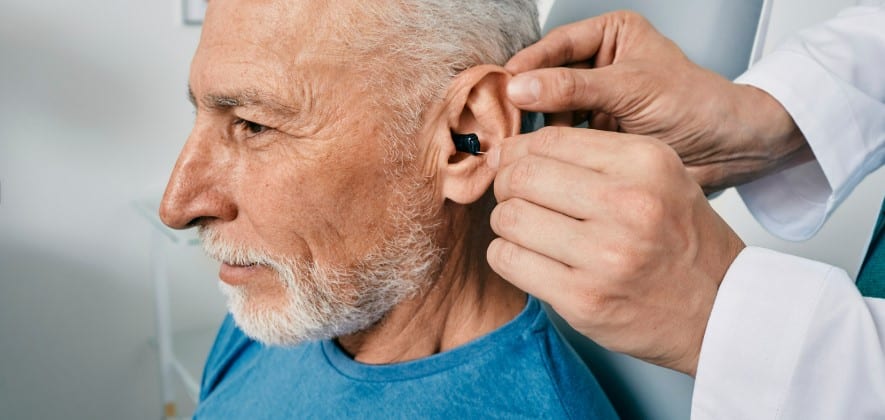
ACHIEVE participants, aged 70–84, had untreated bilateral hearing loss and no substantial cognitive impairment at enrollment. About half were drawn from the long-standing ARIC cohort, while the rest were recruited de novo from the community. All underwent cognitive testing and either received hearing aids and audiological support or participated in a structured health education program over three years.
The ARIC-based predictive model incorporated shared measures such as physical performance, depressive symptoms, lifestyle factors, and genetic markers—specifically the presence of the APOE ε4 gene variant, which is linked to increased Alzheimer’s risk—to estimate each participant’s likelihood of cognitive decline. Researchers then applied this model to ACHIEVE trial participants, allowing them to examine how the hearing intervention’s impact varied by baseline risk level. The analysis revealed that individuals with the highest predicted risk experienced the greatest benefit.
Notably, the benefit observed among those with the greatest predicted risk was even larger than that found in the original ACHIEVE analysis of ARIC participants, where hearing intervention was associated with a 48% slower rate of decline.
Implications for Clinical Care and Policy
The findings strengthen the case for treating hearing loss as a modifiable risk factor for cognitive decline, particularly in aging adults with complex health profiles. Prior observational studies have suggested a connection between hearing loss and dementia, but this trial-based evidence adds clarity to who may benefit the most.
Importantly, the data also hint at a mechanism: Hearing intervention may ease cognitive load during communication, enabling better cognitive performance, particularly in domains like language that rely on auditory input.
Despite the encouraging results, the authors note several limitations. The ACHIEVE sample, especially those recruited de novo, tended to have higher education and income levels than the general population. Additionally, some potential risk modifiers, such as loneliness and social isolation, were not included in the predictive model due to missing data in the ARIC cohort.
Still, the study offers actionable insights.
“These findings clarify the characteristics of older adults with hearing loss who are most likely to experience 3-year cognitive benefits from hearing intervention,” the authors wrote. Long-term follow-up is underway and may further illuminate benefits in those with lower initial risk or across broader cognitive domains.
As the global burden of dementia grows—projected to reach over 150 million cases by 2050—interventions that reduce risk, even modestly, could have profound public health impact.
The authors suggest that policy measures, including expanding Medicare to cover hearing care, could be a practical step toward addressing a major driver of age-related cognitive decline.
Reference:
- Pike JR, Huang AR, Reed NS, et al. Cognitive benefits of hearing intervention vary by risk of cognitive decline: A secondary analysis of the ACHIEVE trial. Alzheimer’s Dement. 2025;1–14. https://doi.org/10.1002/alz.70156