


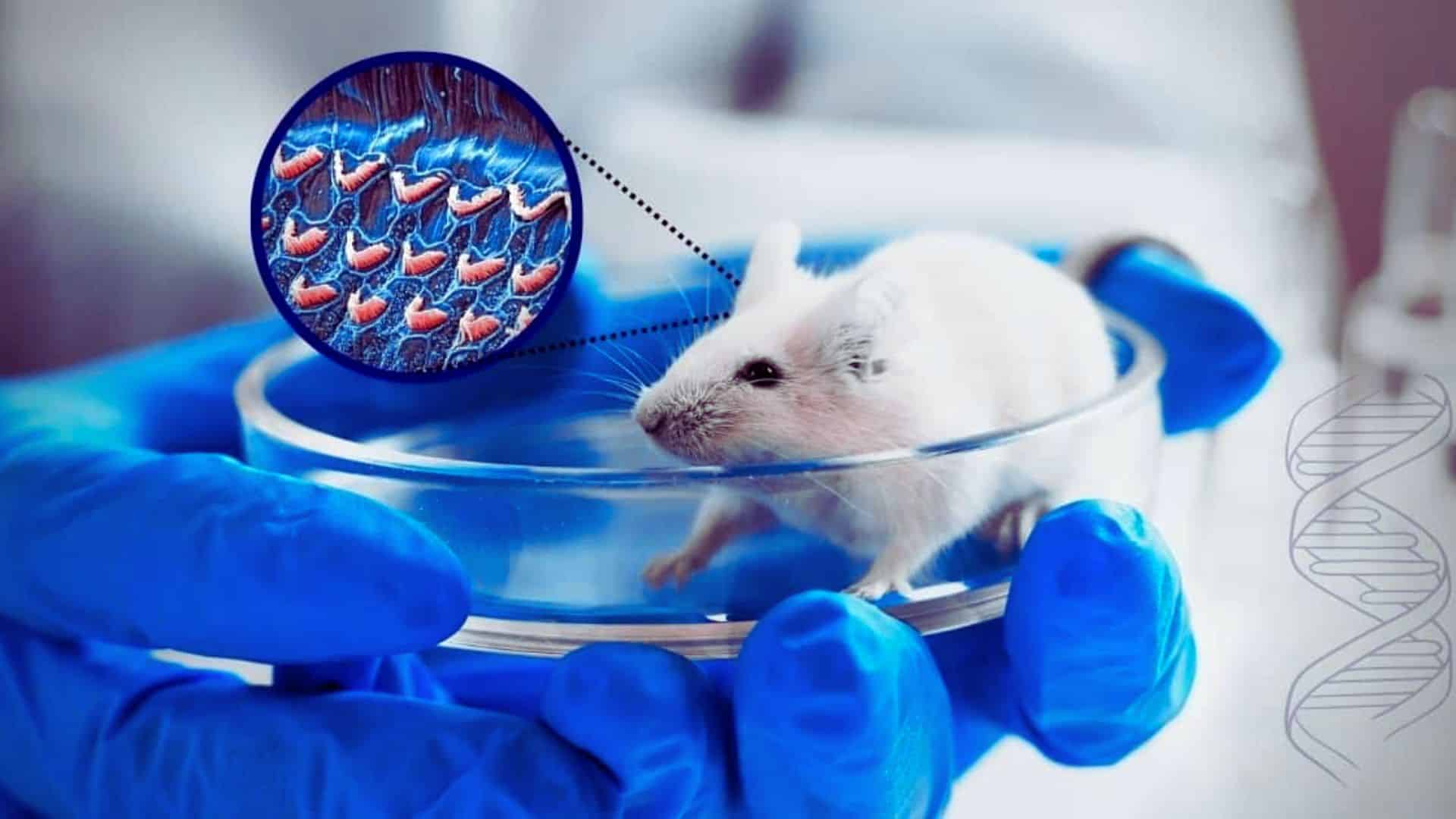
A new preclinical study has demonstrated that cochlear gene therapy can restore both hearing and auditory processing in a mouse model of atypical DFNB9 deafness, a genetic condition caused by mutations in the OTOF gene. The findings, published in Communications Medicine, offer promising insights for treating a broader range of hearing loss severities associated with this condition—not just those involving complete deafness at birth.
The study, conducted by a team of researchers from Institut de l’Audition, Institut Pasteur, and collaborating institutions, focused on a less common form of DFNB9 marked by fluctuating and temperature-sensitive hearing loss.
Using gene therapy delivered directly to the cochlea, they achieved full restoration of hearing thresholds and sound discrimination, even when treatment was administered after the so-called “critical period” of auditory development.
“These findings indicate that gene therapy can address the entire spectrum of DFNB9 hearing loss, and that profound deafness during [the] critical period may not impede the restoration of central auditory processing,” the researchers reported.
A Mouse Model Reflecting Human DFNB9 Variants
DFNB9, an autosomal recessive form of hearing loss, is caused by mutations in the OTOF gene encoding otoferlin—a protein essential for the release of neurotransmitters at the synapses of inner hair cells (IHCs). While many cases result in profound prelingual deafness, roughly 15% present with more variable symptoms, including moderate or progressive hearing loss that may worsen during fever.
To model this clinical variability, the researchers engineered mice with an in-frame deletion in the Otof gene (E1799del), corresponding to the human E1804del mutation. This particular mutation disrupts otoferlin’s normal distribution within IHCs without eliminating the protein entirely. Though structurally intact and with normally functioning outer hair cells, the mutant mice were found to be profoundly deaf due to failed synaptic transmission at the IHC level.
Further analysis showed that the mutated otoferlin clustered abnormally within cells and failed to localize to the presynaptic regions where neurotransmitter release occurs. In addition, these mice exhibited a reduced number of synaptic ribbons—structures vital for continuous signal transmission in the auditory system.
“This suggests that proper subcellular expression and distribution of otoferlin are critical for IHC ribbon maintenance”
Restoring Hearing and Auditory Function with Gene Therapy
To correct the defect, the team used a dual adeno-associated virus (AAV) vector system to deliver the full-length otoferlin gene into the cochlea. Mice were treated either as newborns (P2) or young adults (P30), corresponding to stages before and after the critical period for auditory plasticity.
Three weeks post-treatment, immunolabeling showed that otoferlin had returned to its proper location in the IHCs, and the number of synaptic ribbons significantly increased. Functional testing confirmed restored calcium-dependent synaptic exocytosis—the mechanism by which neurotransmitters are released in response to sound stimulation.
Crucially, auditory brainstem response (ABR) testing showed that treated mice had normal hearing thresholds across a range of frequencies. While the amplitude of wave I (reflecting the synchronous firing of auditory nerve fibers) remained somewhat reduced compared to wild-type mice, the researchers noted this likely reflected the still-lower ribbon counts rather than a failure of auditory recovery.
“The presence of abnormal or partially functional otoferlin in IHCs does not impede the effectiveness of the wild-type version of the protein when delivered… using [the] dual AAV gene therapy approach,” the researchers noted.
Perhaps most striking, hearing improvements remained stable over at least three months—the longest duration tested—highlighting the durability of the intervention.
Central Processing Also Recovered—Even After the Critical Period
One of the more novel aspects of the study was its focus on central auditory processing, which is critical for speech understanding. Though ABRs confirm peripheral sound detection, they do not assess whether the brain properly interprets auditory information.
To probe this, researchers employed a series of behavioral tests. These included:
- The acoustic startle response, which assesses brainstem-mediated reactions to loud sounds.
- Prepulse inhibition, measuring the brain’s ability to process subtle auditory cues.
- A Go/NoGo task using the Audiobox system, in which mice had to discriminate between sound frequencies to receive water rewards.
In untreated mice, none of these tests showed normal results. However, in both P2- and P30-treated animals, behavioral responses matched those of wild-type mice for higher-frequency contrasts. This included successful discrimination of tone pairs that differed by up to 40% in frequency, indicating a meaningful recovery of auditory perception.
“Peripheral gene therapy improves central acoustic behavior… for administrations at either the neonatal or the mature stage,” the researchers concluded.
This finding suggests that auditory deprivation during the critical period may not irreversibly impair the development of central auditory pathways—an important consideration for human patients diagnosed later in life.
Toward Broader Application in Human Hearing Loss
Gene therapy for OTOF-related deafness has already entered early clinical trials, but so far, these have focused primarily on individuals with complete congenital deafness. The current study adds evidence that the approach may also benefit individuals with partial, progressive, or temperature-sensitive forms of DFNB9—potentially expanding the pool of eligible patients.
Moreover, the success of treatment after the auditory critical period raises hopes that gene therapy could still be effective in children and possibly even adults who were not diagnosed or treated early.
“These findings constitute a significant milestone… further emphasizing the potential of gene therapy for tackling genetic deafness, even when administered at the end of the critical period,” the researchers wrote.
As gene therapy for hearing loss continues to evolve, this research underscores the importance of developing treatment strategies that address not just hearing thresholds, but also the broader auditory experience—including perception, cognition, and communication.
Reference:
- Benamer, N., Le Ribeuz, H., Felgerolle, C. et al. Cochlear gene therapy restores hearing and auditory processing in an atypical DFNB9 mouse model. Commun Med 5, 229 (2025). https://doi.org/10.1038/s43856-025-00926-3
Readers interested in the latest developments in hearing therapeutics can check out this excellent panel discussion from the 2025 Hearing Therapeutics Summit: