


by Terry Mactaggart, President and CEO, Summus Hearing Inc.

Terry Mactaggart
While more research is evident about the incidence and impact of hearing loss, and innovations to instrumentation continue as we approach OTC 2, I remain reflecting on how much progress is actually being made in pushing back against the growing hearing health problem…?
How Big is the Problem? We know that the hearing health problem is substantial, impacting millions of people globally. Estimates like 40 million Americans and 1.5 billon worldwide are often quoted. The thousands of interpreted tests accumulated by our Hearing Guidance technology, however, suggest that these are understated, primarily because of the way the data is collected and the underestimation of early change in audiometric patterns.
The industry also tends also to focus most on Sensorineural losses (accounting for approximately 30% of our data sets) whereas Conductives approximate 20% and Mixed more than 10%. SN’s are therefore a minority part of a much larger whole.
Given this record, we argue that likely about 70 million people are affected by various forms of hearing loss in the United States and Canada. That makes hearing issues the largest untreated chronic health condition in our societies.
And equally important, the scale of the problem is growing, principally due to our aging populations and exposure of many to loud environments.
So What’s the Big Deal?
We also know that untreated hearing loss often leads to reduced quality of life, affecting communication, social engagement, and cognitive health. Correlations with dementia are also strengthening. Despite continuing advancements in hearing aid technology, barriers such as stigma, cost, and lack of awareness continue to hinder widespread adoption. We all have hearing stories that substantiate these factors.
The introduction of over-the-counter (OTC) hearing aids marked a significant milestone in making hearing health care for SN loss more accessible and affordable for millions of Americans. Data indicates a gradual increase in adoption rates, particularly among younger adults and first-time users, who now view hearing aids as a practical and approachable solution.
However, the above noted barriers plus the challenge of self-fitting still hinder widespread acceptance.
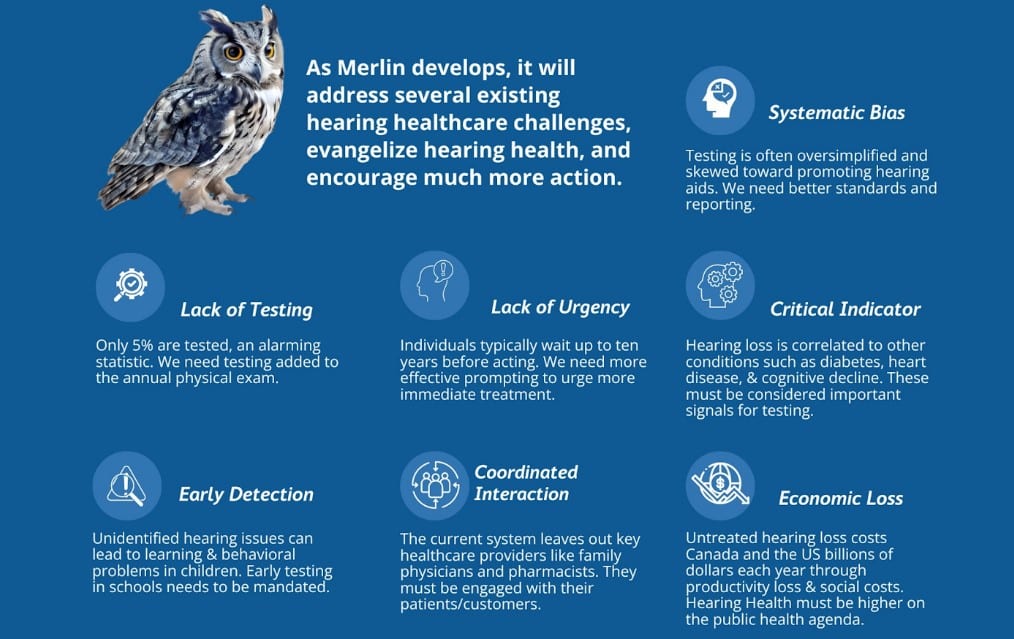
As mentioned in earlier posts, several elements contribute to the resilience of the hearing health problem. Most significant are (i) the great majority of people have never been tested; (ii) those who have often lack adequate interpretation of their results; (iii) the relatively few who are informed delay too long in taking action (thus the seven plus or minus year “Hearing Journey”); (iv) key providers – family physicians and pharmacies, for example – are typically not yet involved in testing their patients hearing.
Taken together, these influences still weigh heavily and represent a “Capital P. Problem”.
So What are We Doing About It?
Some months ago, the Summus Hearing team wrestled with what contribution we could make to alleviate this “stuckness” – lack of testing and responsiveness towards taking the actions warranted. We concluded that our well-established hearing health guidance process (from testing, to interpretation, to hearing triage, to medical grade reporting, to coaching about what best next steps to follow) could be extended and further personalized in order to make a difference.
We recognized that underlying these problems are behavioral issues requiring application of know-how and technologies that are only now beginning to appear in digital health. If we are to really confront the Hearing Health Problem, we need to take account of individual groups and critical influences that are frequently overlooked. These include…
- Age and Messaging: Position in one’s life cycle is an obvious consideration. While the proportions of so-called “Normals” are higher at younger ages and “Sensorineurals” increase with older people, most virtual testing doe does not account for the user’s age factor. And clearly messages provided as motivators to different age cohorts with similar classifications need to be customized and nuanced.
- Lifestyle Considerations: One’s daily activities, hobbies, and work environment all play a significant role in hearing health. Standard testing rarely accounts for these differences, leading to one-size-fits-all solutions.
- Overall Health: Conditions such as diabetes, cardiovascular disease, and even stress can influence hearing health significantly. These factors are often ignored particularly in internet-based hearing assessments, yet they are crucial for understanding the full picture of auditory well-being.
- Personal Preferences: The decision to use hearing aids or other interventions is deeply personal. Factors such as comfort, aesthetics, and lifestyle compatibility should be considered, but they are often sidelined in the rush to fit a device.
Ignoring or minimizing these considerations results in missed opportunities for early intervention, underutilization of preventive measures, and substandard care that fails to address the unique needs of each individual.
Bridging those gaps by offering a more holistic and personalized approach to hearing care will contribute to redefining how we think about and manage hearing health. Rather than waiting longer, we have decided to embark on an ambitious project which, when fully available, should help “Move the Meter” in a significant way.
It is being branded “Merlin” and represents we believe a major, potentially breakthrough, addition to our well-established Hearing Guidance Process.
Much Ado About “Nudging”
In addition to the obvious challenges of (i) accessing current testing data (we have a sufficient “data lake” including age, gender, test results and classification); (ii) onboarding users and gaining their permission to proceed; (iii) designing an effective questionnaire to capture information about status, work and leisure activities plus general preferences and a high level health profile, we need to incorporate follow-up rounds of testing adding comparisons and, when appropriate, references to contemporary research advice.
While we know from previous experience that when presented with an easy-to-use and relatively private process, many people across a wide age demographic are curious about their hearing and proceed with testing themselves. And we have some idea from placement in doctor’s offices and pharmacies offering OTC hearing devices about how many subsequently take action.
But attracting thousands more and providing sufficient motivators for many to take the next steps indicated to preserve or rehabilitate their hearing health represents a much larger challenge. Employing a suitable AI application will go part way but will not alone provide the needed stimulus.
That dilemma has led us to determine how to “nudge” individuals with different profiles to take the plunge. “Nudge” was described in a book published in 2008, subsequently revised and updated several times, which lays out premises that have been incorporated in many behavioral science strategies. It usually involves subtle cues or interventions that encourage desired behaviors without restricting options or relying on heavy-handed approaches.
“Nudge” solutions could play a pivotal role in motivating individuals to preserve or rehabilitate their hearing., Integrating hearing health prompts, customized for individual users, into digital health platforms, for example, could gently remind people to consider hearing screenings or adopt preventive practices. They could also be used to make hearing health information and resources more visually appealing, accessible, and easy to understand therefore lowering perceived barriers to seeking help. Guiding users and rewarding them with discounts for relevant products and services could also increase engagement with hearing preservation and rehabilitation.
By leveraging these subtle yet impactful interventions, nudge solutions can foster a culture of proactive hearing health care and contribute to reducing the stigma and inertia surrounding hearing loss treatment.
While it’s still early days leading up to Merlin’s launch, we believe that we are on the right track and are optimistic about the outcome. A personalized AI Hearing Health Companion makes good sense.
To leverage this effort, we are also interested in working with others to deepen and broaden the base as well as promote the innovation. If you wish to be in touch about this, I can be contacted at…
Terry Mactaggart
President & CEO
Summus Hearing
[email protected]
(905) 988-8905