


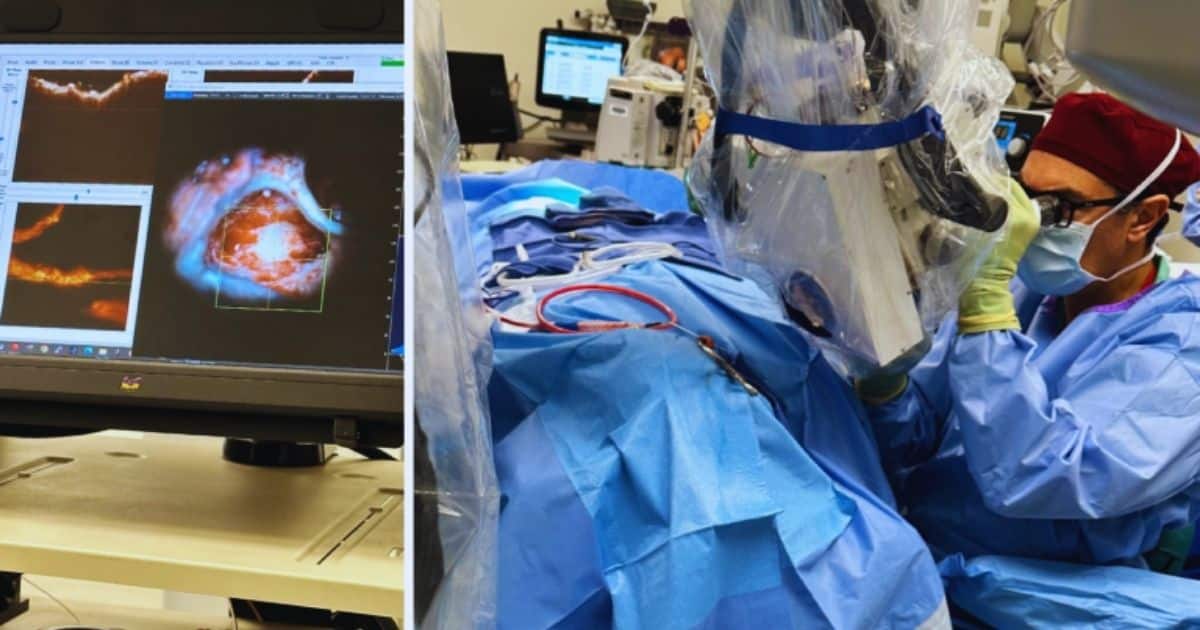
LOS ANGELES, CALIFORNIA — Dr. John Oghalai, Chair of Otolaryngology–Head and Neck Surgery at the Keck School of Medicine of USC, has been awarded a prestigious R01 grant from the National Institutes of Health (NIH) to further his research into noninvasive imaging of the human inner ear using optical coherence tomography (OCT).
The project, titled “OCT Imaging of the Human Inner Ear,” aims to develop a technique for capturing high-resolution, 3D images of the delicate structures within the cochlea without invasive surgery. OCT imaging, which uses low-power laser light, has already proven successful in animal models such as mice and guinea pigs. Dr. Oghalai’s team now plans to adapt the technology for use in human patients during surgical procedures by attaching an OCT device to an operating microscope.
“Because this is frequently where hearing loss originates, a better understanding of how the cochlea works could be essential to empowering scientists to figure out how to prevent hearing loss from worsening and how to restore hearing for as many patients as possible”
–Dr. John Oghalai
Currently, clinicians rely on CT and MRI scans to visualize the gross structures of the inner ear, but these techniques provide limited detail about the tissues themselves. OCT could provide a noninvasive, detailed view of the cochlea, offering new insights into conditions like Meniere’s disease, sudden sensorineural hearing loss, autoimmune inner ear disease, and vestibular schwannoma tumors. Together, these conditions affect hundreds of thousands of individuals in the United States alone.
The recent NIH grant marks another milestone in Dr. Oghalai’s decades-long career at the intersection of engineering, surgery, and auditory neuroscience. In a recent interview on This Week in Hearing, Dr. Oghalai discussed how his background in electrical engineering helped shape his approach to hearing research and innovation. He highlighted the potential of technologies like OCT to bridge longstanding gaps between basic auditory research and clinical practice.
Dr. Oghalai’s work in OCT imaging builds on earlier collaborations with Dr. Brian Applegate, a biomedical engineer specializing in laser imaging. Together, the two researchers demonstrated that OCT could visualize the inner ear’s microstructures through dense bone in animal models without causing hearing damage—a key breakthrough that paved the way for human applications.
By enabling high-resolution imaging during surgery without extending anesthesia time, the new technique could improve both diagnostic accuracy and patient outcomes. “We’re hopeful that this work will lead to a much better understanding of inner ear diseases and, eventually, to new ways to preserve or even restore hearing,” Oghalai noted.
Dr. Oghalai joined USC in 2017 after seven years on the faculty at Stanford University. At USC’s Caruso Department of Otolaryngology–Head and Neck Surgery, he continues to lead one of the nation’s most prominent auditory research programs.

Source: USC