


Miracle-Ear conventions used to be raucous affairs, and their 2005 event in Huntington Beach, CA, was no exception.
Beyond franchisees masquerading as USC Trojans while a Beach Boys cover band played hits from the early 1960s, one memorable moment from this conference sticks out for me: Robert Sweetow’s talk on something called “Listening and Communication Enhancement,” or LACE as he called it, a DVD-based auditory training program.
This event was the beginning of my three-year love affair with LACE.
A tryst that culminated in a clinical study that a Miracle-Ear franchisee, Al Shrive, and I published at AudiologyOnline in 2008, a study that demonstrated patients who completed the LACE exercises had significantly higher satisfaction scores and minuscule return-for-credit rates.
The first spark of my love affair with LACE can be traced back to my graduate school days at UMass Amherst.
It was 1990, and I vividly recall sitting around a large table with five other first-year audiology graduate students as Professor Harris Nober, also seated at the table (weirdly, he always lectured while seated at the head of a table), waxed ecstatically about the many virtues of Raymond Carhart, the father of audiology.
On one of his 35-mm slide carousels (remember those?) was this quote, attributed to Carhart, that to this day I still recall:
“Our task is not merely to make sounds audible but to make them meaningful.”
That quote has stuck with me for years, and I’m betting many of you have had similar experiences during your training. A professor has cultivated and shaped your understanding of the importance of auditory training, that treating hearing loss is a lot more than just fitting hearing aids.
Researchers like Jennifer Henderson Sabes, Theresa Chisolm, Nancy Tye-Murray, and others have articulated that aural rehabilitation and auditory training must sit alongside well-fitted hearing aids at the table.

For most audiologists practicing in the 1990s through the 2010s, our best intentions to provide systematic auditory training quickly fell by the wayside. Even though it was effective, the early version of LACE was clunky, cumbersome, complicated—and for practice owners, cashless.
There was another big reason LACE encountered significant headwinds at this time: as the excitement of “100% digital” and then Bluetooth streaming hearing aids took hold, audiologists leaned on the device to do all the work. Despite the clinical evidence supporting its effectiveness, audiologists didn’t have the time to implement LACE consistently, as it originally required in-office time with patients.
As for patients, the early versions, prior to customization, were harder to stay engaged with.
Rekindled Love – Oh, How Things Have Changed
I believe that the aural rehabilitation revolution is finally here. I want to be a part of it. You should want to be a part of it, too.
“Our task is not merely to make sounds audible but to make them meaningful.”
There is one simple reason I joined Neurotone: the new Lace AI Pro captures the hearing healthcare zeitgeist (“spirit of the times”) by combining clinically validated evidence that drive a range of outcomes with a patient-friendly, patient-led AI platform delivered through a flexible subscription-based model via a smartphone—and (this is important!) it keeps the hearing care professional at the center of the therapeutic relationship.

The new Neurotone represents a convergence of innovative scientific thinking (co-founder Miles Aron) and savvy business acumen (co-founder Rick Carlson). I’ve been around long enough to know the new Neurotone is creating something special, unique, maybe even transcendent—and something that Raymond Carhart would have championed if it were around 80 years ago. You simply do not want to miss it!
Now is the time, hearing care professionals. Integrate Lace into your clinic. Recommend it to every patient. Persuade, nudge, and wheedle them into completing the training exercises—and make money doing it! It’s never too late to rekindle the love.
About the Author
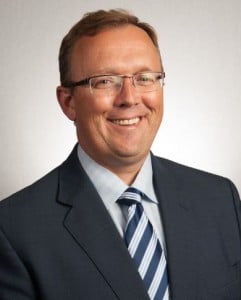 Brian Taylor, AuD, is a recognized thought leader with over 35 years of industry experience, currently serving as Vice President of Clinical Research & Professional Relations at Neurotone AI. His expertise, spanning both academic and business contexts, offers a unique and practical perspective on critical topics such as amplification, best-practice outcomes, and practice management.
In addition to his role at Neurotone AI, Dr. Taylor is actively involved in the field as the editor of Audiology Practices, an adjunct instructor at the University of Wisconsin, and a contributor to Hearing Health & Technology Matters. His extensive background is reflected in his numerous publications and lectures, demonstrating his ongoing commitment to advancing and sharing knowledge.