


It’s no secret that loud music has a profound impact on our hearing—yet reducing the risks for music lovers, artists, and venue staff remains a major challenge. Thanks to a new partnership between Sownd Affects and Oscar Acoustics, efforts are underway to address this issue through an emerging concept known as audio inclusivity.
Through this collaboration, three Hackney venues—Paper Dress Vintage, Vortex, and SJQ—are participating in a project designed to make live music spaces more accessible and welcoming for people of all hearing abilities.
What Is Audio Inclusivity?
Audio inclusivity is a concept developed by Marion Marincat, founder of Sownd Affects, to ensure venues and experiences are accessible and welcoming for people of all hearing abilities, including those who are noise-sensitive.
“Becoming profoundly deaf at 26 completely reshaped my relationship with sound. Despite wearing the best hearing aids available—programmed by excellent audiologists—live music venues, busy restaurants, even work meetings became overwhelming. That experience pushed me to move from a career in finance into hearing health, founding an audiology company in 2014.”
–Marion Marincat
Over several years, Marincat spoke with patients, audiologists, and manufacturers, leading to a key realization.
“It’s not only about what people should do when they have hearing loss—it’s that spaces aren’t designed for diverse hearing abilities. When I discovered that one in three people are noise sensitive (including neurodivergent groups, those with tinnitus or misophonia, and many people over 55), I knew something had to change.”
A Data-Driven Approach to Inclusive Sound
Sownd Affects’ approach combines acoustic improvements based on sound data from individual venues, staff training, and inclusive policies. The organization follows a structured three-step process—Assess, Enhance, Train—beginning with in-depth acoustic assessments that measure how sound behaves in each space and how it is experienced by both audiences and staff.
This data-driven methodology identifies opportunities to improve clarity, balance, and exposure levels. Once the physical soundscape is optimized, bespoke training ensures venue teams understand the needs of noise-sensitive guests and can maintain consistent, inclusive practices across events.
The result is venues that sound better, feel better, and welcome everyone—regardless of hearing ability.
Partnership Brings Audio Inclusivity to Hackney
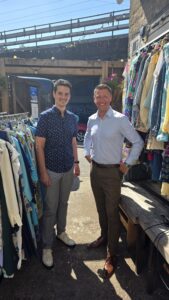
Marion Marincat (L) and Ben Hancock (R)
The concept has drawn interest from Ben Hancock, Managing Director of Oscar Acoustics, a company specializing in sound treatments designed to absorb excessive noise and create calmer, more comfortable environments. Supported by Arts Council England, the two organizations joined forces to bring audio-inclusive acoustics to Hackney.
“The Hackney project is the result of 12 years of pilots, hundreds of interviews, and several innovation and arts grants,” said Marincat. “I’ve lived and worked in Hackney since 2018, and as a hub for creativity and community, it made perfect sense to pioneer this work here.”
“Working with Ben Hancock and Oscar Acoustics this year has been brilliant—they’ve provided the technical expertise to transform these grassroots music venues, proving we can make spaces audio inclusive without compromising their character.”
Early Impact and Community Response
The impact is already being felt by venue staff. Alice Pasey of Paper Dress Vintage said:
“My staff previously experienced difficulty focusing and mental fatigue after a loud shift. Now, they can hear and communicate easily, which I believe will lead to a happier workforce. As a noise-sensitive person myself—I have ADHD—I’m so proud to deliver audio-inclusive experiences that more of our community can enjoy.”
“Hackney is proud to be at the forefront of cultural innovation that puts inclusivity at its heart. These audio-inclusive upgrades across our much-loved grassroots venues represent a major step towards making Hackney the UK’s first truly audio-inclusive borough.”
–Hackney Mayor, Caroline Woodley
During the project, jazz fusion band GoGo Penguin reflected on their early performances at venues such as the Vortex Jazz Club, noting how poor acoustics can feel like “a battle against the audience.” They explained that improved acoustics strengthen the connection between artists and audiences, allowing sound to be immersive without being overwhelming.
Hancock shared his own experience:
“I went to the first gig at SJQ after the treatment and the feedback was brilliant. Staff who once wore earplugs for protection said they could finally hear customers and felt far less fatigued after a shift. The long-term benefits of that can’t be overstated.”
What’s Next?
Building on the project’s success, Marincat and Hancock are now producing a short film to raise awareness of audio inclusivity and its broader benefits.
“We’d love to treat more venues in Hackney—and eventually expand to other cities,” said Hancock. “We’ve shown how it works in practice; now we want to share that knowledge widely and help people understand that inclusive sound isn’t about making venues quieter—it’s about making them better.”
“We’re excited to publish case studies showing measurable improvements in acoustics and wellbeing,” added Marincat.
“Our methodology—combining hearing psychology, acoustics, behavioral and data science, and participatory research—has also led us to launch Sownd Certified, a certification for spaces that ensure noise-sensitive people can feel comfortable whether there’s live music or a busy service.”
With support from the University of Southampton, before-and-after data collection and sound testing have demonstrated the effectiveness of the approach. With workshops and staff training in place, the project continues to build momentum.
As Marincat concluded, “Audio inclusivity isn’t just a health initiative—it’s a cultural movement. By making venues accessible to everyone, we’re not only protecting hearing, we’re redefining what great sound means.”
Find out more about Sownd Affects, the Hackney project, and the future of audio inclusivity at
www.sownd.co.uk.
Source: BIHIMA