

MENLO PARK, CALIFORNIA — Meta is preparing to turn compatible AI glasses into over-the-counter hearing aids through a new FDA-cleared software feature aimed at adults with perceived mild-to-moderate hearing loss.
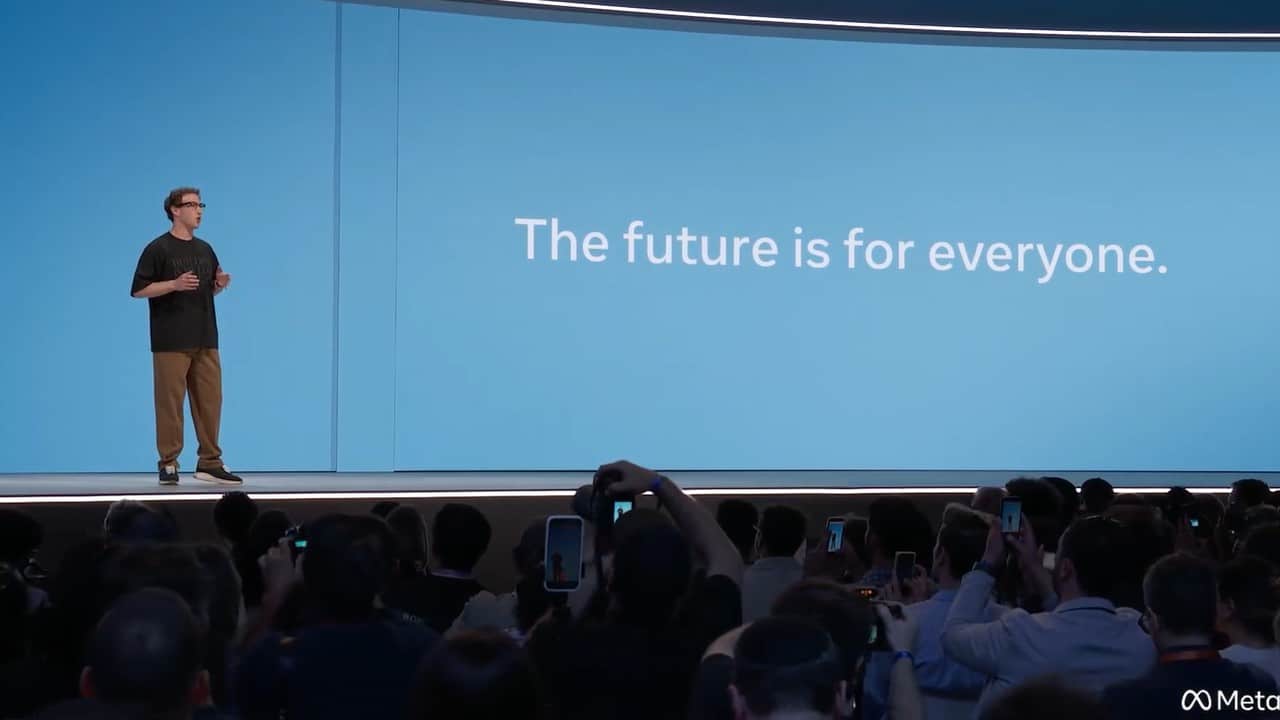
Announced September 23 at Meta Connect 2026, the company’s new Hearing Enhancement feature will launch in the United States later this year and can be added to supported Meta AI glasses for $149.99 or accessed through a Meta One subscription.
Meta says the feature can be set up at home in minutes without a clinic visit or prescription and will be eligible for HSA/FSA reimbursement.1
While Meta introduced the technology at Connect as part of a broader expansion of its AI glasses portfolio, regulatory documents show the hearing feature goes considerably further than conventional audio enhancement.
The U.S. Food and Drug Administration cleared Meta’s underlying Hearing assist software in July as an over-the-counter, self-fitting hearing aid for adults 18 and older with perceived mild-to-moderate hearing loss.2,3

Smart Glasses Become Self-Fitting Hearing Aids
According to Meta’s FDA 510(k) summary, Hearing assist is software as a medical device (SaMD) designed to operate with compatible wearable electronics. The system uses microphones and open-ear speakers built into the glasses to capture, process and amplify environmental sounds according to an individualized hearing profile.3
Users complete onboarding and self-fitting through a compatible smartphone application, without requiring assistance from a hearing care professional. Fine-tuning controls allow users to adjust volume, sharpness and left-right balance, while the glasses’ multi-microphone system can operate in either a standard all-around mode or a frontal focus mode. Active noise reduction is also incorporated into the system.3
Unlike earbuds or conventional hearing aids, the glasses deliver amplified sound without occupying or obstructing the ear canal. That approach is increasingly being explored as an alternative hearing-aid form factor. Nuance Audio Plus, introduced earlier this month, similarly combines open-ear hearing technology with traditional eyewear for adults with perceived mild-to-moderate hearing loss.
Meta’s announcement comes alongside a major expansion of its eyewear portfolio. At Connect, the company introduced Ray-Ban Meta Audio, new Ray-Ban Meta and Meta Glasses models, and additional software capabilities. Meta says it expects to offer more than 100 AI glasses options across its portfolio by the end of 2026.1
Apple AirPods Served as the FDA Predicate
Meta’s regulatory pathway also highlights the growing overlap between consumer electronics and hearing aids.
For its 510(k) submission, Meta identified Apple’s Hearing Aid Feature for AirPods Pro 2 as its predicate device. The AirPods Hearing Aid Feature became the first FDA-authorized OTC hearing aid software device in 2024, allowing compatible AirPods Pro 2 to function as self-fitting OTC hearing aids for adults with perceived mild-to-moderate hearing loss.
Both the Apple and Meta products fall under the FDA’s Class II air-conduction hearing aid software category and are intended for the same general adult hearing-loss population.3 The primary difference is the wearable platform: Apple’s software delivers amplified sound through earbuds positioned in the ear, while Meta’s system uses speakers and microphones incorporated into smart glasses.
Meta also specifically referenced Nuance Audio in its FDA submission. The company noted that a glasses-based hearing aid using externally positioned speakers and microphones had previously been cleared by the FDA under Nuance Audio’s K243150 submission.3 Nuance Audio received FDA clearance in early 2025, establishing an OTC hearing-aid platform that integrates hearing technology directly into eyewear.
The glasses-based approach has also begun accumulating independent clinical evidence. A 2026 study of Nuance Audio Glasses found improvements in speech recognition in noise and reduced listening effort among adults with mild-to-moderate hearing loss.
Clinical Study Included 142 Adults
Meta supported its FDA submission with a clinical investigation involving 142 adults with mild-to-moderate hearing impairment or perceived hearing difficulties despite audiometric thresholds within the study’s normal-hearing category. Participants were enrolled at three U.S. clinical sites.3
The study compared people who independently configured Hearing assist with those whose settings were fitted by a licensed hearing care professional. Participants used the devices in laboratory testing followed by 14 days of use in their everyday home and community environments.
The primary outcome used the International Outcome Inventory for Hearing Aids (IOI-HA), while the secondary endpoint assessed speech-in-noise performance using QuickSIN. According to the FDA summary, the self-fit group met the study’s predefined criteria for non-inferiority compared with the professionally fitted group on both measures.3
Testing also found an average 4.8 dB signal-to-noise ratio benefit when participants used the self-fitted Hearing assist system compared with listening without it. Real-ear measurements showed equivalent insertion gain between the self-fit and professionally fitted groups across speech inputs of 50, 65 and 75 dB SPL.3
Bench testing conducted across four audiometric profiles representing mild through moderate hearing loss also found that the system’s frequency-specific gain was closely aligned with NAL-NL2 prescriptive targets.3
Hearing Assistance Moves Further Into Consumer Wearables
The Meta launch represents another step in the expansion of hearing aid functionality into mainstream consumer electronics.
Apple brought FDA-authorized hearing aid functionality to AirPods Pro 2 in 2024, while EssilorLuxottica’s Nuance Audio introduced an OTC hearing aid built directly into prescription-compatible eyeglass frames. Meta’s approach brings a similar hearing aid function to a broader smart-glasses platform already designed around open-ear audio, microphones, AI and everyday eyewear.
Together, these products illustrate how the boundaries between hearing aids, hearables and other consumer wearables continue to shift as FDA-cleared hearing software moves onto hardware platforms originally designed for purposes beyond hearing care.
Meta is also introducing separate audio accessibility controls across its AI glasses portfolio, including the ability to shift audio balance toward either ear or route all audio to one side. Those controls are distinct from the FDA-cleared Hearing Enhancement feature.1
According to the company’s Connect announcement, Hearing Enhancement will arrive on supported Meta AI glasses in the United States later in 2026.
References
1. Meta. Your Personal Agent Coming to AI Glasses. September 23, 2026.
2. U.S. Food and Drug Administration. 510(k) Premarket Notification K254044 — Hearing assist. Decision date: July 13, 2026.
3. U.S. Food and Drug Administration. 510(k) Summary: Meta Hearing assist (K254044). 2026.
Source: Meta