

Emergency departments are difficult places to hear. Background conversations, equipment, alarms, and the urgency of care can make it hard for patients to understand questions and instructions. For Veterans with hearing loss, those barriers may affect some of the most consequential conversations of a hospital visit.
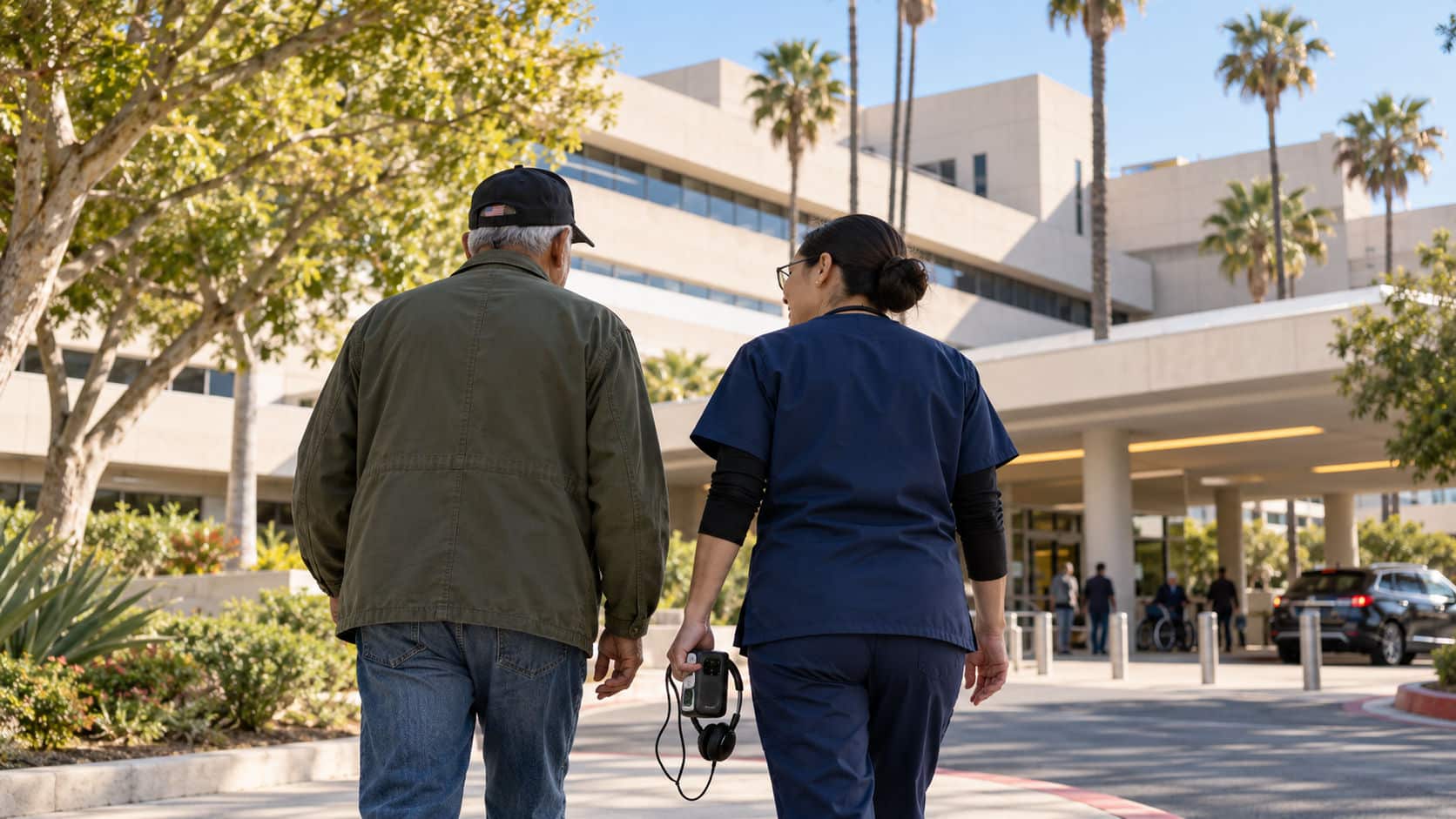
Researchers at the VA Greater Los Angeles Healthcare System tested a practical response: offering a personal voice amplification device to Veterans identified as hard of hearing in its emergency department.
A new study published in Disability and Health Journal reports that staff were able to incorporate the device into care and that surveyed Veterans generally found it helpful. The study also shows the challenges of sustaining the program across a busy department.
From a Small Pilot to Department-Wide Use
The program began with a six-month pilot in 2024 led by a small group of emergency department clinicians. It expanded to all department staff from November 2024 through June 2025. Veterans were identified as hard of hearing through self-report or staff observation during triage, rather than a formal hearing test, and could then be offered the device.
The approximately $65 device used a microphone and amplifier to send a conversational partner’s voice to the Veteran through wired headphones. The aim was to make speech easier to access amid emergency department noise. Clinical champions trained colleagues, promoted use during staff meetings and nursing huddles, and placed signs reminding both staff and Veterans that the device was available.
During the expanded phase, staff identified 299 Veterans as hard of hearing across 347 emergency department visits. Among those Veterans, 78—about 26%—had no hearing loss-related diagnosis documented in their VA record during the preceding 10 years. That finding does not establish a new diagnosis, but it suggests that an emergency visit can reveal communication needs that were not previously recorded.
About one in four Veterans identified as hard of hearing had no hearing loss diagnosis documented in their VA record during the previous 10 years.
What Veterans and Staff Reported
Staff completed documentation for 79 encounters with hard-of-hearing Veterans and recorded device use in 64 of them. In 54 of those 64 encounters, staff rated the device as very helpful in providing care. The most commonly documented reason for not using it was that the Veteran had a hearing aid of their own.
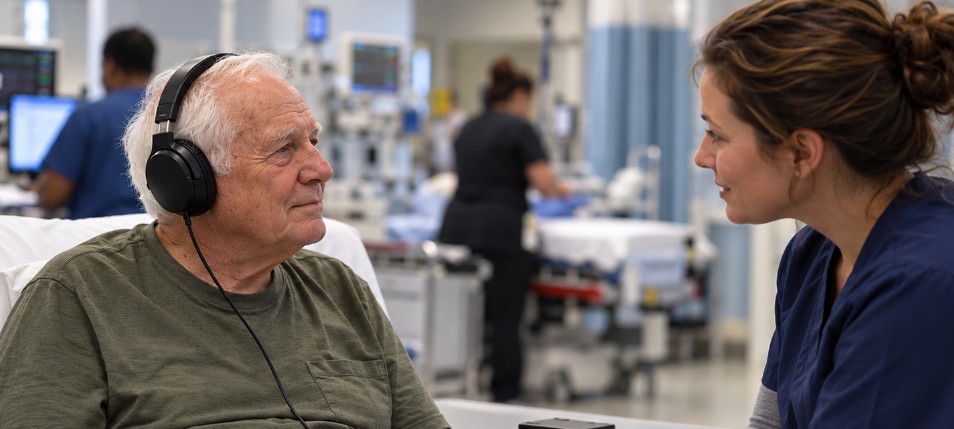
Patient feedback was also favorable, though the number of respondents was small. Of 18 Veterans who used the device and completed a survey, 16—89%—said it improved their care in the emergency department. The same number said they felt better heard or understood, and 17 said they would use the device again. Staff placed 11 audiology referrals through the program’s documentation process.
Those responses describe the experiences of people who used the device and answered the surveys; they cannot establish how every eligible Veteran experienced the program. They do, however, point to the immediate value of having a communication tool available during an acute care visit.
Of 18 Veterans who used the device and completed a survey, 16 said it improved their care in the emergency department.
Operational Results Require Careful Interpretation
The researchers also compared emergency department operations during the pilot and expanded phases. After accounting for patient age and a VA measure of hospitalization risk, the average time from arrival to a decision to admit or discharge was 48 minutes longer during the expanded phase. Admission rates were higher, while the difference in three-day return visits was not statistically significant.
The study had no untreated comparison group, so those changes cannot be attributed to the hearing device. Other department conditions and differences between patients or periods may have influenced the results. A separate change to the electronic triage form also removed a mandatory hearing-status question during the expanded phase, which may have caused staff to miss some Veterans who needed assistance.
Making a hearing device available was feasible; making it easy to find, maintain, and use consistently remains the next challenge.
The experience exposed practical barriers to routine use. Devices were stored with the charge nurse, requiring staff to retrieve them before an assessment. Batteries and missing headsets needed attention, while rotating staff and trainees did not always know the devices were available.
The authors suggest easier access at triage, regular reminders, and clearer maintenance procedures as priorities for sustaining the program.
A Communication Need Beyond the Audiology Clinic
For hearing care professionals, the study highlights a setting where hearing access must be addressed in the moment. An amplification device can help with an immediate conversation, while identification of a possible hearing difficulty can create an opportunity for later audiologic evaluation and longer-term support.
The Greater Los Angeles VA results support the feasibility and early acceptability of offering such devices in an emergency department. Further evaluation is needed to determine whether the approach improves clinical outcomes and how best to make it available consistently to patients who need it.
Reference:
Faiz J, Akuzawa H, Fermin P, et al. Improving care equity for hard-of-hearing veterans through implementation of a hearing assistive device in the emergency department: A pre-post observational study. Disability and Health Journal. Published online August 27, 2026. doi:10.1016/j.dhjo.2026.102167.