


A fully implantable cochlear implant isn’t just a technical milestone—it’s a fundamentally different way of living with hearing loss. In a candid conversation, Gael Hannan speaks with Michael Seufer, one of the first recipients of the Envoy Medical Acclaim, an investigational fully implanted cochlear implant that eliminates external hardware.
Michael shares how his hearing loss, first identified in childhood, shaped his life—from academic challenges to finding refuge in hockey—and how traditional hearing aids eventually stopped providing the benefit he needed. Michael describes the moment he decided to pursue the Acclaim after years of discouraging experiences with amplification.
Motivated by wanting to fully hear his young son, he enrolled in the clinical trial at Mayo Clinic and embraced the risks of cutting-edge technology. He explains that the fully internal system allows him to hear 24/7 without putting anything on, removing daily barriers common to hearing aid and CI users. From waking up able to converse immediately to showering, exercising, and using headphones normally, he says the experience feels “transparent,” allowing him to simply go about his life without thinking about hearing loss. He also details the device’s internal rechargeable battery, its wireless charging system, and the notable sound quality he experiences—without feedback or the limitations of microphones and speakers.
Michael emphasizes that he isn’t a spokesperson, just someone whose life has changed dramatically and wants others to know what may be possible. Above all, he says, the Acclaim represents something deeper for him: “It’s what hope sounds like.”
- Learn more about Michael’s story here
- For more information on the Acclaim and Envoy Medical’s other products, visit their website here
Full Episode Transcript
Speaker 1: Welcome to This Week in Hearing. I’m Gael Hannan, hearing health advocate and also the author of Hear & Beyond: Live Skillfully with Hearing Loss with Shari Eberts. This week, we are talking about an exciting new development in hearing assistive technology, more specifically in cochlear implantation, completely implantable cochlear implants. As a person with hearing loss, lifelong hearing loss, and lifelong user of assistive technology myself, this is personal. Our guest is Michael Seufer. He is a father, a hockey player, and a whole lot of other stuff that we’re gonna hear about. But he is a recipient of the Acclaim cochlear implant from Envoy Medical, an investigational, fully implanted device designed to restore hearing without any external hardware. Welcome, Michael.
Speaker 2: Thank you for having me here.
Speaker 1: Oh, it’s so nice to have you here. So first off, tell us about your hearing loss journey that led to receiving an implantable CI. what’s Tell us about your journey.
Speaker 2: Sure. So it wasn’t until second grade that my hearing loss first came up. I think the school nurse sent home a letter to my parents of the routine hearing screening that all students, you know, have. And The letter said that they had detected there was a hearing loss, you know, that I had a hearing loss. My family found that quite shocking because I had never exhibited any type of, you know, behavior or any sign that I had a hearing loss. I was always bright, engaged, and, you know, never, never asked people to repeat themselves, you know, so it was shocking. My family considered that, you know, maybe it’s just an anomaly, a, a bad hearing test or whatever. And so they… That pretty much nothing, nothing happened with that, pretty much just let that go. And then around sixth grade, it became more apparent that I did have a hearing loss. They took me to the Ohio State University’s audiology department, and that was when it was verified that I did have a hearing loss at that point. The audiologist asked a lot of questions, and one of them was, what type of grades was I getting in school? At that time, I was in sixth grade. I had been tested into I was reading at a college level in sixth grade, and I had just been placed into what was called a gifted and talented reading program called Junior Grade Books. And with all that being said, the hearing loss was extensive, and they were trying to figure out how I was able to communicate with that type of hearing loss and get those grades considering everything that I was missing. And so that’s how it all started, and from that point, I eventually started wearing hearing aids. But just as, you know, how kids are got a lot got teased a lot and all of that. And it did cause me to retreat inward. I was depressed a lot. I found solace in hockey. Being a hockey goalie, in the goal by yourself. You don’t have to hear very much. And it was pretty much see the puck, stop the puck. That was my happy place, and that is what got me through, you know, those years and through high school. And then a concerned friend was instrumental in getting me to wear hearing aids again. I went to college at 23. I played college football. Again, it was difficult academically to hear and did the best I could and never let anything hold me back. But that’s how things were, you know, before the Acclaim came along.
Speaker 1: Amazing. That was amazing. The I’m not a hockey player. I’m not even sure I like hockey, but I shouldn’t say that because I married into a hockey family. Now, you say that just well, we’ll get back to what we’re supposed to be talking about, but I’m curious. See the puck, stop the puck. But what happens when it gets in behind the part that they call behind the net? Do did you and do you rely on voices to tell you where it’s coming out?
Speaker 2: So that’s a great question. Never thought of, you know, to even think about, that’s a great question. A lot of this, what was going on, I mean, this is a hearing issue, but it’s also the brain was involved in all of this. And I didn’t really start learning about all of this, everything that was really happening all my life up until present day prior to getting the Acclaim. But basically, it’s just the non-verbal communication and observation and looking and constantly seeing what’s around me, what we would call situational awareness. My brain was taking in a lot of information and spinning very fast to process it, and that’s how I got by before the Acclaim came along.
Speaker 1: That’s great. So ’cause I’m always curious about how other people deal with those issues. So what was the step from hearing aids to the Acclaim? What led you to that and what made you decide to choose this system? But first things first, when was the time when you realized that you needed a cochlear implant?
Speaker 2: So the hearing aids weren’t providing the benefits. My loss was too extensive. But I was stubborn and I knew about the stigma, and being teased in school didn’t help any. I was reluctant to wear a behind-the-ear aid, which is-… what my loss really required, and instead I wore CIC form factor hearing aids that were down in the ear canal. And it didn’t matter what hearing solution, what hearing aid I was gonna wear, it wasn’t really going to make enough of a difference. My hearing was just that bad. And realizing that, eventually I realized, “I’m missing out, you know, on things.” But we don’t know what we don’t know. I didn’t realize what I was missing because I never really, you know, I, I hadn’t had that in the first place. And then my son came along, and I had actually been considering getting a traditional cochlear implant. I went through all the steps and I think I was basically just scheduled with a surgeon and have the surgery. But just, I, I don’t know, just, there was just a still, small voice in back of my mind that said, “Just be patient. Just wait,” you know. So, I was on the internet one day and I saw press release and it was from Envoy Medical in conjunction with the Mayo Clinic, and I had been following Envoy for years. This was back before they were called Envoy and they had another solution that had contacted them about, I think it was 2018 or something. It wasn’t a good fit. My loss was too great. And so when they came out with the Acclaim and turned into clinical trial, I jumped right on it and I emailed them on, I think it was a Sunday, and got a, a reply the very following morning, and I think it was a few weeks later, I was out at Mayo getting you know, tested and evaluated for all of it. But honestly, I just wanted to be able to hear. I wanted to hear my kid. I didn’t wanna miss anything. You know, any of it, any of the things he wanted to share, his 10-minute responses to, to, you know, simple questions, or I didn’t wanna miss a single, “I love you, Dad.” So that was, that was all, that was part of it, big driving factor.
Speaker 1: You know you’ve given me your motivation and we talked but I and what led you to it, but I still think you’re very brave for choosing cutting edge technology. And not everybody wants to be the first in line. They want things to be the kinks to be worked out as it were. What were your expectations? So you had the surgery, you had the implant, and I wanna talk more about how it, your daily life is and how you use it, but what were your expectation of the Acclaim and were they met?
Speaker 2: So that, this is all, this all fits together, really. It’s neat how it actually did come, come together. There was a book when I was two years old I loved, you know, for my family to read to me and it was a book called Frankie the Brave Fireman, and I got a hero complex early on in life starting at the age of two from that book. And everything I’ve done since then has been, you know, a hero complex. Goalies a hero position, you know. And it was just that was part of who I was. I never looked at it as I’m doing something that has this great risk. I mean, I knew that. I knew there was a risk. They they were, Mayo was, was very thorough in explaining everything to me, but I believed in it. I believed it was gonna work. I also thought that hey, this is an opportunity. You know, as you mentioned, people, you know, want to wait to work out the kinks and all that, but this was an opportunity to be a part of a great story, you know, for not just myself or my kid or my loved ones or our company, this is an opportunity to be a part of a great story that serves humanity, and that doesn’t happen very often. So I jumped on it. I never once thought about it, worried about it. It wasn’t part, it’s not part of my DNA.
Speaker 1: I love that. I love that. I can tell you that if I was still back in the hearing aid part of my life, you would make me cross over that divide. So, but what I wanna know is how do you use it? For me, because I wear a cochlear implant, I wear a Kanso, it’s off the ear, and I have beautiful jewelry that attaches. It’s lovely. But I’m still connected to, this is my… Not still. I’ve, I’m very positive about this. This is my command central. This is how I do my volume. This is
Speaker 2: Mm-hmm.
Speaker 1: … stream. So I, I want to know how, what is, how you use it, and I’m really curious about the battery. How do you change it or how does it, how do you recharge it?
Speaker 2: Great questions. So in a nutshell, how do I use it? I wake up and I go do stuff. That’s it. That’s it. It, I don’t have to turn it off. I don’t have to turn it on. I don’t need to adjust the volume. It’s, for me, it’s transparent in my day-to-day life. There is a remote control that you can adjust the volume and you can turn it on or off. I don’t really do that. There are times maybe I want to turn it off. Maybe I need some peace and quiet. Maybe I wanna focus or tune out, you know? If I’m not listening to music, that’s kind of neat, you know. I can just turn it off, tune everything out. But by and large, it’s 24/7 hearing. For me, that was important. My goal was to have regular, normal hearing and people that have regular hearing, they don’t turn their hearing off at night. They don’t turn it off when they go take a shower, and I understood from my initial research that the brain has to learn to hear again with the Acclaim or even a traditional cochlear implant. So I did, I wanted to be natural. I wanted to leave it on 24/7, I wanted to hear everything and it was really neat ’cause it’s like going back in time and starting all over again and hearing things that most people hear as an adult for the first time. It’s been wonderful.
Speaker 1: So, you wake up and you can immediately have a conversation with someone whether it’s a partner or it’s someone in your life or your son. You can just start talking. You don’t have to say… put on the device. I that, that is something that that I miss, so I’m very envious of that. Or you can just go jump in the shower. You can shower with this. Amazing.
Speaker 2: Great, questions. … stories, great scenarios. See, those are things that hearing people don’t think about because it’s, it’s not part of their day-to-day. It’s not a worry or concern. With people that wear hearing aids or external cochlear implants, it’s a big deal, you know. You can’t get your hearing aid wet. You can’t get your cochlear implant wet. So, taking a shower requires steps that you have to do. But with the Acclaim, it’s fully internal. There’s nothing external. There’s nothing to put in or take off. I just wake up and I don’t talk to anyone in the morning when I wake up, except my coffee maker. That’s my first love of the morning. I make coffee, maybe I’ll talk to it about how much I appreciate it, but really. Yeah, you wake up in the morning and, you know, say good morning to your partner or your kids and all of that. Again, it’s, it’s allowing you to not think about a hearing loss.
Speaker 1: That’s Well, I think about my hearing loss all the time just because it’s what I do, you know. So, I, I do that to myself. Tell me about the battery. How does it recharge? Now, is the battery… I saw a presentation recently and is the battery down here in your pecs?
Speaker 2: Great question. So, the battery is fully implanted and it’s right… It’s about maybe an inch below the collarbone. And it’s a, a simple outpatient surgery and they implant it the chest so I can feel it right here. It’s small. You can’t even… You know, when you’re out and about, if I go swimming or whatever or, you know, shirt off, out in public or whatever I’m doing, boating, kayaking, I’m pretty active guy you can’t tell, you know. And so the battery’s internal and the charging mechanism, it’s just a, a… like a loop that connects to the charging pack, like a battery, like an external cellphone battery charging pack, for example. And there’s a harness that holds it in place and it just recharges wirelessly. And I wear that when I’m reading or working on the computer or something like that. And then when it’s charged, I just take it off. That’s really the only time that I’m reminded, hey, I have… you know, I have a… you know, an internal cochlear implant. Otherwise, my life in it is transparent.
Speaker 1: What if someone you hadn’t seen for a while came you said “Hey, Michael, good to see you,” and punched you in the chest there? would hurt? Could they feel it?
Speaker 2: So, a hockey goalie and a a hockey puck is and it will leave bruises even through your, your body armor, your, your padding and so forth. I played high school hockey and I’ve taken slap shots directly to that area, really close in, and it’s been remarkably robust. Nothing. No issues with the battery pack whatsoever. That was one of the things that I wanted to test and my surgeon at Mayo, Dr. Chisgol, something we, we talked about as well before all this started. Absolutely no issues.
Speaker 1: That’s interesting. That’s interesting, and you just reminded me why I was so glad that my son played forward and not a goalie. No mother likes to see people shooting pucks at their son
Speaker 2: Great point.
Speaker 1: or daughter. So is there a remote? Do you have it beside you there? Can you hold it up for me?
Speaker 2: I don’t have it with me. I go off camera and get it if you’d like me to.
Speaker 1: You know what? It’s okay. I think what I’ll… In, in post-interviews, somebody will post a picture of that.
Speaker 2: Sure.
Speaker 1: So, it is done externally. And is your smartphone part of your management of your hearing?
Speaker 2: So, we’re still in a clinical trial. It’s still ongoing. I’m still a part of it and this is still considered a beta product, you know, per se, but it’s working remarkably well. I can’t speak for what Envoy’s development timeline is like, but I do not… I would think that at some point you would have a different remote or a smartphone app. Again, I don’t wanna mislead anyone. I don’t have that, but, you know, you could do that. But again, I don’t need one, to be honest. There’s noth-… I don’t have to, like, change listening modes when I’m in a noisy restaurant. You just wake up.
Speaker 1: Okay. Interesting, interesting. So that… I love the fact that it’s being tested and it’s so that there’s we can look forward to seeing these things improve, like the system. And how about your hearing? It… does… is it clear? Is there any downside or is there any issues you have with what you’re actually hearing in terms of clarity?
Speaker 2: Another great question. So, with my hearing aids, I… they sounded like… I mean, again, I had a hearing loss since I was a kid, so the baseline was never, okay, this is what regular, clear hearing sounds like and this is what, you know, hearing aid. But I had always been able to listen to music and tell the difference between, like, music that was a poorer quality versus music that was considered high fidelity. And listening to music is a big part of my day-to-day as well. And with a hearing aid, I could hear with it and I could hear the music, but if I wore headphones, I would get the feedback when it was over my ear. Feedback was always an issue because, again, my loss was so great. Those aids were being maxed out, so higher the volume, the more feedback. But with the Acclaim it’s different. I’m… It’s hard to explain, but it’s not a microphone. There’s no microphone or speaker. There’s nothing in my ear. It’s internal and it uses the ear’s natural anatomy to hear instead of a microphone and a speaker in your ear canal. You know, it’s, it’s tremendous. The sound quality for me is great. I hear people’s tone of voice-… much more distinctly. I can tell my voice had changed. It was one of the first things that everyone, after my surgery, would say, “Your voice is different.” Other than
Speaker 1: You have a beautiful, you have a beautiful voice, by the way.
Speaker 2: Thank you very much. I appreciate that.
Speaker 1: You’re
Speaker 2: So it was just a lot of discovery in hearing and hearing myself. I think being able to hear myself talk, you know, and the vowels and so forth was improvement on that. It’s, it’s just been tremendous for me.
Speaker 1: That’s amazing. It’s really, really amazing. I can tell you don’t regret this decision.
Speaker 2: Not at all.
Speaker 1: Yeah. Will you, with the testing that’s ongoing with Envoy, will you with your current technology implanted, be able to benefit from the Acclaim as it perhaps as other, the ability to stream, et cetera? Will you be, will they be able to add that or to enable what you’ve got so that you can expand your listening experiences?
Speaker 2: So I have Apple AirPods in my ear.
Speaker 1: That’s what it is. I saw something, I wasn’t sure what it was.
Speaker 2: Yeah. I don’t need the I don’t need Bluetooth because I don’t have a hearing aid I have to pair it with. I just put something in my ear and listen to it like a normal person or hearing person does. I don’t need to worry about those additional steps to hear or utilize thing. Talking on the phone, one of the first things I did when I had the implant after was activated, again, these are little day-to-day things that people take for granted, you know, hearing people do, not because of, you know, anything other than they don’t have to worry about it. I use my iPhone as my alarm. I don’t have to have something that vibrates and it was just that I don’t increase the volume of my iPhone either. It’s just the default, turn the alarm on, and woke up, get ready for work or whatever. So I don’t have to worry about intermediate steps, additional technology to, you know, hear my phone or, or whatever. These AirPods were designed, for example, for hearing people to put in their ear and it just worked and that’s what it does. There’s nothing in my ear so I put the AirPods in my ear, it just works because the Acclaim is internal and it’s transparent.
Speaker 1: I’m not clear on what the AirPods is doing for you right now in our conversation. Could you clarify that for me? I don’t know why they get me to do this technical interviews, because it’s my weak point.
Speaker 2: problem.
Speaker 1: But maybe that, that’s because I ask these because I need clarification. What’s the AirPod doing for you?
Speaker 2: Okay, so the AirPod is basically a wireless headphone. If you wear headphones to listen to music, the AirPod is a wireless headphone. It’s not designed specifically for me or a hearing impaired person per se, but what’s neat about it is it does have built in hearing aid technology. I haven’t, I haven’t turned that on. I, I don’t need that because the Acclaim is enough. But basically AirPods are it’s a, a wireless speaker. You can listen to music, you can talk on the phone. I have it paired to my computer right now in this interview so I don’t have to wear headphones or have speaker on my computer.
Speaker 1: Oh, okay.
Speaker 2: It’s a speaker.
Speaker 1: paired to the computer. Sorry for interrupting. So it’s paired to the computer. Okay. I mean, that’s Okay. Now I understand. Like, for me, I’ve got my little microphone,
Speaker 2: Mm-hmm.
Speaker 1: that’s plugged in and this has enabled that to plug into… You know. So it’s, for me, it’s, it’s really fast, but it is And I’m very grateful for it just extra steps.
Speaker 2: Uh-huh.
Speaker 1: This has been very, very enlightening and I really appreciate the time that you’ve spent talking with me on this. Again, I appreciate your attitude, I appreciate your bravery because there’s always people who have to go first and who have to sort of demonstrate and, and calm other people and answer people’s questions. So I’m, I’m so pleased that, Michael Seufer, you were one of those people. Is there anything else that you want to tell us about this that we might not have covered in our time together?
Speaker 2: Sure. I’m a person. I’m sitting over here. I’m not a brochure, I’m not a pamphlet. I’m not a salesperson. I’m just an individual that wanted to hear my kid and I knew I was missing out on a lot. Technology’s always growing and the technology up until I got the Acclaim, it’s not been enough for me. The Acclaim has allowed me to live the life I want to live. It’s been transparent. The clinical trial’s still ongoing. I just want to get the word out for other people like myself that might find themselves in a similar situation, you know, talk to your caregiver, talk to your audiologist, talk it over with your family. And my understanding is the clinical trials are opening up to other areas around the country. There’s an opportunity there to get in on this ahead of time. You know, I have full confidence this is gonna get, you know, FDA approval. It’s just wonderful technology and it will change your life. It truly has changed mine. I have a website that I set up and I like to answer questions. I get emails all the time from people. They just want a little bit of clarity and they just want to have some hope and that’s what it is. The Acclaim, for me, it’s what hope sounds like. And I want to get the word out and I want to help people and I really appreciate the opportunity to speak with you about this and thank you for having me on.
Speaker 1: Oh, it’s great. We’re gonna put up your website so people can contact you. To me, it’s all about communication. It’s not just about hearing better, it’s about communicating better and that’s how I, I run my life. I do all that it takes in order to communicate with people because
Speaker 2: Mm-hmm.
Speaker 1: … it’s foundational to a happy life.
Speaker 2: Uh-huh.
Speaker 1: Michael Seufer, thank you very much again for being with us and I look forward to meeting you someday. Great.
Speaker 2: That sounds wonderful to me. Thank you very much for having me on. I, hopefully I’ll talk with you soon.
Speaker 1: Okay.
Be sure to subscribe to the TWIH YouTube channel for the latest episodes each week, and follow This Week in Hearing on LinkedIn, Instagram and X.
Prefer to listen on the go? Tune into the TWIH Podcast on your favorite podcast streaming service, including Apple, Spotify, Google and more.
About the Panel
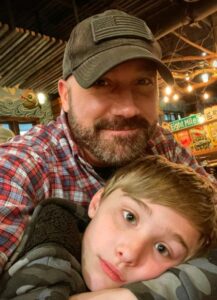 Michael Seufer is one of the first recipients of Envoy Medical’s Acclaim cochlear implant, an investigational fully implanted device designed to restore hearing without external hardware. A father, former hockey goalie, and lifelong user of hearing technology, he now shares his lived experience to help others understand the possibilities of fully implanted cochlear solutions. Through his “Echoes of a Miracle” platform, Michael provides hope, guidance, and real-world insight for individuals and families navigating significant hearing loss.

Gael Hannan is a writer, speaker and advocate on hearing loss issues. In addition to her weekly blog The Better Hearing Consumer, which has an international following, Gael wrote the acclaimed book “The Way I Hear It: A Life with Hearing Loss“. She is regularly invited to present her uniquely humorous and insightful work to appreciative audiences around the world. Gael has received many awards for her work, which includes advocacy for a more inclusive society for people with hearing loss. She lives with her husband on Vancouver Island, British Columbia, Canada.