

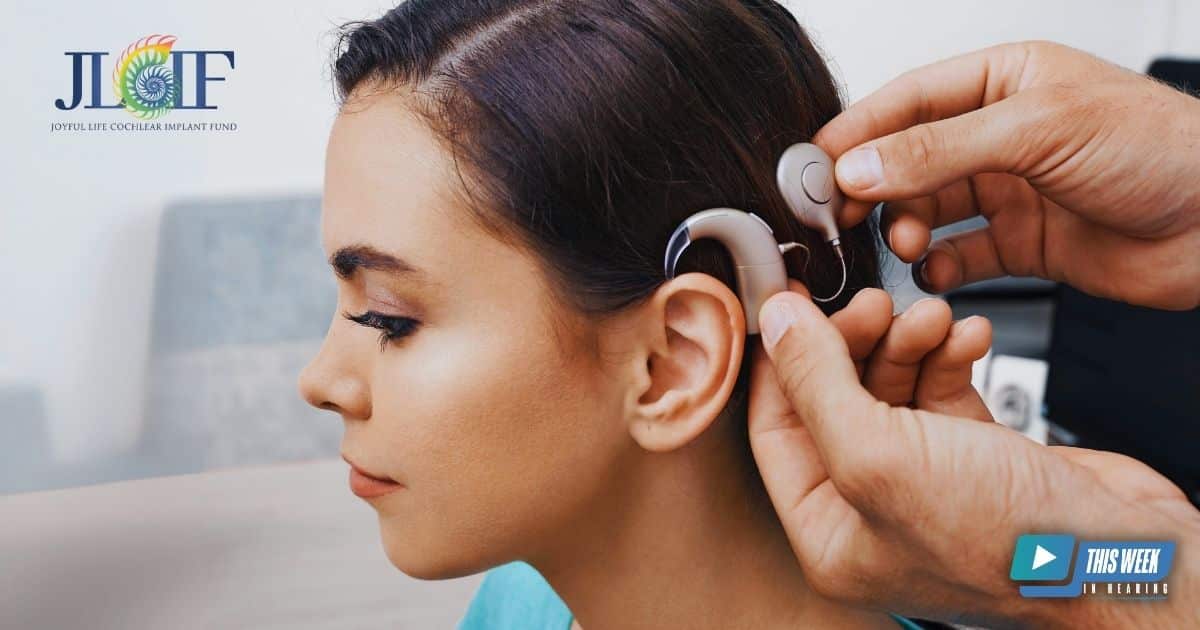
What happens when the technology that restores your hearing comes with ongoing costs that insurance often won’t cover? Angela Irwin—bilateral cochlear implant recipient, TEDx speaker, confidence coach, and founder of the Joyful Life Cochlear Implant Fund—shares her personal journey and why she’s working to ensure no one loses their hearing a second time due to equipment costs.
In this in-depth conversation, Angela explains the hidden expenses of cochlear implant upkeep, from rechargeable batteries to obsolete components, and the emotional impact these challenges can have on recipients.
She also discusses how her nonprofit not only provides financial assistance for essential equipment but also offers coaching and advocacy tools to help people navigate life with a cochlear implant, build confidence, and communicate their needs effectively.
- Learn more about the JLCIF: https://jlcif.org/

Full Episode Transcript
Welcome to This Week in Hearing. I’m Shari Eberts, and today we’re talking with Angela Irwin, a bilateral cochlear implant recipient, TEDx speaker, confidence coach, and the founder and executive director of the Joyful Life Cochlear Implant Fund. A former medical device executive and longtime advocate for hearing access, Angela knows firsthand what it’s like to live between the worlds of hearing and deafness. Through her nonprofit, she’s on a mission to ensure that no one is forced back into silence simply because they can’t afford the ongoing costs of their cochlear implant equipment. So, thank you, Angela, for being here today to talk about your mission. Thank you so much for having me, Shari. It’s my pleasure. So, some listeners might already be confused, right? So at least in the US, cochlear implants are usually covered by insurance. So, what costs are your nonprofit trying to offset? Okay. So, that’s a great question to start with. So indeed most insurance companies, Medicare and Medicaid cover the surgical part of the cochlear implant procedure. What many people are surprised about after the fact is that it… that those very same insurance plans, those very same insurance companies may not cover the ongoing costs of upkeep of the devices. So for example, a rechargeable battery, a cable coil, an upgrade that may need to happen every, you know, five to 10 years. People are caught usually off guard thinking, “Well, if my insurance paid for my surgery, well, of course they’re gonna pay for these ongoing cost.” And so that’s what we’re here to support. We’re here to support the people who are already implanted that may not have the, you know, financial resources to pay for the $250 rechargeable battery or cable coil or, you know, repair and replacement of the external equipment. Right. No, that makes a lot of sense. And so is there a way to estimate sort of how much in dollars this is on an annual basis and, and how that compares with sort of the cost of hearing aid wearers would have for a similar time period? I personally was never able to benefit from hearing aids, so I’m… you know, don’t necessarily have that, you Yeah. great analysis of a comparison. But for a cochlear implant recipient, so I’ve been implanted for over 28 years Wow. which is just amazing to think about. Im so incredibly grateful for this technology and having you know, it just gave me a second lease on life. But certainly I and I think that’s one thing that we are trying to get a little bit more information out is that, you know, helping people understand that, you know, if, if you get a cochlear implant, especially when, you know, children are being implanted younger and younger, which is fantastic with newborn hearing screening and, you know, having that access to access to sound as soon as possible. But what many people don’t understand is that there are gonna be those ongoing costs across someone’s lifetime. Now, you know, if we can help people plan and prepare for that better, I think that’s fantastic. And so I’m appreciative to you to have this opportunity in this platform to hopefully bring that awareness to, to more people. So for example, the rechargeable battery like any other rechargeable battery technology, it only has a certain number of cycles before it doesn’t last as long. And so if, if people, individuals and families can plan for, you know, let’s save some money for, you know, $250 towards a rechargeable battery that you’re probably gonna need every two years at least and same with the cable coil. The cable coil is one that, you know, gets the wear and tear, if you will. Same sort of thing. And then, of course, the the full device the companies usually make them obsolete, so they no longer support, you know, certain generations of the technology and then you can’t even get those replacement parts. And so that’s what we’re here to help with in, in case that we’re kind of the last resort, if you will. We do require that people have exhausted all other options, whether it’s insurance, whether it’s other state programs or whatever it might be before, you know, we will step in and, and wanna help out. The, the bottom line is we don’t want anyone to lose their hearing for a second Yeah. … because it’s so devastating to go through it one time. We don’t Mm-hmm. … anyone to lose their hearing for a second time simply because they cannot afford, you know, the ongoing cost or the upkeep cost. I love that. I… and I think it’s, it’s these nitty-gritty details, right, that are sort of the make or break as in almost anything in life, right? I mean, they, “Oh, this sounds great on paper,” or, “This sounds like a wonderful solution,” but it’s that upkeep and those specific details and that knowledge, that foresight really that can make the difference between success and struggle with a cochlear implant or with any other type of, of hearing device or other challenge. So I really love that mission and the focus on sort of that practical, nitty-gritty aspect that may not get as much attention. Yeah. I mean, absolutely. It’s, it’s such an overwhelming Mm-hmm. … before the surgery. There’s so much to understand. Is, is this thing even gonna work or not? know that’s how I felt. I had tried every hearing aid known to man back in 1997 when I first got implanted, and I was like, “Oh my gosh. None of those work for me, so now you want me to have a surgery and have this device and, you know, all the things?” But it’s so overwhelming as you’re going through that process. You’re trying to decide what brand you want. You’re investigating all these things. You’re, you’re focused on just having a surgery itself is its own… And so people aren’t even thinking really past the surgery or certainly not the activation. It’s like, you know, that’s all you can see in that moment, and then when you get past that and then you’re like, “Oh, wait a minute. There’s ongoing costs.” So it does end up being sort of a surprise, which is totally understandable because it is quite an emotional journey and quite… can be quite overwhelming while you’re in that process leading up to the implantation itself. Yeah. Absolutely. And I know this is really a very personal journey and, and topic for you. Can you talk a little bit about your journey and what inspired your passion for hearing access advocacy and then how that led you to start the Implant Fund? Absolutely and I will say it’s interesting that I’m in this place. It, it feels so full-circle because I lost my hearing. I had… Born with normal hearing at the age of seven, started to slowly lose it. To this day, we don’t know why. But over the course of 15 years. So by the time I was graduating from my undergraduate degree I was really relying on lipreading. Like I said, I had tried all these hearing aids, nothing worked, and I was really… I, I referred to it… It was my mad-at-the-world phase. Oh. I was really mad at the world that my only option to even have a chance to remain part of the hearing world, which is the only world I knew, no one in my family has hearing loss, no one has had deafness, there was just, you know, no knowledge of that. And then to to get this technology and… I basically feel like I got a second lease on life at that point and went on to work for one of the cochlear implant manufacturers for eight years, so I, you know, met incredible cochlear implant recipients and helped families and individuals through the cochlear implant process. So, you know, I have a very deep connection with that and understanding, and like I said, having been implanted myself, I am bilateral with eight years in between, because when I first got implanted, bilateral cochlear implants weren’t even… wasn’t even an option or a thing . Wow. Wow. Yeah. And so anyway, so my husband and I moved to France 15 years ago, which is… I still can’t believe that I had a work opportunity to go. We thought we would go for a few years, and here we are 15 years later. Wow. But I always knew in France, our, my health insurance covers those costs that I talked about. So if I need a new rechargeable battery, I get reimbursed by our national healthcare service, and whenever I would get an upgrade when I moved to France, I was sending spare parts back to my friends in the US, the people that I Yeah. … met while I was working for Cochlear and so it was sorta, always sort of in the back of my mind that that was an issue, and then I, I really can’t explain it, but when COVID hit, I just couldn’t stop thinking about it. I felt so incredibly grateful that I didn’t have to worry about, “How am I gonna afford to keep, you know, these devices running?” And I just wanted that for everyone else, like I said at the beginning. It’s just, I don’t want anyone to have to lose their hearing a second time, ’cause, you know, when you get the cochlear implant, there’s rehab, there’s stuff that needs to happen, and we work so hard and we become so dependent on it, you know? Our whole lives revolve around it, and at that point, I had been out of the, the US for 10 years, so I thought, “Oh, I, I bet there’s a lot of organizations that might be helping with such a thing.” So I reached out to the manufacturers and they were like, “Actually, there really isn’t, and we would love it if you would do that.” And so I remember hanging up the phone because I thought, “This is gonna be one phone call.” I thought, “Surely they’ll say, ‘Oh yes, there’s lots of organizations that are-” helping with this exact thing.'” And I’m off, I’m off the hook and great. You know, I’ll just go on my merry way. And when I you know, got the exact opposite news, I just remember hanging up the phone and saying to my husband, “I guess I’m starting a nonprofit organization.” Oh. Wow. And no experience in nonprofits, no desire. Like, that was never on, like, any sort of bucket list … any list at all. I was just like… I just was like, “I, I have to do something.” Because I… Again, like I said, I just felt so grateful that I don’t have to wake up and worry that, “Oh my God-” … loss. Whats gonna happen if, you know, one of the sound processors isn’t working? What am I gonna do? So that was sort of the genesis of Joyful Life Cochlear Implant Fund. And we officially launched in October of 2020 so we’re coming up on our fifth year anniversary, which is also hard to believe, Wow. Congratulations. That’s really amazing. Thank And thinking of the impact that you’ve made over that five years must bring you just a lot of joy and satisfaction. And thinking about how you’re gonna continue to do that. Yeah. It’s you know, I, I’d like to say… So again, so we are tiny. We started, I put a little seed money in to kind of get us going, get us a website, trying to get the word out, if you will, that we are here to help. And but so I’d like to say that, you know, yes, we’re, we’re tiny, but our impact is mighty. Because as people with hearing loss or people with cochlear implants know, it doesn’t just impact the person. It impacts everyone they come in contact with whether it’s school, work, you know you know, all those things. It, it doesn’t just impact the individual, it impacts everyone they come into contact with. Absolutely. So, if we can keep someone in stable hearing that really does impact everybody in their circle. So yeah. Absolutely. Absolutely. So, can you talk a little bit about some of the main activities and the initiatives of Joyful Life Cochlear Implant Fund? So I know there’s obviously the funding, but there are, is additional support or coaching. Can you talk about some of those activities? Yes, absolutely. Very happy to. And again, very happy for the opportunity to share this, which I know is very near and dear to your heart and all the fabulous work that you’re doing. So we do have, we have two programs at Joyful Life Cochlear Implant Fund. The first one being the product support, so just keeping people on the air with stable hearing. The second one is life and confidence coaching. So, after my career in medical devices, I did a career change at the age of 40 and am doing confidence coaching mostly for women leaders. Mm-hmm. And what we find out, and as you very well know, there… The emotional side of hearing loss is not discussed enough. Mm-hmm. Although, you know, you’re doing a fabulous job of bringing it to the forefront. Navigating life with a cochlear implant is also really not… You know, the companies try their best. You know, they, they’ve got a lot of, you know, a lot of recipients to support. And so, that was really important to me as well, to have that emotional support sort of guiding people along that process. Even, again, because cochlear implants aren’t really that well understood. Mm-hmm. I, I liken it to so… Many people don’t understand that these are considered a prosthetic device, much like a prosthetic leg, or arm, or limb. Interesting. However you wanna call it. When we have it on, we can do almost anything. Mm-hmm. When we don’t have it, then, you know, our world becomes smaller. Mm-hmm. And also I think that people also don’t understand about cochlear implant surgery is they think, “Okay, you can have the surgery.” And like a knee surgery or a hip surgery, “Oh, you’re gonna have a little rehab and then boom, life is back to normal.” And it just doesn’t work that way. It’s like every single day, we are thinking about this, we’re having to make sure we have our batteries charged. You know, also like hearing aids as well, but thinking about what situations might I be in in that day. And, you know and so when you have people who have Well, any of us really, if you have progressive hearing loss, but certainly those folks that have sudden deafness and they’re just like floundering out there in the world, or any of us that get a cochlear implant. Like, how do you even go back to work and explain to your coworkers? Because they’re expecting you to come back, “Oh, you had the surgery and now you have normal hearing.” … it doesn’t work that way. I wish. Yeah. so much pressure, put so much pressure, on the person who’s already like just overwhelmed with everything. And so, some of the coaching that we end up doing is just simply how do we explain to people what, what in the world this device is and how does it work? And explaining why we don’t just magically have normal hearing again, because it isn’t normal hearing. I mean, I, I am again, beyond grateful and blessed with the level of hearing I get from it. But it’s, it’s not normal hearing. And at the end of the day, when I take it off at night, I am indeed clinically deaf, you know? So there’s that navigational piece of it that I really think is important to help support people in that. And just, yeah, explaining, you know, to people and helping raise awareness and that advocacy of that emotional side of it as well. Absolutely. And I think it’s so misunderstood, just hearing loss in general, whether it’s cochlear implants or hearing aids, that they’re not like glasses, right? That’s the most similar thing. People think, “Oh, okay, when I put on my glasses, now I can read the small print on the menu.” Or I can see in distance. And with hearing aids and cochlear implants, it’s I mean, it’s a an amazing transformation. It’s hugely helpful. But it does not bring that hearing back to normal. There’s so many other skills and, like you said, sort of planning ahead and making sure everything’s charged. And there’s other aspects to it that-… I think people don’t necessarily understand sometimes the people with hearing loss, you know, the hearing challenges don’t understand it, in addition to the family and friends and coworkers and everyone. So, this education piece is so important, and it starts really, like you said, with educating the person so that they can go out into the world and explain it to others in a way that’s clear and non-confrontational, and so that it leads to the ability for them to advocate for themselves so they can build some good communication around them. That’s exactly right. I love your description. That is exactly right. How they can, you know, put together the, the the language to advocate for themselves as well. Yeah. I remember I was you know, working with a, a lovely lady who sudden, sudden hearing loss, you know, woke up and pretty much deaf over the course of a few days, few weeks. Got a cochlear implant, and again, the family and friends, everyone, the expectation of, “Okay, well, now it’s, everything’s fine.” Whoo. “And you’re back to normal.” Boom. And she’s, like, Yeah. … you know, floundering. And and I remember we spent some time even coming up with short scripts of you go to the post Mm-hmm. … what do you say if you can’t hear? Because that needs to be, that only needs to be this amount of information. Right. Versus, okay, what do you say to your coworkers when you come back to work or when you have a new coworker and you’re explaining, “I have this cochlear implant.” That’s a little bit more. You know, what do you say to family and friends? That’s a little bit more. So, we literally work on how to find that language to explain. Mm-hmm. And also you know, to your point in that the self-advocacy is such an important thing, explaining to your family, “Well, yes, I have this device. However, in a noisy restaurant, I still…” I mean, I still, you know, 29 years in, practically 29 years in, I still lip read. I mean, that was a self-taught survival skill from age of seven, losing my hearing, I will always lip read, just because it just makes it a little bit easier. I hear wonderfully with my cochlear implants, but if you get into a noisy environment, you Yes. … you’re trying to just bring in all the tools that you can have. And so, that’s what we’ve you know, sometimes spend time on in, in the coaching process, and then just, again, building that confidence and so that you do have the confidence to to speak up and advocate for yourself. Right. And to know what to ask for, right? Because if we just say, “Oh, well, you know, I’m gonna have trouble hearing in this environment,” people say, “Oh, that okay.” But we need to say, “Well, so what you can do to help is to make sure you’re facing me, so I can lip read.” Or, “Would you switch seats with me, because you’re in the shadows?” Those sort of very specific verbal requests are so important, and it’s having the confidence to do that and the language to do it, like you said. So, that’s that’s wonderful that you’re focused on that. So, how are you letting people know about the fund and, and how to apply for grants? And you did mention that there is a screening mechanism. Can you provide any more details about that? Absolutely. So if you just go to our website, our website is jlcif.org. You can go there and apply for both programs, or both support, the product support as well as the, the life and competence coaching. We do, as I mentioned earlier, require that people have gone through, exhausted all other options, whether that’s insurance, Medicare, Medicaid, state programs, any other aspects. The manufacturers all have, you know, like Care Credit usually programs and that sort of thing. So, we, we, we, we really are the, the last stop. Okay. And so one of the ways there that’s the main thing, and, and we have been around for five years, but I feel like we’re a very well-kept secret. So, that’s why I’m so grateful to, you know, be here with you today, ’cause you have such a you know, audience and a reach. We do need help, you know, five years on, we do need help letting people know that we are here and we are here to, you know, again, like I said, just make sure people have that stable hearing. We don’t want them, like I said, losing their hearing for a second time. It’s just heartbreaking when I think about it. Absolutely. No, well, I really appreciate you being on the podcast today and talking about all the expertise that you have and your mission and the backstory. I think it’s just such a clear passion and such an important project. So, thank you so much for all your work on these efforts. If people wanna learn more about Joyful Life Cochlear Implant Fund, they can visit jlcif.org. So, thank you so much, Angela. I really appreciate your efforts and for your being on the podcast today. Thank you, Shari. I really appreciate the opportunity as great to talk with you and get, get the word out a bit more. Absolutely. Thanks so much.
Be sure to subscribe to the TWIH YouTube channel for the latest episodes each week, and follow This Week in Hearing on LinkedIn, Instagram and X.
Prefer to listen on the go? Tune into the TWIH Podcast on your favorite podcast streaming service, including Apple, Spotify, Google and more.
About the Panel
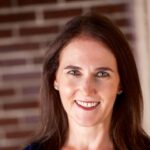
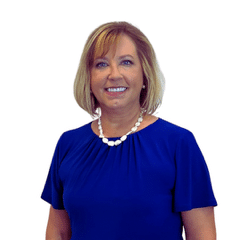 Angela Irwin is a bilateral cochlear implant recipient and the Founder & Executive Director of the Joyful Life Cochlear Implant Fund, dedicated to ensuring recipients have the support they need to thrive. After experiencing progressive hearing loss throughout her childhood and early adulthood, she received her first cochlear implant in 1997, regaining not only her hearing but also her joy of life. With a background that includes eight years at Cochlear Americas and an MBA, Angela combines professional expertise with lived experience to advocate for and empower the cochlear implant community.