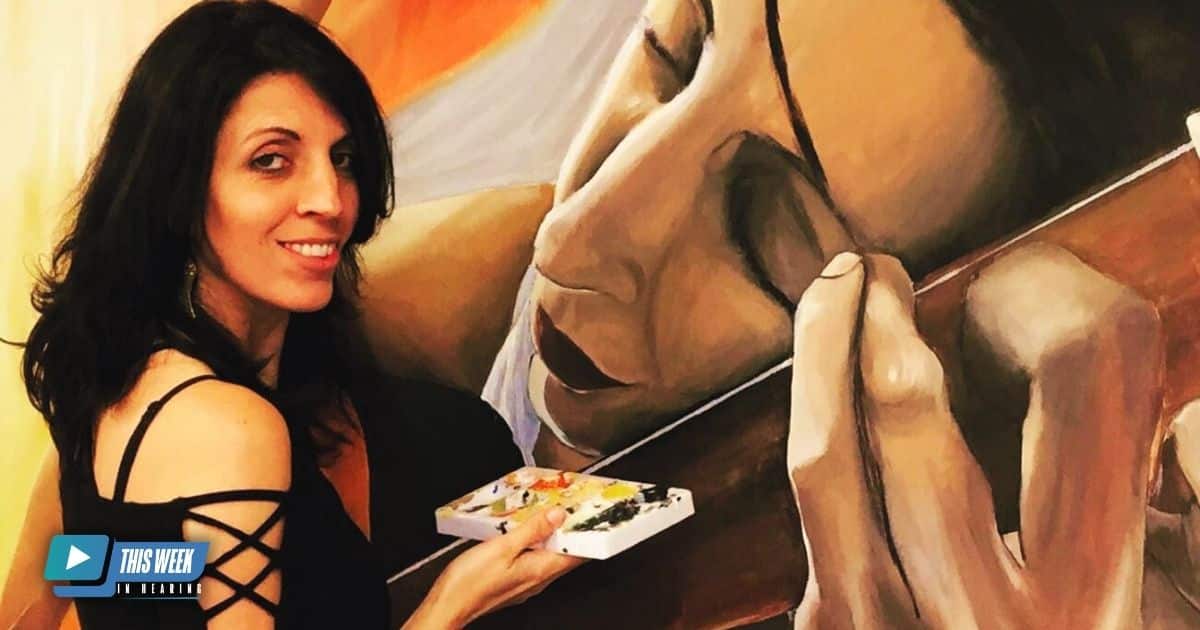
What happens when hearing loss shapes an artist’s path? Priscila Soares—a Brazilian-American artist, illustrator, and mother—draws on her experience with single-sided deafness and raising a child with profound hearing loss to create artwork that reflects, honors, and connects with the hearing loss community.
In this thoughtful conversation, Priscila shares how reconnecting with her creativity through therapy led to a growing body of work now featured in audiology clinics, children’s books, and private collections. Her art conveys both personal and shared experiences around hearing difference, helping others feel seen and understood.
???? Explore Priscila’s collections here
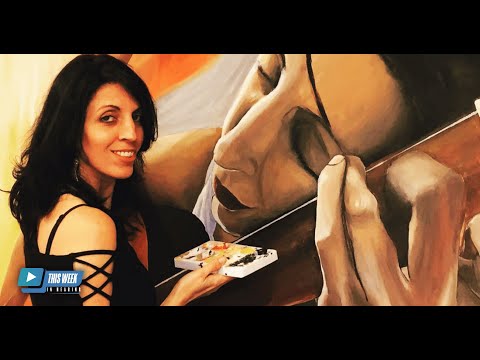
Full Episode Transcript
Hello everyone and welcome to This Week in Hearing at the Hearing Loss association of America, or HLAA conference. Earlier this year, I took a quick first pass through the exhibitor space. When it opened, there was a table called ‘My Lucky Ears’ there and nobody was there and, and I was just about to walk on by when this book caught my eye. It got my attention because a couple of months before my wife had purchased it for her primary school library. I had to hold up a print of the COVID because it’s summer break here. I really would have liked to go into the library and show it on the shelf, but it’s locked and we can’t get in. Now at the booth, no one was there, but I gathered that it was that of Priscila Soares, the illustrator. So I made a mental note to come back and introduce myself. After hearing Priscila’s story, I was sorry I didn’t bring my recording gear because it’s one every hearing care professional or industry person will enjoy. Fortunately, she agreed to meet me online so I can share it with you. Priscilla, welcome to the show. Since your story is your introduction, let me divert from my usual practice and ask you to describe your background before you began your career as an artist. Thank you so much Andrew for this opportunity. I’m so honored and happy to be here right now. Well my journey began. Well I’ve always felt like an artistic person my entire life and I actually moved from Brazil to the United States to study motion picture. But when I was still in Brazil when I was a teenager, I was told that I had a mild hearing loss on my right side due to cholesteatoma and it had already perforated my eardrum. So I was going to need surgery. And I did the surgery while I was still in Brazil. But unfortunately something went wrong in the process of doing it and my ear completely shut off. And with the whole experience, I still don’t know what happened there. Nobody really could tell me what was the issue. And I was just kind of led on to continue my life as if it didn’t happen, you know, and, and try to wing it the best way I could. I had no advocacy, no, I didn’t know anybody around my age with any kind of hearing loss similar to mine. And I was just living life as a you know, a mono hearing person, a single sided deafness. So when I moved to the US to study motion picture, I was still finding some difficulties, especially in group environments and presentations. But I kept just trying to pretend that that was not an issue. That Was not there. Nobody ever told me about cochlear implants or hearing aids or anything like that. And when I was in my mid-20s, I had my first son, Lucas, and then I had my second son, Jason. But right before I had my second son, I find out the cholestoma is now on my left side. And he had already corroded the ear bone, the bones in my ear. So with that, I, of course I had to do another surgery to remove the cholestone because they told me if I didn’t do that, I would eventually become completely deaf. This time, the surgery was very successful, but because it had already corroded the ear bones, of course, actually the cholestytoma itself was conducting the sound inside my ear. So when it got removed, I just immediately felt the difference. My hearing went way down. And I’m like, okay, now I’m struggling. So that was the first time that I was indicated to wear a hearing aid on that side only. And I began using that as a way to help me. But this is when my struggle got a lot stronger. So through, through those years, I was really subconsciously playing safe and doing jobs. I began to work as a designer and a photographer. A lot of one on one work, working with small businesses in a way that for me was more controllable. Group environments, noisy environments were very difficult for me. So knowing how uncomfortable that felt, I just kind of avoided them altogether as much as I could. So my calling to actually try to grow with my art was something that got put onto the shelf, especially after my second son was born because he didn’t pass his hearing screening test at birth. So we went to do some testing, further testing, and we did some genetic testings. And it’s like, yes, he was diagnosed completely deaf, profoundly deaf. And we found no connections between his deafness and my hearing loss. I don’t have anybody else in my family with any kind of hearing issue, and I was that my cholestoma was most likely due to a lot of ear infections as a child. So that was very surprising to me, you know, to have a son who was just born deaf. And we couldn’t figure out exactly why and how that happened. But the interesting thing that happened around those times is that as soon as my son was born, we had people calling us up and introducing him into a world of a preschool program with total communication and a specialist that were coming to our house on a weekly basis and helping us with learning sign language, language and learning how to, you know, help him with speech. And at that preschool that we would go to is where I for the first time found the community of people who are deaf and hard of hearing, people with hearing differences of all ages and all kinds of different hearing losses. And something really happened to me with that because I thought I was there just to help out my son. But that experience actually ended up helping me awaken something inside of me about the way I felt about who I am and how I accepted parts of myself that I felt that were debilitating about me, such as my hearing loss, you know, and there was a self empowerment that began to happen around those times. Well, that’s interesting really, because a key point what you said was, is that we all need community to help us through these times. And for you especially really to have two completely different and unusual cases between your son and yourself had to be very, very diffic. But the power of finding your community to help you pass that. And maybe it’s a, you know, it’s an interesting and fortuitous coincidence that I met you at the HLAA conference because that is a nationwide community to support people such as yourself. So there’s some good karma going on there. But now you took those two, those two things and really you took it and you took action on it and you really turned it into something that’s positive for a lot of people. How did that journey begin, actually? Well, when I was about to turn 40, you know, my kids were in that preteen age and you know, especially my youngest, Jason, who was you know, needing so much help when he was young, we learned communication because one of the biggest differences between him and I is that I started losing my hearing after I already acquired language and him was before. So there was a lot more work to be done. And even though he was fit with cochlear implants and he was being successful with it, you’re always working, you know, those things. So the focus on myself wasn’t that strong until we got to that time when the things were just kind of moving along just fine with the kids. And all of the sudden I just felt lost, you know, when I had more time for myself, I’m like, I don’t know, there’s something missing inside of me and I don’t know what it is. And I went to do therapy. And doing therapy, the first thing that, you know, during the conversations, like, Priscilla, you don’t have, you don’t give space to yourself. You don’t honor anything really about yourself. You’re just like Giving yourself to others so much, to the family, other people, that where is that space? What is it that you really want? So that investigation began. And the funny thing is, is that my therapist actually in one session, she led me through this meditation. And it was a meditation that I had to meet this wiser version of myself. And I asked this wiser version, you know, what message do you have for me? And she said, trust and let go. And when the meditation was over, Andrew, I’ll tell you, I, she, my therapist asked me, so what do you think about the message? And I said, I feel like I made it up. It sound. It’s so like so obvious. Like it’s such an obvious outta my go. It was a pretty thing to say, you know. So I kind of dismissed it a little bit like it was no big deal. And she kind of chuckled in my answer. But she said, well, even so, you know, why don’t you go home and you maybe do a little journaling on it or maybe do a piece of art. And I had no idea what that moment would unleash to me like, right, that, that little proposal that she gave me. Because I went home and I looked at my room and I saw my art mater materials collecting dust that I would just buy and put on the shelf. One day I’m gonna use it and all these ideas that I had, like, one day I’m gonna do this, you know, one day I’m gonna create that and all these artworks that I had started and never finished. And I’m like, well, I guess I’m gonna do a piece of art. But knowing that I had a tendency to self sabotage, I was like, all right, Priscilla, you have one rule and one rule only. It doesn’t matter the material, it doesn’t matter the theme. And it doesn’t even matter if you’re going to like what you make. The only thing that matters is that you completed within a week. So you can tell your therapist on the next session about the experience. So that. Well, you know, it’s funny, I thought of something my, in my wife’s former occupation is a Montessori teacher. They had a mantra which was it’s the process, not the product. Exactly that. So that was the focus right then. And at the same time, you know, I was exploring in this inner investigation because I was really looking for like, what is it inside of me that’s missing? What is it that I want to come? What’s my essence? You know, who am I really? You know, before all this conditioning, before all of this, the parents and cultures and society, limitations, you know, who is this Priscilla that wants to really be seen and. And have a voice and to myself? You know, I wanted to look at myself in the mirror and see me. So I decided to do that through the arts. You know, just this process of, like, I just want to discover what I want it all to come out in, and so I be doing that. So I was portraying my story with my hearing loss. I was portraying my story with my disconnection, with my inner self and wanting to regain that. And as I begin to make pieces, something erupted inside of me that was like, oh, my gosh, all these years, not only I’ve been collecting all of these things to be ready for this moment, waiting for this moment to happen, but also everything that I’ve gone through was serving for the moment. So all of my stories, everything, all of my experiences, and it wasn’t about waiting for the right moment to come. It was about me deciding when is the right time for me to finally do that. It had to come from myself, from my choice of prioritizing what is so important about me. Me and when is it? I’m going to give myself the honor, the time to decide. Now is the time. So that’s when I began doing it. As I began doing that, I began to share it on social media, begin to share it on galleries, locally and people. I ended up getting a studio. Things just started falling into my lap because I was just feeling so. I was glowing. I was just like, oh, my gosh, this feels so amazing. I was feeling liberated. I’m like, I can’t believe I’m finally doing all of this. So just for myself, that felt magical. I didn’t want to stop doing art. I. Every day I was like, I want to make more. I want to make more. I want to make more. So I began having this collection of art that began to show up. And as that happened, people that are having. That were going through similar experiences, be it with hearing loss or anything that had to do with what I was portraying, begin to respond in a really positive way. It’s like, wow, I feel so connected. This is making me emotional. This is really touching me. I really see myself in this piece and that piece. And it was often that people would come to my studios and begin to cry when I would share the story behind each of the pieces that I was doing something that I was so not knowing that was going to happen. So with that began the desire of, like, well, now I want to portray other people’s stories, too, you know, because I really believe that our stories are important, and I want to honor that about every person. So I began to ask people, send me your stories because I want to portray you. And I began to portray person after person, people with different hearing stories, also knowing that hearing loss and deafness is often misguided and misunderstood. You know, people tend to think, for example, if you’re completely deaf, that you obviously are going to use sign language or you read lips. And that’s not everybody’s experience, as you probably know. So I wanted to change that. I’m like, we all have very individual ways of dealing with our hearing differences. And I wanted people to know about those stories, all of these different ways, and break a little bit of that taboo, that stigma around it, and make the people that are going through those experiences feel like it’s okay to be who they are, whatever that is. Like, I didn’t feel comfortable with that when I was younger. Don’t we all want to know that we’re not alone in our experience, especially a difficult experience? Absolutely. Is what you said about community, right? So, like, putting people Together. And what a beautiful way my way of doing that became doing it through the arts, you know, So I wanted to connect. So that one thing began to lead into another. So I began. I got invited to do children’s book illustrations, just such as that one that you, your wife, purchased for the library. And and I started doing illustrations in itself. And that’s when, as time went on, I noticed that especially audiologists begin to purchase my work to put on walls. I have an audiologist in a local audiologist. And I had a local art show last year, and she came over. I invited her to come over to my opening to set up a booth to teach people about hearing health. And when she was in my event, she said, priscilla, you know, when I was trying to decorate my space, you know, my workspace, I looked everywhere and I couldn’t find any art that was kind of like the art that you’re doing. You know, you’re the only one doing this. You need to go to the conventions, you know, you need to get yourself out there. And that’s when something clicked inside of me. Because, Andrew, I remember so well doing my first audiograms when I didn’t have the community, when I didn’t have the advocacy, when I didn’t have the self empowerment, when I was first getting the diagnosis. And I remember how sterile and scary those rooms felt for me. I felt very alone. Now, that is not a reflection of how these professionals usually feel towards their patients, because I’ve known so many audiologists, especially after my son was born, who are so dedicated and so caring and so wanting to help. You know, their patients, they go out of their ways. They became family to me. So many of them are family to me. They’ve just done so much for us. You know, it wasn’t just for my son. It was for all of us always wanting to help. But not always. Their spaces, their offices, their clinics are really reflective of that. So I made a mission. I said, I’m going to become relentless about creating content to make the community of people with hearing differences be honored, feel seen, feel represented in a positive way. And I hope that every clinician will decorate their spaces in a way that reflects the passion that they have inside for their patients. Okay. And so that’s really, really the goal then, right, is to make the space reflective of their own passion. And also, I suppose, especially with children, right, when they come in to see themselves represented in art and then can feel connected with that art and with the space, rather than being scared by it is there a fair way of putting it? Absolutely. That and the parents, because so many of the children that are diagnosed, you know, with hearing loss, they come from hearing parents. So the parents have no idea what that world is like, you know, they are scared themselves. Like I was too, even though I already had hearing loss. You know, I felt like I was in a different world with my son, going through it. So we want the environment to be that positive, welcoming environment in every way possible. So when you come in for the first time into an environment and everything that’s surrounded in, in there, in the decoration, in the way it’s seen it is what the art, why the art is so important. You know, when you see all of that being reflect in a positive way, in a welcoming, fun, light way, it will not only make you feel welcomed, but you will induce the right questions, right. The kids are going to want to see like a little co. Clear that looks whimsical and silly and fun, you know, doing something cute. And they’re going to be asking what is that? And then it becomes a conversation, you know, that you can start having. So I want these to be part of the conversational pieces that can start, you know, them to be introduced in the hearing loss world and the hearing differences world in a very positive way, in an embracing and nurturing way. So that’s the mission. Okay, so you’re really doing two things now, right? Like, like this book was published by a major publisher is no small thing. So now you’re doing illustration, but then you’re also doing art mostly for audiologists. Or would people find your art in other settings as well? No, they have. Huh. They find my art in other sightings as well. I mean I do for all the, the hearing health, you know, professionals, but I also do for the families themselves. I do accept commissions, you know, from people. So sometimes people come to me like would you portray my child or would you portray me or my story? So I still do that too. And I still have a whole other aspect of my art which is in general just about my self growth and, and the way I view the world, you know. So I do a lot of a big artworks big sculptures and, and big paintings, large paintings and so that I offer. I usually exhibit either locally or really anywhere within the US So I do that as well. And I facilitate art sessions too. You know, I want, once I went through that whole process of liberating myself to do more art, to connect with that creativity within myself. I really also felt a desire to want to help others who are missing that part of themselves to really get closer touch with it. So I became certified in art, life coaching and breath work to really help people to go through those experiences as well and see if they can unleash and connect with their inner creative. So I understand you’re also doing other things besides the art. Tell me about that. Yeah, actually, as I’ve been doing the art and going to these conventions, I’ve also been doing talks on stage, sharing my story and sharing the mission behind the story, and advocating for the importance of having art on the walls of medical spaces that makes the patients feel seen, related and relatable and honored. So that’s been really exciting. And I just did a talk this year on the audiology convention in Australia. So that was really great. And I’m about to do one at CENTAC in December where I’m going to be advocating for patient advocacy. You know, we came this close to meeting each other because I was in Australia just a little bit before the audiology Australia conference, and I was debating whether I should hang out for a week or two, you know, and work from Australia and then attend it, or should I come back home? And I ended up coming back home, so I didn’t go, which was really too bad. But I’m so glad we got to meet at hlaa. I guess it was meant to be one way or another, we were meant to meet. So you’ve really, I mean, you’ve turned your experience, which some people might just, you know, it might make them withdraw. And yet you turned into something that’s far greater than yourself. And I very much appreciate that. Now, if I’m a hearing care professional or related in the industry, how do I see your art? Where do I go and how do I learn more and order pieces? Yeah, you can just go to myluckyears.com and it’s all in there. It has all of the different types of art that I do for children and adults and a page also for, you know, taking commissions or just having a conversation. You can also find me on social media. I’m always on my luckyears.com so Instagram, TikTok, it’s all in there. I love to connect and talk to people, chat. So if anybody wants to communicate with me, I’d be happy to respond. Terrific And you want to have any last words before we finish this conversation? Well, first of all, I’m so happy that we met. That was a great little piece of connection in there. I just love going to these events. That’s something that I want to continue to do. At this point, I guess I just want to say that the mission of what I’m doing became bigger than myself. So right now, I see there is a lack of it, and I really want all these health professionals to see that there is a way of flourishing your walls and bookshelves with stories and images that make the community of people with hearing differences to feel honored, seeing and represented. So, you know, if there’s anything I can do to help that happen, I’m here. Well, it’s wonderful what you’re doing, and I wish you every success in the future and look forward to seeing you at the next conference or show sometimes. Thank you. I’m looking forward to it. I appreciate it. Andrew.
Be sure to subscribe to the TWIH YouTube channel for the latest episodes each week, and follow This Week in Hearing on LinkedIn, Instagram and X.
Prefer to listen on the go? Tune into the TWIH Podcast on your favorite podcast streaming service, including Apple, Spotify, Google and more.
About the Panel
Priscila Soares is a Brazilian-American visual artist and illustrator whose work explores themes of identity, hearing difference, and empowerment. Living with single-sided deafness and raising a child with profound hearing loss, she creates deeply personal art that reflects the lived experience of hearing loss and disability. Her work is featured in audiology clinics, children’s books, and private collections, serving as a powerful bridge between art, advocacy, and accessibility.
Andrew Bellavia is the Founder of AuraFuturity. He has experience in international sales, marketing, product management, and general management. Audio has been both of abiding interest and a market he served professionally in these roles. Andrew has been deeply embedded in the hearables space since the beginning and is recognized as a thought leader in the convergence of hearables and hearing health. He has been a strong advocate for hearing care innovation and accessibility, work made more personal when he faced his own hearing loss and sought treatment All these skills and experiences are brought to bear at AuraFuturity, providing go-to-market, branding, and content services to the dynamic and growing hearables and hearing health spaces.