What happens when technology, human connection, and sign language expertise come together to close access gaps for the Deaf community?
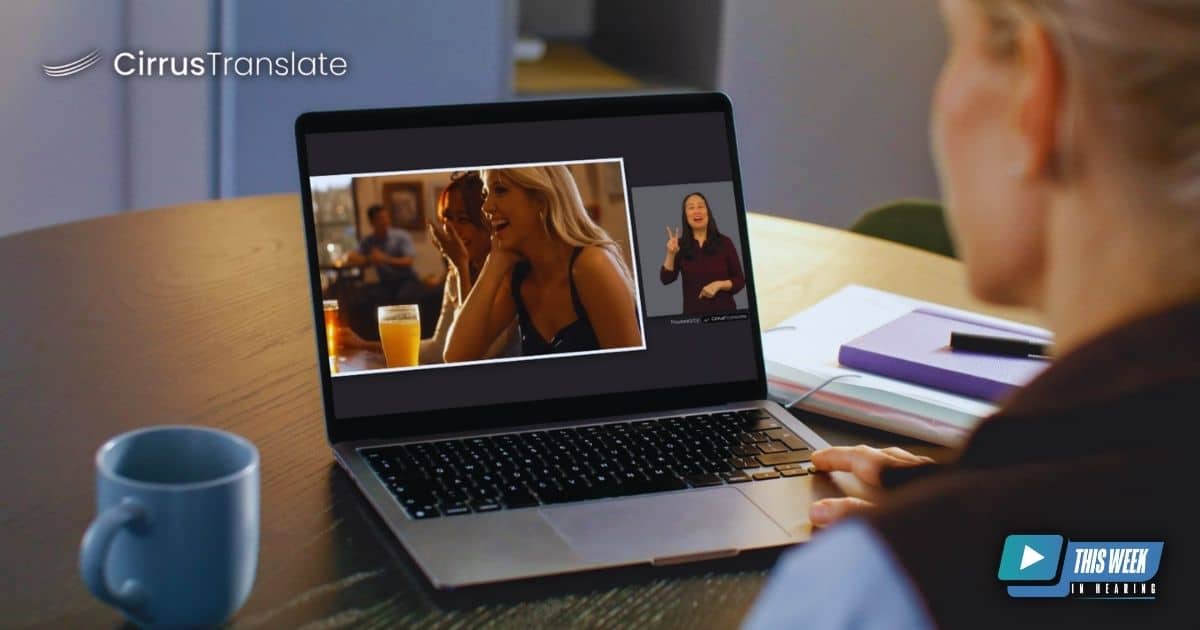
In this episode, Shari Eberts sits down with Cirrus co-founders Chris Fillman and Rhett Youngberg to explore the mission behind CirrusTranslate—a new AI-assisted, human-delivered platform for American Sign Language (ASL) translation.
The platform aims to increase accessibility while protecting the role of qualified interpreters. The conversation highlights challenges in interpreter education, limitations of automated tools, and how Cirrus is working to support Deaf access in healthcare, education, and beyond.
- Learn more at: https://cirrustranslate.com

Full Episode Transcript
welcome to This Week in Hearing. I’m Shari Eberts, co author of Hea & Beyond Lives Skillfully with Hearing Loss. Today’s guests are from Cirrus, a sign language firm that provides education, focused interpreting, interpreter training and, and digital ASL translation services. Their latest product, CirrusTranslate, is designed to make ASL translation easier, increasing access for the Deaf community. Joining us today are Chris Fillman, the founder and CEO of Cirrus, and Rhett Youngberg, the company’s co founder and chief technology officer. So thank you both for being here to talk about your latest product launch. Thank you. Thank you for having us. Absolutely. So Chris, let’s start with you. For people who are not familiar with Cirrus, can you give us a little bit of history on the company and its goals and why did you decide to start this company? Yeah sure. Thank you for the question. We, we started Cirrus back in 2020 and really with a very simple but clear goal in mind. To improve access for the Deaf community to information. For information to be accessible to us isn’t just, you know, a privilege. It’s, it’s, it’s something that is a fundamental human right. And for me and my wife, we are, some of our closest friends are Deaf. For her that connection goes back to when she was just a little girl. So we’ve seen firsthand, you know, how limited access to information, it just, it can impact not only understanding of vital information but also opportunities. You know. So we, and we started by asking in the beginning what, where do we go with this vision? What can we do to make the biggest impact? And so what we started and decided to kind of hone in our focus and start with was educating interpreters. Because interpreters are the first line of defense, you could say they’re the first people that every day in their day to day lives are coming to contact with Deaf people at schools, work, their places of employment, maybe government jobs or, or agencies. So our first focus was let’s create a platform with a yearly summit that we can bring together in interpreters from all walks of life with subject matter experts, ASL experts, some of the most respected and renowned teachers in the ASL field worldwide and that we can, you know, improve, improve the quality of, of the interpreting services that are out there. So that was, that was kind of where we started. We thought that will have, will have a big impact. And during covid that was huge because people were going to, in person trainings and of Course that wasn’t an option anymore. So our platform was at the beginning and still is all virtual. And so we’ve, we’ve thought very highly of that, that platform that we started and then we moved eventually into interpreting with a strong focus on educational interpreting. School districts is probably where 90, 95% of our work is in interpreting because we thought we’re better to start with young deaf students who they need to have the best possible access to education. And then we’ve now just launched our newest product, CirrusTranslate, which from the very beginning, day one, our vision was to have a high quality sign language translation product that could, you know, be used at scale and nobody else was really, really addressing that need. And we’ve now made that, you know, vision a reality with the recent release of, of CirrusTranslate. So we’re super excited about that. Awesome. Well, it definitely sounds like a labor of love and very well timed with COVID Right, Because I know that there was really a shortage of interpreters at that time because everyone was in such demand for the ability to communicate. And that was good timing on your part to really focus on that at that time. So can you talk a little bit about what makes Cirrus unique from other companies in the sign language space? Yeah, sure. Id say what. And Rhett’s going to probably speak to this more than me as our CTO. But I would say what makes Cirrus unique is our focus. We’re sort of always laser focused on innovation and efficiency. How can we solve the complex problems that come with, especially translation with. Without sacrificing quality. So that’s always kind of been our focus is being innovators and how can we be more innovative and efficient? I guess so in the translation space, like I mentioned specifically, we we have used automations and AI technology strategically, not to replace human translators, but to handle everything else possible. You know, the things that aren’t really critical and important to a Deaf person that just wants the best possible information, the most clear possible message, intaking new jobs, a file preparation, file storage, subject matter, prep editing, post production, delivery, all those things. We found ways to use technology to strategically shorten the time frame needed and make it more efficient, but also kept human skilled translators really at the heart of translation itself. No, that’s for. That makes a lot of sense. And how long does it, does it take to have a translation done typically? Is that something that’s A couple of days, a couple hours. How long does it take take to do that? Well that’s a great question. And because it’s not we, we have human translators. Right. So because it’s, these are not machines, it depends on the complexity of the project itself of the subject matter. Our teams take their time to get the message. Right. That’s the, the top priority is, is accuracy and clarity. And, and many times many projects we do are not life and death. They’re not extremely, I guess you would say very risky to translate accurately. You know for example we’ve done a lot of children’s videos and educational piece. Those can be done very quickly typically. But other subject matter takes considerably more time. So we typically say, and Rhett maybe could answer better as our CTO what our average is. But I think it usually takes just a few days typically right now to get high quality translation back. Course depending on how long you know it’s a 70 page document might take a little bit longer. Fair enough. That’s right. Okay, excellent. So let’s dive a little bit more into your newest product, CirrusTranslate. So can you talk a little bit more about what it is and how it fits into the company? So yes, CirrusTranslate is an amazing new platform that it helps companies, schools, government agencies, nonprofits, any organization to make their content accessible to the Deaf community. And in a way that’s not only accurate and clear but also builds trust and conveys emotion. So for our clients it’s first and foremost many of our clients, it helps them with ADA compliance which is critical. But also beyond that it’s for clients it’s very easy to use as well. Just takes a few minutes typically to upload your content, get a quote which we are able to do with AI now. And you’re on your way. And so it’s very easy to use very simple. Theres no reason not to use it as far as that goes. You know, since we’ve made it very, very user friendly. But from the very beginning back in early 2020 this product was, was the ultimate vision. This was, this was what we wanted to accomplish but it definitely took time to build up to it and make sure that it was going to be. We didn’t want to release it before it was really a really ready. So we’re very excited. It combines human skill and technology to deliver high quality ASL translation at scale with simplicity, which is really something that hasn’t really existed before. So we’re super, we’re super excited about it, as you could tell. Yeah, that’s wonderful. Congratulations on getting to this final goal. I think that’s really exciting. I mean sometimes people wonder in terms of making things accessible for the Deaf community, why captions or captioning wouldn’t be enough. So can you talk a little bit about that? Why ASL translation is a critical part of accessibility. Yeah, I know this is a pat. This is a subject Rhett in particular is very passionate about. But I can speak to it as well. But maybe I’ll let kind of tee that one up for Rhett to explain. Yeah, absolutely. Yeah. So one of the things that we are really passionate about is again, young people, because of our education background, specifically focusing on students. And unfortunately, by the time that a Deaf individual graduates from high school, 1 out of 5 only read at a second grade or lower reading level. So reading for deaf individuals is very difficult. And you know, the last time you were at an airport and you were only able to watch the TV that was there using captions. You realize that even reading at higher reading levels, it’s a lot to process and you can’t really follow things properly. So when we talk about translation, we’re talking about the importance of having this same content in the same language, the native language of that user’s heart, rather than having them try and figure out what’s being said. That makes a lot of sense. I think people misunderstand that a lot of the time. So. Chris. Yeah, go ahead. Yeah, I was just going to add to that that a common misunderstanding is that sign language is. Is only. Is the same as written English. It’s just in you know, translated into science, you know. So American Sign Language, like many of the sign languages throughout the world, are actually a completely different grammar, structure, syntax. There are many things that are unique to sign language. Where parts of a sentence would go are. They change when it comes to sign language. So even if you know, made an excellent point, it’s even at it. But even at a high reading level, it’s. It still would be like us reading a language with the words in the sentence. You know, the phrases are. Or parts of a sentence misplaced. It. It makes it much more difficult to process for us. No, that makes a lot of sense. And I think sometimes the flip side is also misunderstood. That for a lot of the hard of hearing community people don’t know ASL. Right. Sometimes providers or hospitals assume, oh, okay, someone is mentioning that they have a hearing loss, let’s provide ASL. And so for people who don’t use ASL, it’s like a foreign language. And so I think it’s, you know, the flip side is true. And that is something that can be very confusing and complicated about the Deaf and hard of hearing community because there are different groups within that that need different types of translation and different types of communication access. And all of those are important provide. So it’s interesting though, just how confusing it can be for people who are not, you know, sort of indoctrinated or really part of that, that community. And it’s interesting too because even when we have a translated file, you have a signer right there. It’s the comprehension is 24% higher if you add subtitles in addition to the signing. So this is really not a one or the other to us. It’s both fascinating. So are most of your translations then captioned as well? Do you usually do both? All of them? Yeah. We did not want to create a product that you had to come to us for the asl. You had to go to somebody else for the captioning. We handle all captioning in addition to the asl, and it comes as standard on any one of our projects. Oh, that makes a lot of sense. So it’s actually sort of a one stop shop for someone who wants to make sure that their content is accessible to the entire Deaf and hard of hearing community. Exactly. So that’s wonderful. All right, Rhett, so let’s hear about your role at Cirrus and what sort of inspired your work on CirrusTranslate. Yeah, so my role is the chief technology officer. And so I was one of the co founders of the company along with Chris. And my role is to develop technology for our company to make us run faster, more efficiently, but at higher and higher quality, rather than degrade the quality and just in the name of efficiency. So it really started in 2020 with our platform. Called Terp Academy. That was the learning platform that we’ve custom built for live ASL workshops going on. And so that was all custom built. Then we moved to our own interpreter management and scheduling software that was also developed in house because we only work in schools. And so that’s something that is a very unique subset of features that are needed in software. So we went from Terp Academy to that and now we’re in CirrusTranslate. So we really being so involved in the community is inspiring because you realize all of these different technologies that can be used to make things so much better, but people either have the technical knowledge but don’t have the knowledge of the community, or they have the community knowledge but not the technical knowledge. So we’re a very small Venn diagram of people that have both. I love that. That’s really wonderful. So can you talk a little bit more about how you developed the technology? I don’t want you to get too technical for the layperson some kind of understanding of that would be great. Yeah, sure. So really, it sounds really simple, but in order to build a successful solution, you first need to know the problem. And so what we did is we spent the first couple of years in research and development, really learning from subject matter experts, from interpreters, from native signers, and we tried to understand what the current processes were, what the current issues were, and really doing a deep dive on the art of translation. And so after we’ve done all of that work to understand what’s going on we produced the Cirrus Translation Standards, which is a document that’s available on our website to anyone who wants to be able to translate and have basically a guide in ASL translation. And that was developed in collaboration with people like Robin Dean, who has a PhD in translation and interpreting, as well as Deaf interpreters like Nigel Howard. And so we went through the research and development phase. We went through a phase where we built our own studio, created custom software for the studio space so that everything was purpose built for ASL translation. And then right when we really started to feel like we were getting a firm grasp on what was going on, ChatGPT was released. And so that’s now the era of large language models is being introduced. And so what we realized when we started to use these tools was that this could really assist translators, not in a way that replaces them, but in a way that augments their time. So, for example, as we were looking over our workflow, we were noticing that over 80% of the time in the translation process was being spent on things like setting up a home studio, recording the file, editing the translation files. And so all of these things were taking up so much time from these translators. And there’s such a small subset of translators that you don’t want their time being wasted. And so what we started to do is we started to build out things like machine learning models to remove the signer from the background so that we can use them on different templates rather than using a traditional green screen chroma key. We also started to really focus on what large language models could allow us to do in terms of pricing and understanding documents coming in, preparing a document for the translators based off of new projects so that they have all of the information that they need in order to translate something effectively. So all of that is being done automatically. And we built out this workflow with the idea that the translator’s time needs to be protected at all costs. So that’s why our tagline is AI Assisted Human delivered. The humans are behind all of the translation, the choices between signing and recording, but AI is allowing them to do that in a faster way. And so really that development took time over the last few years, and now we’re at the point today when it’s actually usable. Well, that makes a lot of sense because you want people to be focusing on their highest skill level. Right. And, and so they should be spending their time on where their skill resides, and that’s on the ASL translation rather than some of the technical aspects. So that sounds like a, a good case study actually, for how to use AI in a business context. Because I know everyone’s sort of learning and figuring out how to do that at this point point. So that’s a good example of it. Yeah, it’s really about intention. Right. Is your intention to automate the fact that you can now no longer have a workforce, or is your intention to give your workforce what they need to do their job better? And so we chose the latter. No, no, that makes a lot of sense. Now we touched on this a little bit, but can you talk a little bit more about why a service like CirrusTranslate is needed? Yeah, so a couple of the stats that we mentioned before, like 1 in 5 reading at a second grade level or the 54 percent employment of Deaf individuals, they’re underemployed in comparison to hearing individuals. Theres a lot of evidence that deaf individuals do not have the same access to information. So we started looking at things like job trainings, medical information, educational information, and the vast majority of what we take for granted every day, they really don’t have access to. And so that’s when we really decided that CirrusTranslate was the way forward. And so we think that Deaf individuals, they deserve better than what they have now. But the future that’s also being pushed for them is also a little scary. Things are being pushed towards AI translation, AI avatars, AI interpreters. And so really what you’re telling the deaf community when you’re pushing those things is that your language is a problem for computers to solve. And facilitation of that is not for humans. It’s not worth the human’s time to provide you information in your language. And so for us, we fundamentally disagree with that. We think that ASL is such a deeply human language and there will always be a need for a human in the process. And so that’s why I think Cirrus Translate really needs to be in existence. It needs to have another option to all of the AI being pushed right now is to allow humans to do that. Interestingly, in the World Health Organization, they were testing AI interpretation and spoken language, and they set a passing goal of 75% accuracy. And out of all 90 tests, only one reached 75%. And all of them had issues. The average was about 46% accuracy. And that’s in spoken language where there’s a ton of information and really things where these large language models can shine. And so for asl, we don’t have that. So we are far away from the AI able to be your interpreter world. That we think is kind of inevitable when you look at the way that the technology is progressing. But not yet until we get to a point where the Deaf community, where individuals feel that this is accurate information when their lives are on the line, then we want to provide another option where humans are involved. And I’ll just add to that. That’s an excellent point the Rhett made. I’ll just, just add that we are realists. We realize that these, these services cost money. And many organizations, even if it’s mandated that they should provide access, just either won’t or can’t afford to. And so while, as Rhett mentioned, the day, the day will come when AI is able to produce a fantastic translation in American Sign Language, and we will happily either pivot or close up shop and say thank you, because what we care about is a Deaf community. And we’ll be thrilled when that day comes. But until then, we, we, we Realize it, it’s not now. And there’s a gap no one is filling that gap and providing high quality, clear natural language that’s faithful to the message now. And that’s only done by humans. So we’re going to fill that need now, but we will make it more affordable by eliminating the other tasks and processes that can be eliminated without eliminating the human in the middle, if that makes sense. That makes a lot of sense. And it’s a continuum. Right. I mean, 10 years from now, it might be a completely different answer, as you said. And it’s been a similar conversation in terms of sort of CART, where you have a person who’s doing the live typing and communication access and that, that way versus the AI captioning. And it’s been sort of a transition to AI. It’s cheaper it’s faster a lot of times. But there were big problems in terms of the quality and the accuracy. And it’s been amazing actually, to see how rapidly the AI is catching up to CART. And so, you know, again, it’s making sure that in different situations if it’s a life or death situation, you need to have that accuracy at a hundred percent. Right? Yes. Some other context, it might be less, less important. And so the same thing here. Right. And I think it’s, it’s great to hear that you know, your company’s eyes are wide open. Right. And sort of hoping for that day when AI can step in and do this and make it even easier. Right. For people to have that access that they need. Absolutely. Yeah. So can you talk a little bit about who your target market is for the service, how much it costs? You know, how do people get this set up for themselves? Yeah. So really, if you are an organization or an individual and you have content that wants to be accessible, then we are pretty much your only option. So our website, saristranslate.com, it allows you to take your documents, your video files and upload them. Using AI, we’re able to analyze your documents so that we can understand the complexity level and give you a price of where we feel that this is a good price for, for this content. And really that has been such an amazing change because that’s one less piece of friction for us to go through and have to understand what’s going on in order to do that. So we wanted to make this as streamlined as possible, as Chris was saying before. So in, in general, a video starts below $20 per minute and a document starts at 34 cents per word and it goes up from there based off of complexity. However, we also have the ability to do things like bulk rates. If you have a book that’s going to be translated, we can also work with you on that for, for that kind of pricing. So there, there’s a lot of very easy solutions for you if you just upload that to Cirrus Translate and. If you, and if you think about things that are used over and over, that’s an easy, easy savings. You know, for organizations. A standardized test a job training, you know, a manual an intake form. Those are things that many organizations are paying interpreters to come over and over and over and over. I was just talking to a friend a couple days ago who was a an interpreter in our area here in Northeast Florida and he’s, he was saying, boy, I’ve done these same job trainings for this company over and over. I mean I don’t mind at all, but it’s like I can, I can interpret by memory because I’ve, I’ve been and I’ve been here and I’ve done the same thing over and over. So those are the type of scenarios where it, boy, it really makes a lot of sense for organizations. Right? That makes sense. You can amortize that initial investment or that initial cost over all the times that it’s used rather than having each instance pay for each instance that you need the translation. So. Yeah. Excellent. Well, thank you Chris and Rhett for being on the podcast today, sharing these exciting updates. Are there any final thoughts you’d like to share? I know for me, just thank you for having us on and really if you, anybody who is listening has anything that you want to translate, if you want to make your content more accessible, please reach out to us and we’d be happy to partner with you on it. Wonderful. Yeah, I have really nothing else except the same as Rhett just to say thank you for having us. We appreciate it very much and we have we’re an organization. I will tell you that Cirrus has been working, working, working for many years to develop some of these products. But we are not mass marketing experts and we are. So we’re, we’re just now starting to try and get the word out. So any, any, anybody that you come across that might be interested or you know, send them our way and we, we’d love to work with them. Awesome. Well, thank you so much again. And I’LL just let everyone know. If you want to learn more about Cirrus or CirrusTranslate, they can visit cirrustranslate.com so thanks very much guys. Thank you.
Be sure to subscribe to the TWIH YouTube channel for the latest episodes each week, and follow This Week in Hearing on LinkedIn, Instagram and X.
Prefer to listen on the go? Tune into the TWIH Podcast on your favorite podcast streaming service, including Apple, Spotify, Google and more.
About the Panel

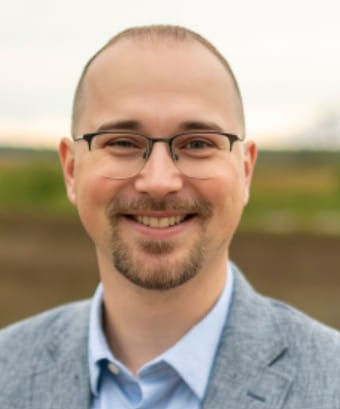
Rhett Youngberg is the Co-founder and Chief Technology Officer of Cirrus, where he designs and develops purpose-built software to enhance accessibility without compromising quality. With expertise in both technology and Deaf community engagement, Rhett has spearheaded the creation of CirrusTranslate, blending AI-driven efficiencies with human-delivered ASL translation.
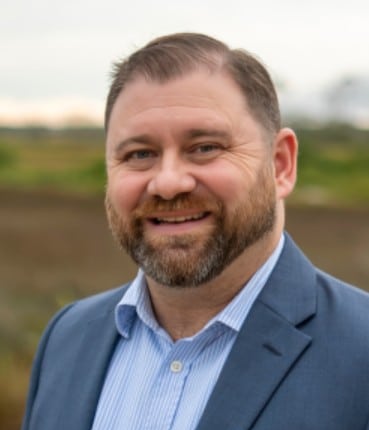
Chris Fillman is the Founder and CEO of Cirrus, a company dedicated to improving access to information for the Deaf community through high-quality ASL translation, interpreter education, and digital tools. With a mission rooted in personal connections and a commitment to equity, Chris has led Cirrus from its founding in 2020 to the launch of its flagship platform, CirrusTranslate.