

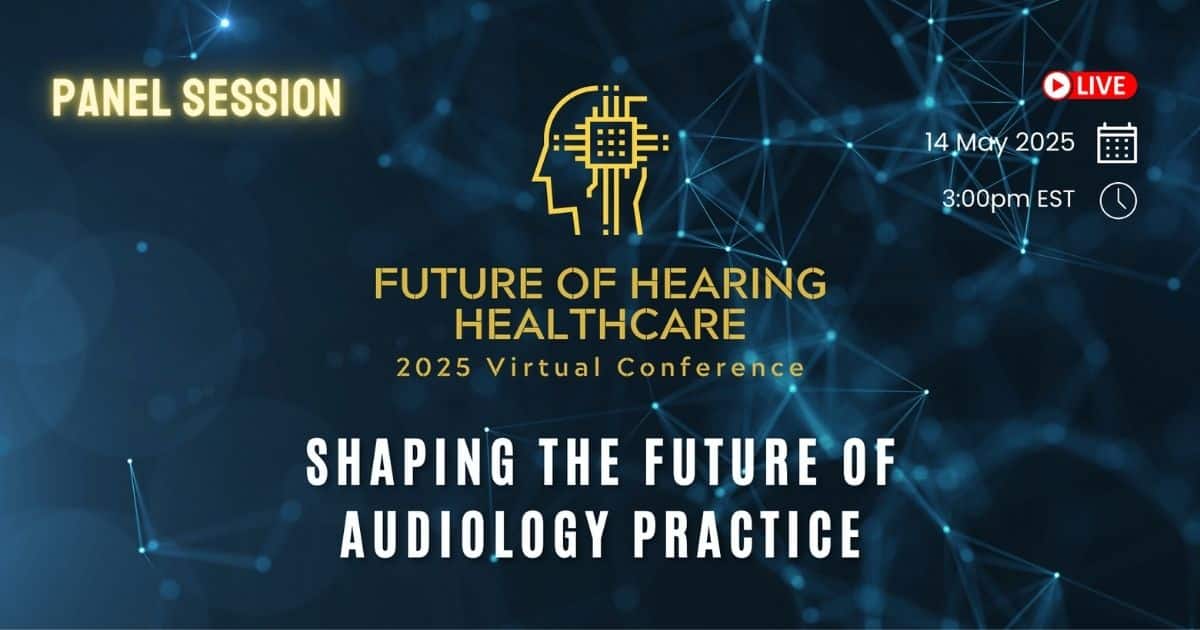
Modernizing audiology practice isn’t just about professional progress—it’s about improving patient care. In this session, moderator Dave Kemp leads a timely discussion with Dr. Alicia Spoor (Maryland), Dr. Kelley Linton (Arkansas), Dr. Brian Greenaway (Oregon), and Stephanie Czuhajewski, Executive Director of the Academy of Doctors of Audiology (ADA), on the evolving legislative landscape shaping the future of audiology.
Together, they share insights from recent efforts to update state practice acts, expand clinical authority, and remove outdated restrictions—efforts driven by a commitment to better access, continuity, and quality of care for patients.
Through real-world examples, the panel explores what it takes to advance legislation—from coalition-building and political strategy to educating stakeholders and managing professional opposition. Whether already passed or still in progress, these initiatives reflect a growing movement to align audiology’s legal scope with its clinical training—empowering audiologists to practice at the top of their license and meet patients where they are.

Full Episode Transcript
All right, everybody,
and welcome to our panel
discussion today here at the
Future of Hearing Healthcare
conference.
I am thrilled to be joined by
four great guests. I have,
kind of going clockwise on my
screen, Dr. Alicia Spoor, Dr.
Kelley Linton,
and Brian Greenaway. Dr.
Brian Greenaway,
as well as Stephanie Czuhajewski.
So thank you all for
coming on today.
I think we’re going to have
a great conversation.
So just to kind of set
the stage here,
I wanted to bring these
three here, Alicia,
Kelley and Brian in particular
to kind of talk about some of
the different state legislation
that they’ve been heavily
involved in.
As I’m sure many of the
viewers are aware,
there has been some state level
legislation that has been passed
recently to expand the
scope of audiology.
And so I felt that this
would be a great,
you know,
topic for a panel to talk
through the various elements
of each of their different
propositions, the process.
And then also here with
me is Stephanie,
who helped to really bring
this together,
so wanted to give her an
opportunity to talk about the
role that ADA in particular has
played to really support these
state level initiatives.
So anyway,
before we dive into the topics,
let’s start with some
introductions.
So we’ll go east coast
to west coast here,
starting in Maryland with you,
Alicia.
Yeah, thanks so much, Dave.
Happy to be back again.
My name is Alicia Spoor.
I am currently the legislative
chair for the Maryland Academy
of Audiology and I’m also the
advocacy chair for the Academy
of Doctors of Audiology.
So I try to do a lot on both the
state and national level because
it seems like seeing patients
day to day isn’t quite enough
audiology for me.
I need to do a little
bit more pattern.
But I do wanna make a comment
first and foremost as we start
and I’m sure Dr. Linton and Dr.
Greenaway feel the same way
when we talk about this.
Even though I’m the person here
from the state of Maryland,
it was really a team effort.
So I’m gonna call out my team
really quickly just so they
get some recognition.
We have a great lobbying firm
headed by Gil Jen with the
Bellamy and Jen group.
And then there’s a really core
group of audiologists from the
Maryland Academy of Audiology
that are part of our
legislative team.
And those are doctors Melissa
Segev, Brianna Bruno Holton,
Jana Brown and Lee McCarthy.
So again,
even though I’m the token person
on this call tonight,
I do want to make sure that
everybody knows there is a group
team behind us in Maryland.
So thank you for having me.
I’m excited to talk about this
again and super excited to have
more states joining us.
Awesome, Alicia,
thank you so much. All right,
moving into the Central Time
Zone One state below me in
Arkansas with you, Dr. Linton.
Yes, thank you. Thank you, Dave.
I’m also very thrilled to be
here with this group of people
to talk about what we’ve done
in the field of audiology.
I have a private practice
in Fort Smith, Arkansas,
and I started that
practice in 1998.
I don’t really particularly
see patients anymore.
I’m more involved in education
side and industrial audiology
type things and doing things
like this, advancing our field.
I’m a founding member of the
Arkansas Academy of Audiology
and as Alicia said,
it was definitely a group effort
pulling the audiologists
together in our state along with
ADA and excited to let you guys
know what worked for us.
Fantastic. Awesome.
Thank you so much.
Last but not least, you, Brian,
over in Oregon.
Thanks, Dave. I’m Dr.
Brian Greenaway.
I’m a clinical audiologist as
well as an assistant professor
of audiology at the Pacific
University School of Audiology
out here in Hillsboro, Oregon.
I have been involved in
legislation and policy,
policy stuff since
I was a student,
since someone on this call,
who shall remain nameless,
drug me into it back
in Maryland.
Yeah,
I also currently serve as the
legislation and policy chair for
the now Northwest Academy
of Audiology.
We merged successfully Oregon
and Washington academies
together this year.
That’s been going great.
And I also serve with Dr.
Spoor on the ADA Policy
Committee as well.
Awesome. Well,
thanks so much for being here.
All right, well,
let’s kind of get into it.
I think the first question is
to talk about, you know,
what is actually being proposed.
So if one of you maybe we can
start again with you, Alicia,
to just kind of unpack,
you know,
what are the changes that are
being proposed and the
significance of each change?
Yeah, very much. Happy to.
And I know Dr.
Linton’s going to come
in behind me,
so
don’t think I’m taking
any thunder away.
Feel free to jump in
if you want to,
but I do want to mention a
little bit the catalyst
for this.
So when the FDA final rule came
out regarding prescription and
over the counter hearing aids,
that was the catalyst that we
used in the state of Maryland to
kind of start working
on this process.
So we knew we had to open our
statute to make sure all of our
audiologists could prescribe
prescription hearing aids so
that we could continue to use
that as a tool in our tool belt
when it’s appropriate
for our patients.
And so we use that as our
stepping stone to go through.
And we really harped on
the comments around,
modernized and harmonized the
practice of audiology.
And the nice thing about the
state of Maryland and probably
many other states is that the
other clinical doctoring
professions have already
done this. You know,
we’re kind of the young
profession.
We’re the ones that are coming
to the game now.
And so we looked really
closely at optometry,
we looked really closely
at dentistry.
And then we also looked at
chiropractic and podiatry and
what they already
had in statute,
because that set a precedent
in the state of Maryland.
And so that was our kind
of stepping point.
But we wanted to make sure that
we excluded any ambiguity around
things that people would say,
well, you know,
can you use evaluation
and management code?
You have evaluate,
but you don’t have manage.
Is that a gray area?
Is it not? You know, it’s.
It’s nice to just have it clean
and clear and ready to go.
And so that was our jumping
point moving forward.
And as you’ll hear, I’m sure,
as we talk about a
little bit later,
it wasn’t immediately successful
for the state of Maryland
either.
We just kind of got a little bit
of a head start in front
of Arkansas.
But that was our.
Our founding point in the.
The reason why we went about
maybe including some phrases or
comments around serum and
removal or prescription hearing
aids or radiographic imaging,
or including what was not part
of the profession of audiology,
because, again,
a precedent that was
set in our state.
So I’m going to pause there and
I’m going to turn it to Dr.
Linton,
because she can kind of go
through all those little
components that were added as to
what was actually included in
the practice of audiology.
Yeah.
So we looked at things that
would let our patient care be
more fluid and be able to work
with the other primary care
physicians and other physicians
that were referring to us.
And these were things like,
like being able to order blood
work, cultures, imaging. Again,
you know,
when patients are coming to us,
we have an idea of some tests
that we need or that the primary
care physician is going to need
or maybe the ENT is
going to need.
So being able to order those,
have those ready to go,
just helps that patient care.
It’s for the.
It’s the flow of the patient
care and keeps maybe the patient
from having to linger to get
another appointment to see the
physician who is going to turn
around and order the blood work
or the cultures or the imaging
and then come back.
So if we can step in and get
those items ordered,
what’s needed,
and then be able to send the
patient with those results to
the physician that they need
to see. It’s just,
it’s going to be better
patient care.
That’s really interesting. Okay,
great.
So thank you for kind of setting
the stage here. Brian,
do you want to talk at all about
Oregon and sort of the
process so far that,
that you’ve been through
there or.
So it kind of started
off very similarly.
A lot of things kind of fell
into place at the same time.
Around the time that Maryland
was wrapping up their
legislation last year,
our board for our licensing
board actually came out and made
an announcement that they were
going to be opening up the
statutes and rules this
legislative session to
make some changes.
So of course we jumped to it.
We went through all the
statutes, all the rules,
line copy,
just made a bunch
of suggestions.
Turns out the board,
due to some staffing issues,
didn’t go through with,
with their plans this year.
But we decided we had good copy.
We thought it was the right
time for a lot of reasons,
which I’m sure we’ll
get into later.
So we, we went ahead.
We were able to find
a sponsor and,
and push forward with a lot of
the same things that we drew
very heavily on Maryland.
Sounds like a lot of the same
things from Arkansas.
Kind of pushing access and
affordability of high quality
care was always our kind of our
mantra throughout the whole
thing. So we had the radiology,
we had the blood work
portions in there.
We had very specific to Oregon
language that we were
able to just tweak.
Something unique to us was
allowing audiologists to
supervise audiology assistants
and doing basic hearing testing.
Just really things designed at
improving that flow of care and
getting patients where they
really needed to be as
soon as possible.
And if you don’t mind me
stepping in, Dave, I mean,
I think we all skirted around
maybe what your actual
question was.
And so if I pull up the
Maryland legislation,
we were very clear that we put
in the words evaluate, diagnose,
manage and treat.
That is extremely important in
the profession of audiology
because again,
removes a lot of the ambiguity,
also lets you use maybe those
diagnosis codes that we’re all
using to bill our patients when
we’re working with insurances.
We took it a step further and we
took the FDA language around
prescribe, order,
fit, sell, dispense prescription
hearing aids.
We also put that around external
osseointegrated sound processors
as well as auditory implantable
sound processors. So again,
we didn’t want anybody coming
back and saying, well,
you can do the hearing aids,
but it doesn’t say anything
about, you know,
the external components.
When we’re working with our
surgical colleagues,
we also further went down
and said. Said, well,
audiologists can conduct
health screenings.
We know that’s so important
around comorbidities within
auditory and vestibular care.
We know that’s been an issue
around Medicare patients from
PQRI to PQRS to MIPS and in
whatever process that
moves forward.
And it’s just good patient care
because we know the ears are
related to so many other things.
And then we put in removing
foreign bodies from the external
auditory canal because there
were so many times the
audiologists were looking in the
ear canal and we’re like, oh,
there’s a dome,
there’s a filter there,
you know, from our hearing aids.
But again,
it was kind of a gray area.
And so we wanted to make it
super clean and clear.
We wanted to make sure cerumen
removal was called out
in our statute.
It was in our regulations,
but we added that within our
statute so that audiologist
could remove cerumen from the
external auditory Canal.
You heard Dr.
Linton talk about the ordering
of blood work and cultures.
We also were trying very much to
forward think and
I love that Dr.
Greenaway kind of went one step
further with supervising
of the assistants,
which we didn’t think about,
but having the whole ordering
and performing non radiographic
imaging in the audiology office
with that equipment.
So we don’t know what’s coming
out in the next five to
10 to 15 to 20 years.
And hopefully we’re going to be
moving forward and audiology is
going to continue to progress
and modernize.
But we wanted to make sure
that whatever equipment,
equipment came around,
that we were able to be doing
that and trained and that was
within our scope as well.
And then ordering the
radiographic imaging,
as both of my colleagues
have commented on.
And then like I mentioned in,
in Maryland,
at least because we looked at
the other clinical doctors,
we put very specific information
in as to what audiologists
cannot do,
which is a big contention when
we’re talking to our,
our AMA state chapters with
those physicians and or our AAO
HNS state chapters around our
ENT colleagues. They need us,
we need them.
But we’re not out there to try
to do the cochlear implant
surgery. You know,
we’re not out there to get an
MRI machine and start being the
radiologist and performing
those.
So those were very specific
things that we put in not only
to alleviate maybe some concerns
that the possible opposition
might have,
but also because again,
there was a precedent
set for us.
And so we want to stay in
the lane of audiology,
but we know that also includes
the best patient care and so
those were all of the components
that we put in in the
state of Maryland.
Well, in Arkansas,
we actually took Maryland
because they obviously were the
first ones to successfully
do this.
We took what they had written
up, and Arkansas already,
believe it or not,
had a pretty generous scope
of practice for audiology.
So we did add in the things that
we felt needed to be there to
get Arkansas up on the same
level as what Maryland had
asked for. And, you know,
did have some opposition
with AMA and AAO.
So we had to tweak a little bit
of our wording just to make them
happy. And, you know, it’s.
And in the end, it’s very good.
We’re pleased with the
way it’s written.
We definitely expanded our scope
just as we wanted to.
And we also put in that we would
not be doing surgery
and listed very specifics
of surgery.
And
everybody was happy
when it was done.
We were all on the same page,
and we were all.
All groups were happy.
I feel like that’s a huge
takeaway, though,
is to understand how to more or
less placate the opposition,
if you’re being honest.
And so I feel like that’s really
good intel and good information
to have. And again,
I think the spirit of this
conversation is to learn
from one another.
I find it really interesting
that you have these three very
unique parts of the country that
seemingly have their own
circumstances and all that,
and yet you’ve got
these different,
similar bills that are kind of
being at least reviewed
and evaluated.
And so I think that’s
really encouraging.
So we’ve kind of talked about
the what, right? Like,
what exactly is being proposed?
I want to talk about both
the why and the how.
I feel like maybe we start on
the why and go through,
you know,
in your own sort of estimation,
what.
Why are you so passionate about
this? What, in your opinion,
does this mean for the short.
The mid.
The long term of the profession
of audiology?
How do you envision
this? I mean,
is this a stepping stone into
something that’s, you know,
greater than this, or does it.
Do you foresee it being
something that’s sort
of fragmented,
like this at the state level,
that maybe it congeals?
I would just be curious to
hear your thoughts as to,
you know,
both as a state that maybe
has already passed this,
where you go from here or what
changes from here, and then,
you know,
sort of down the ladder to if
you’ve not passed this yet,
like, what.
What are you looking at?
So anybody,
feel free to hop in here as
to what? I guess the,
the ultimate why this matters.
Well,
I’ll say something real quickly.
I think there’s really kind of
two sides to it as far
as the why. I mean,
we have the side of the
profession of audiology,
and as a profession we need.
I’ve been in the profession a
long time, since the early 90s.
And we used to step around
owning the ear, kind of the,
the ear,
nose and throat doctors owned
the ear and the vestibular
system.
And we kind of had to dance
around that in the early 90s.
But our profession has grown.
We’re now a doctoring level
profession and we need to step
up as a profession and own
the ear, the hearing,
the hearing center and
the balance system.
So this is just progressing that
in the way that it needs to
go so that we continue.
Just as ophthalmology owns and
optometry own the eye, we,
you know,
ENT and audiology needs to own
the ear and the vestibular
system.
So, you know,
on that side of the profession,
you know,
that’s a why that we need
to progress this way.
And then on the other side,
you’re looking at patient care.
I mean,
why is insurance is much more
difficult to deal with.
They pretty much dictate to
physicians what they can do,
how much time they can spend.
And it’s getting much more
limited and reimbursement’s
getting, you know, much less.
We’re seeing a drop
off of physicians.
We don’t have as many physicians
as we did in Arkansas.
We’re a very rural state.
We actually did a heat map and
we’re a six to one ratio.
We’re a six audiologist to one ENT
ratio in our state.
And patients just can’t get in.
They can’t get in and be seen.
And when they are seen,
it’s just for four minutes or
five minutes, whatever.
The insurance allows them to
be seen as audiologists,
we are not governed that
strictly by insurance at this
point and hopefully never will
be. So we can take time,
we can really question
the patient,
we can dig deep in with
questionnaires in their health,
their comorbidities,
and we can really get a more
holistic picture of what that
patient needs and get better
care quicker for the patient.
And just to linger on that
point right there.
So what within the changes
would I guess,
further
support the like,
viability of that patient
care aspect?
Are you talking about better
reimbursement or is it like,
how does that actually translate
into what would change from
where it is today?
Well, as it is today,
the patient, like,
if I do testing on a patient or
I visit with a patient and I’m
unable to order any imaging.
So I then have to write a report
to the primary care or the
referring physician and request
that they consider imaging.
And honestly,
I know we’ve all got stories
and have had this happen.
You send that back
to the doctor.
Does the doctor really
read the report?
Does he have time to read or she
have time to read the report?
Do they really put thought into
what we’ve asked them to do,
why we need imaging,
what’s, you know,
what our worries are,
what our concerns are?
A lot of times they don’t.
And the patient just gets passed
on by after they’ve waited 6, 8,
12 weeks to even be seen
by the doctor,
and then it’s just dropped.
And, you know,
sometimes they’re back
at our office three,
four months later saying, oh,
yeah,
I wasn’t able to get that
imaging. Or, you know,
I mentioned it to my doctor and
they said they didn’t really
know what I was talking about
and they didn’t order it.
So if we can clear all of that
up and have those results done,
it’s going to be.
The patient is going to benefit.
We do not financially benefit
from the items that we have
put in the legislature.
So we are not getting
any reimbursement,
which was something that we
strongly had to explain a few
times in our testimonies.
We are not reaping any kickback
or benefit financially from the
changes in this legislature.
This is strictly efficient
patient care in our world today,
with insurance dictating a lot
of what it does for the MDs.
Makes total sense. Go ahead,
Alicia.
Yeah, I would further note,
and Dr.
Greenaway can jump in as well.
You know, like Dr. Linton said,
this doesn’t help audiologists
financially in any possible way.
It does help the patient,
and it helps our ability to
provide that patient care at the
highest possible level
we can have.
So what’s really happening
in Maryland,
and we do have a very strong
audiology base because of some
of our forefathers that came
around in audiology
back in the 70s.
Now that we’re ordering this
imaging and ordering the blood
work and cultures,
we’re able to get those
results much faster.
And then we’re able to triage
the patients that really need to
be seen by our surgical and or
super specialty providers,
physicians.
And so people always think, oh,
they’re going to go to ENT.
Well, no,
they’re going to go to the neuro
otology specialist to take out
that CPA tumor that was just
diagnosed and is aggressively
growing.
That’s not general ENT
down the street.
That is a super specialty.
And we’re also noticing that a
lot of the what we’re ordering
and getting results back and
triaging our patients is
neurology, or it’s dermatology,
or it’s cardiovascular. Again,
all those comorbidities.
But everybody just always kind
of thought, thinks, you know,
ent send them.
Them to the ENT down the street.
And that’s really not what we’re
finding now that we’ve been
doing this for six plus months
in the state of Maryland.
And so we’re,
we’re able to use those results
to get the patients where they
need to be or to go back to
the patient and say, hey,
you don’t have any of
these red flags.
We’ll continue to monitor you
as the doctor of audiology,
but let’s get you the treatment,
either audiologically,
vestibularly that you need,
bring you back in our office,
and then we’ll revisit this
again in 6 months, 12 months,
18 months, 2 years,
whatever that time frame.
And evidence based practice says
that we should be following up.
So that’s kind of some of the.
Oh,
this is what we’ve seen as
we’ve been doing it.
And I’d love to hear what Dr.
Greenaway thinks too.
Yeah, I mean it really.
I think what we kept driving
home is this is not just helping
audiology practice at the top
of our scope of practice,
but really letting everyone in
this system practice at the top
of their scope of practice.
We know our ENTs, our surgeons,
they want a cut.
That’s what makes them money,
that’s what makes them happy.
So what we are arguing kind of
over and over again in this is
let us order that imaging,
let us have those boring office
visits with the patients,
figure out who actually
needs to see you,
who has something actionable,
and then you can spend
your days,
your time solving
those problems,
and we can do what is at the top
of our scope of practice.
We have very, very long.
Even in the Portland metro area,
which is kind of our major
urban area in Oregon,
we have long wait times.
Patients are waiting 2, 3,
4 plus months to see ENTs
when we make referrals.
And that means that they’re
just not. I mean,
when you’re putting Medicaid
finances, all of that,
even aside,
just when you try to call them,
they tell you it’s going to be
November before we can get in.
Our patients aren’t doing that.
So we are failing our patients
at patient care,
not getting them care
when they need it,
but also
lengthening the stress that
patients where we know we have
patients where we look at them
and say, you don’t have a tumor.
But we are following
the gold standard,
we’re following our AAO
referral guidelines.
So I’m going to have you see
this ENT anyway. That’s,
that’s drawn out stress for
Them like Arkansas.
We also did a few different heat
maps looking at audiology
versus ENT,
and that’s one of the things
that really drove home the
need for this for me,
was when we’re looking,
like Alicia was saying,
specifically at neurotologists,
otologists specializing
in the ears,
not just your everyday ent.
Outside of the Portland
metro area,
there are two counties that have
neurotologists or specialist
otologists. That’s it.
But we have.
Audiology is not perfect in
terms of rural coverage
in Oregon,
but we’re doing a lot better
than that. So for me,
it was looking at how far are
patients having to drive,
Are patients even able
to access that care?
And pushing this legislation,
if we had gotten that
bill passed,
it would have expanded quality
care to a lot of patients
across the state.
Yeah, I mean, I.
I find this to be really
interesting, ultimately.
And I want to go back to what
Kelley was saying about,
you know,
how she had to really
clarify this,
that there wasn’t some sort
of monetary benefit to the
audiologist. I mean,
it seems like you’re ultimately
arguing to be,
you know,
let us kind of unburden the
system a little bit by being
able to triage people
more effectively.
Let us be that initial point of
contact, and then, you know,
we don’t need to bog down these
people that are already
so in demand,
because that kind of seems like
the nature of a lot of this
right now is, you know,
we’re just talking about
specialty care right now.
But in general,
a lot of this seems like kind of
a supply and demand thing,
where you have so much demand
and just not enough supply.
So it’s a matter of figuring out
with these smaller workforces
that, you know,
kind of relatively speaking,
how do you maximize them,
and then how do you work in
tandem with these sort of,
you know,
ancillary or affiliated,
broader allied medical
professionals.
So I think it makes
a lot of sense.
But I kind of want to go back to
this point to just talk about
that piece that you described
Kelley of,
because it seems like that kind
of gets at the heart of maybe
what some of the.
If you’re preemptively trying to
get ahead of the opposition.
Right.
It sounds like that
might be one line.
A through point in the
opposition is that this
is just to, you know,
either creep on our AMA scope
or something like that,
or that this is going to somehow
benefit the audiologist
in some monetary way.
So if you want to maybe talk
through that a little bit,
that would be great.
Yeah,
I think it would be interesting,
especially for People that are
listening and watching that are
possibly going to work
with their state.
I think it is kind of
interesting to hear maybe what
opposition we each had to face.
You know,
we had an AAO representative who
also collaborated with AMA,
and so we kind of knew both
were coming at us
straight up.
We’re worried that we were going
to go purchase an MRI machine
and we’re going to do
MRIs ourselves.
So I continually had to say, no,
I’m not interested
in doing an MRI.
I’m not interested in becoming
a radiologist. You know,
that’s not what this is about.
So, you know,
we had to defend that.
We had to defend health
screenings. Interestingly,
that was something that they
really came at us about.
We ended up contacting our
Arkansas health department,
and this will be different
in each state, I’m sure,
but the Arkansas health
department actually defines
health screenings very broadly
because there’s all kinds of
people in the state of Arkansas
that actually do health
screenings,
from volunteers all the way
up to professionals.
And so we actually talked to the
Arkansas health department
and they said,
do not change anything with the
definition of health screenings.
We are leaving it gray and
we are leaving it vague.
So we were able to come back
against that opposition and say,
you know,
even the state of Arkansas has
most everybody doing
health screenings,
so that’s not that
big of a deal.
We also had to change some
wording as far as making all of
the things that we requested,
imaging, blood work,
all that pertaining only to the
hearing and vestibular system.
Again,
you know, actually said,
we don’t want you getting pap
smears on your family members.
We don’t want you taking X rays
of people, your friends,
you know, and.
And I argued quite a bit about
that because I’m like,
don’t we all take an oath to
stay in our lane? I mean,
I would not expect my
dermatologist to do a mammogram.
I mean, we all,
as professionals,
as doctoring professionals,
we all stay in our lane.
But they just wouldn’t trust
that we were going to do that.
So that is.
That is the wording that we
did come back and change.
For them to say that all of
these that we’re asking is only
pertaining to the hearing
and balance system,
which quite honestly,
you can relate just about
anything that you want to the
hearing and balance system.
We finally decided that when
we kind of got together,
we were like, okay, well,
I think we could probably write
a report sufficient enough to
relate about anything we wanted
to do to balance and hearing.
So, yeah,
I’m curious what other
opposition the others had,
but those were our main ones.
Alicia. Brian.
Oh, my gosh,
feels like forever ago.
And so I’m glad Dr.
Linton and Dr.
Greenaway can remind me
of all the opposition,
because I’ve tried to put it in
the back of my head
at this point.
We had a lot of opposition
around the word diagnose.
They didn’t.
We had opposition that,
you know,
audiologists can’t diagnose,
they don’t have a
medical degree.
We weren’t trying to maintain
that we had medical degrees,
but that was really at the core
because we already had that in
our regulations at the
Maryland level.
And we kept going back
and saying, you know,
with all due respect,
ENT or primary physician,
if you employ audiologists
and we cannot diagnose,
we can’t use diagnosis codes.
Like, just think about that.
If your clinical staff that’s
supporting you by doing auditory
and vestibular testing can’t
diagnose that patient,
use a diagnosis code.
How are they billing insurance
when there’s coverage there?
You know, that was a big pause.
Thankfully. Yes,
we fought health screenings for
two years in a row because just
like Dr. Linton mentioned,
for some reason everybody thinks
we’re going to be doing
UTI screenings,
which was really interesting
to us.
We have a lot of really great
memes around our legislative
committee team about audiology
doing UTI screenings. But again,
we just went back to Medicare
and said, you know,
Medicare is a government agency
or Medicare is a health
insurance, you know,
approved by Congress,
a government agency.
And they are the ones
instituting health screenings
because they realize that
providers are not talking to
each other as they should.
And EMRs didn’t solve all these
problems like they thought they
were going to in the patient
needs to be looked at as a
patient, not as an ear,
not as a semicircular canal,
not.
Not as a teeth and
gum and tongue,
and not as a kidney and liver.
You know,
they need to be looked
at as a whole person.
And so when we went back
and said, you know,
the FDA is very conservative,
they gave the ability to
prescribe and order prescription
hearing aids that would be the
same for external devices around
our osseointegrated and
auditory implants.
When we go back and say,
you know, Medicare,
also very conservative,
works with the older population,
they’re the ones saying that
we should be doing this.
The ICD10 codes say that
we’re diagnosing.
Are your audiologist diagnosing?
Well,
then why would you not let them
diagnose in this statute
like Dr. Linton mentioned,
we did have to concede.
And one thing that I would
mention to anybody who’s trying
to push legislation forward,
don’t put all your cards on the
table at the beginning.
If you have nothing
to compromise on,
you are going to have to
compromise on something,
and what you really want is
going to be taken out.
So we had very vague things
like cerumen removal,
and now we have cerumen removal
from the external
auditory canal.
I’d still like to know where the
physicians think the cerumen is
going to be other than the
external auditory canal.
But we also had to put
in without the.
The use of general anesthesia.
Okay. We were good with that.
That was true.
Around our foreign object
removals without the use of
general anesthesia. Fine.
You know, we were.
We’re staying in our lane.
We want to stay in our lane,
but again,
we want to make sure it’s very
clear. And again, just like Dr.
Linton mentioned,
of course we had to put in
around auditory and vestibular
related conditions when it came
to kind of what we’re calling
those more advanced level
practices the audiologists
should be doing around
ordering blood work,
cultures and imaging.
So with that,
I’m going to stop and turn
it to Dr. Greenaway.
I think we hit a lot of the
same kind of pain points.
What I found really interesting
was AAO HNS naturally wrote
a letter of opposition,
which we actually found
to be very.
A very friendly letter of
opposition, if that’s a thing.
A lot of what they put in there
we thought was thoughtful
and actionable.
And when we went back and,
and did a proposed rewrite
of the bill,
we used a lot of the language
they. They put in there.
So our takeaway from that was,
we know they don’t like it,
but we don’t think that they are
as kind of staunchly opposed as
we were thinking they would be.
When we started everything off,
our state medical association
was a completely different
beast.
They just did some absolutely
terrible rewrites.
At one point they sent us a
version that would not let us
diagnose or interpret results.
So I had to go to their,
their lobbyist and say, so what?
Exactly I’m going to do this
test and I’m just going to hand
all these numbers to the ent.
Is.
Is that the system that
you want here?
And of course they said no.
Well, no, no,
that’s not what we meant.
But
that was just a big mess.
The other big roadblock
that we hit,
I would say two at the actual
legislative side. One is,
we know that legislators in the
general public are not well
informed about audiology.
I massively underestimated how
little people know
about audiology.
Even in our Senate health
committee hearing,
the policymakers kept bringing
it back to hearing aids,
not understanding how this had
to do with the dispensing
of hearing aids,
which we kept trying to tell
them. Well, it, it doesn’t.
It has the, the to do with the.
I hate the term medical
audiology, but the,
the practice of medical
audiology here,
we’re not just dispensing
widgets.
So I think that did
put us back a lot.
The biggest thing that ended
up killing us was we had a
pediatrician on that committee
who told me in a,
in a personal meeting that she
just is not in favor
of any bills that,
that expand scope of practice
for anyone.
So that was kind of a dead
on arrival thing.
We did not expect that when
we were coming into it.
So kind of a lot of just,
just education, I think,
is where we’re going to be
starting off next time and
making sure that everyone
understands what we do,
what we’re actually asking for,
that we’re more than
just hearing aids.
I think that’s kind of going to
be our launching spot
next time around.
Okay, this is. Go ahead, Kelley.
Sorry. That’s very interesting,
Dr. Greenaway,
because we did also have to
learn which legislators
were physicians.
And we too had one or two that,
well,
one is married to a physician
and one is a physician.
And we do knew that both of
those would adamantly
be against any,
any scope of practice being
expanded. So something that,
you know, again,
another state that’s going
to be approaching this,
that’s good information
to learn.
Learn about your legislators,
learn about your senators and
your representatives and
kind of what they do
and how they feel,
how they feel about
certain things.
Honestly,
that’s how Arkansas got it
passed so quickly. I mean, I.
It was.
We had a senator that was
very much new audiology,
very much supported audiology
came to us and said,
what can I do for your field?
What can I do for audiology?
How can I help you?
So he put us in.
He didn’t represent our bill,
but he talked to,
this is his third or fourth
term. So he knows the people,
he knows the other senators,
he knows the other
representatives.
He talked us up and said,
this is a great thing,
this is a great field.
This is what audiology does,
you know,
drug me all over the Capitol,
introducing me, you know,
get a picture with this person,
get a picture with that person,
you know,
and I’m shaking hands
and they’re like,
I support your bill,
I support your bill.
And I was like,
you want to hear about the bill?
No,
because he’s already told me
about it and I support it.
So it’s that kind of
an environment.
And I didn’t anticipate that
kind of an environment
going into it.
But after we were in that
environment several times,
I was like, okay,
this is the key. Because he,
when I was gone or when
we were gone,
he’s still talking about
audiology and he’s still talking
about the importance of this and
answering questions, you know,
like, you know,
why did you not pass it or what
do you have against it?
Then he would contact me and
say, this is, you know,
this is a doctor.
He’s not going to pass anything
because it’s scope of practice,
so don’t worry about him.
Now let’s talk to these people.
So, you know, getting.
And I know we use no lobbyist.
We had no lobbyist in Arkansas.
We did it all on just
relationships,
our personal relationships with
our senators and with
our representatives.
So I can’t stress that enough.
Yeah,
I would say that is a big piece
of advice that the Dr.
Spoor gave me early on that we
unfortunately just ran out of
time before we could really nail
down was don’t just find a
sponsor, but find a champion.
Somebody who’s going to really
stand behind your bill and stand
behind you because there will be
times where it gets ugly and you
need somebody in your
corner for that.
The other thing I want to
mention is not all AMA and not
all AAO-HNS physicians are against
what we’re trying to do.
And we had a physician
on both committees,
our Senate and our House side.
We knew the senator was only
speaking on behalf of AMA and
that was going to be an issue,
but he was one of nine that
we needed to work with.
So as long as we could get to
the other eight, we were okay.
But it turns out the physician
on our House side,
once she heard it, she’s like,
oh, well,
can’t you guys already do this?
Why don’t you just start doing
that? That’s not a big deal.
You can do this. No.
Without any problems, you know,
like, oh,
you don’t need to put
that in legislation.
Just go out and start doing it.
I like that idea.
I also want to make sure I’m not
going to lose my audiology
license if somebody
comes back to me.
But I would say that was true
for our boots on the too because
we all have physician
relationships. They need us,
we need them.
And so we went to those ENTs or
those nurse practitioners or
those neurologists or those
neuro otologists.
Not all of them would
support us.
Not all of them would
support us publicly.
But we went to them and said,
hey, this is what we are doing.
If they’re working within
audiology space, at some point,
they understand why you didn’t
have to explain that to them.
Some of them are very much
willing to put their name and
their face and their reputation
on the line for the audiology
profession.
And those people are also very
key in what you’re doing.
And again,
does not have to be
ENT specifically,
those primary care physicians
are overworked.
Those pediatricians,
even though one of them in
Oregon does not understand those
pediatricians need the help.
The dermatologist,
the neurologists need it.
Our nurse practitioners in the
state of Maryland totally on
board with what we’re doing.
And those are people who are
working clinically and those
are the educators as well.
Turns out we could get our
radiologists on board as well.
And so don’t just think, oh,
physician means you’re going to
be against me. That’s not true.
And don’t be afraid when some
of the physicians will say,
you know, I can’t do that.
Right?
Or I’m not willing to do that
even though I support
what you’re doing.
One other comment really
quickly on that.
I was very surprised at the
audiologists who came back when
we put our legislation
forward and said,
I don’t feel like I’m
trained to do that.
And that was a big wake up call
for our state association.
And it was a big wake up call
that we mention to our board
of examiners. You know,
some of these audiologists that
you are licensing are very
clearly stating that they don’t
feel that maybe they,
they were trained or they were
this or they were that.
So we had to work a lot around
continuing education.
This is what accredited AuD
programs have to provide.
And again,
I’m not saying right or wrong,
but most of our opposition came
from audiologists if they were
opposing us who happened to
be employed by an ear,
nose and throat specialty
clinic.
So we got out ahead of that
a little bit more.
We made sure those relationships
were a little tighter when we
were talking to people.
And it was very easy to say
follow the money sometimes.
And I don’t mean to point
that in a bad way.
We can take all those comments
out if we want to in
the final editing.
But I do want to say it’s not
always opposition from
the outside.
You also have to be ready from
opposition on the inside,
both from individuals.
And we had opposition from our
audiology professions as well.
And so again,
big wake up call for us when
we were doing that.
I would concur.
I, I will just say that I,
I really have enjoyed this
conversation because I feel like
it is, we’re getting to,
I think,
some really valuable information
for people that again,
in the spirit of like,
how do we get more states and
more of a grassroots presence,
you know, to,
and more people to get involved.
So I want to bring
Steph in here.
I feel like she’s been patiently
waiting on the sidelines.
But I wanted to talk about,
you know,
we’ve talked a lot about the
what and the why and some of the
different how. But, you know,
I really do want to talk
about ADA’s role here.
I know that you’ve been involved
with all three of these
different groups in each of
these states. But for me,
I just keep thinking about like,
again,
we’ll just use like Missouri,
for example,
is if I were a young
audiologist. That was
Wanting to get more involved.
What does that look like?
You know,
what are some of those early
initial steps that states
can be taking?
I think there’s so much
information here about tactics
around. You know,
you really need to identify
methods in which you can build
relationships or identify people
that maybe you have mutual
connections with and start
to build inroads there.
Do your research to understand
who might be favorably,
you know,
or have a favorable opinion
of what you’re proposing.
But anyway, Steph,
I want to give you a chance to
kind of chime in here and talk
about the role that ADA has been
playing and how you see that
serving as a sort of support,
you know,
infrastructure for
these efforts.
Yeah, thank you.
ADA has had the honor of being
able to support these different
endeavors and other endeavors
that are in the works, that are.
That are similar that you’ll
probably hear about
in the near term.
It’s very much a supporting
role.
So I think my first advice to
somebody who wants to do an
initiative at the state level
that’s going to modernize their
scope of practice would be to
either join their state
association or form one
if one doesn’t exist,
because you have to,
at a grassroots level.
You have to get to know the
people in your own community,
both from a stakeholder
standpoint,
whether they be opposers
or supporters,
but also from that legislative
framework.
And every single state operates
and functions differently.
I also would say that this isn’t
an overnight situation, okay?
You’re going to have to
cultivate some of these
relationships sometimes over
a longer period of time.
I think, you know, in this,
in the case of Maryland,
which I do happen to know better
than others, I know that their,
their progress really started
30 years ago.
So what looks like an overnight
success was really about 30
years of building relationships
in their particular case and,
and failing a couple Times.
Arkansas, as Dr.
Linton mentioned,
had a benefit of having a
senator that had a keen interest
in some of the things that
they were pursuing.
So they were able to speed up a
little bit what they were doing,
but they still had to work very
diligently with their
stakeholder community,
with the legislative community.
And I think one of the
takeaways, if I’m not mistaken,
in Oregon,
is that some of those
relationships have yet to
be fully cultivated.
That this is kind of
a starting point,
but I think people should have a
little bit the expectation that
you’re not going to succeed
always the first time
out of the gate,
and what looks like an instant
success is really the
tip of the iceberg.
You’re not Seeing the rest of it
underneath which was all the
years of cultivating these
relationships. Right. So again,
first thing,
start with your state
association, join it.
Second thing,
I would say definitely we think
you should be involved with ada,
because regardless of whatever
your practice practice
setting is,
ADA is the organization that is
dedicated to the autonomous
practice of audiology and
evidence based delivery of
hearing and balance care,
which means aligning your
education and training with
your scope of practice.
And in most of the states
that we’ve examined,
there’s a huge gap or a huge
disconnect between that.
A lot of these state statutes
haven’t been updated in decades.
Okay. So as Dr.
Spoor mentioned,
one of the impetuses for us
really taking a new look at
this, a fresh look at this,
was the FDA final rule on over
the counter hearing aids,
which created this prescription
hearing aid category,
which necessitated ensuring that
audiologists are able to
prescribe prescription
hearing aids.
I can tell you that today
there’s still over half of the
states where that is not
expressly stated in statute.
So there are a lot of states
that actually need to be
remediated right now that
need to have their,
their scope of practice or their
audiology statute opened up for
no other reason but to add
prescribe as an activity that
an audiologist can do.
And that doesn’t mean that we’re
actually fearful that anyone’s
going to go after someone’s
audiology license because they
have been prescribing for all of
these great many years. Right.
But what we do know is that
insurers are increasingly
scrutinizing practice acts to
make sure that what they’re
paying for is something that
aligns with the stat for that
particular provider type.
So we want to make sure that
audiologists are protected and
able to continue to be
reimbursed for the things that
they’re doing that they’ve been
doing for all these decades.
By the same token, though,
unfortunately,
in the broad audiology community
for the past 40 years,
while audiology has progressed
significantly from an
educational standpoint,
moving from a master’s degree to
a clinical doctoring degree,
from a scope of practice
standpoint,
the biggest achievement before
these achievements in the past
four years or the biggest effort
was really applied towards us
expanding audiology scope
of practice backwards.
You’re going to say, well, why?
What do you mean by that?
Well,
audiologists have dedicated the
better part of their advocacy
initiatives at the state level
getting rid of dual licensure
requirements that would require
them to be licensed as a
dispenser and an audiologist in
order to dispense hearing aids.
Dispensing hearing aids,
by the way,
is something that in most states
an 18 year old can do with a
high school diploma and no
post secondary education.
So we spend an awful
lot of time,
talent and resources to expand
scope that way and have
neglected to do the things that
need to be done to really
modernize it to align with the
education and training that
has been pushed forward.
So it’s been a wonderful
opportunity to take a look now
at what the FDA has done and the
need to open all these statutes.
And in some cases again,
we’re going to have to remediate
other things like, like Dr.
Spoor mentioned making sure that
cerumen removal and cerumen
management is in scope
of practice.
Making sure that vestibular
assessment and management and
rehabilitation is in
scope of practice.
There are still a couple of
states out there where you
actually have to have a
physician referral to do
vestibular services.
That’s insane at this point.
So we need to do that
type of remediation,
but then also fully modernize to
include things like ordering
imaging and ordering blood work
and other tests that are really
going to speed the process
for the patient,
keep the patient in the
continuum of care.
Audiology is not looking for
opportunities to go it alone.
We’re looking for opportunities
to more seamlessly integrate
patient care with the other
specialists so that the patient
is getting the services that
they need when they need them
and not falling out of that
continuum altogether.
So I think that’s a really
important point.
I also think that we have to
look at building statutes
that are going to be
containing the activities
of the future.
So we want these things to be
broad enough so that as new
technologies emerge and as
new protocols emerge,
that audiologists don’t have to
go back every single time and
reopen statutes. Right.
So including things like assess,
evaluate, diagnose, manage,
treat,
all of these things that are
broad enough to encompass a
great many things as we
go into the future,
I think is fundamental and
that’s probably the number one
thing that we’re looking at as
we look at these statutes now.
Now what ADA has been able to do
that I think from a support
standpoint has been really
useful is we’ve been able to
connect the dots a little bit.
We’ve been able to do some
research that’s deep and far
reaching that sometimes
volunteers at the state level
don’t have time to do because
they are practicing in the
clinic all day, right.
Helping their patients.
We’ve also been able See sort of
what’s working in one state that
could be applied to
another state,
or what changes might we
recommend based on the success
or inputs from a state that
could be helpful to
another state?
So we’ve been able to
sort of serve as a,
maybe a connector so that states
that are interested can talk to
states that have done things
in a more seamless fashion.
And then I think we’ve been able
to also start to look at things
in a way that’s a little
bit predictive in that.
One of the things that I noted
in Arkansas, for example,
is that Arkansas is one of like,
12 states that have the most
generous scopes of practice for
optometry in the whole nation.
In fact, in Arkansas,
optometrists can do LASIK
surgery and some other pretty
sophisticated and advanced
procedures.
So if you consider that
audiology is the eye,
or audiology is to the ear,
what optometry is to the eye,
you can see that what
we’re asking for,
what we did ask for in Arkansas
is extremely conservative,
right. By comparison,
and extremely reasonable.
But what we found out that’s
even more important than the
fact that optometry achieved
these things is that many of the
legislators that voted yes for
optometry to be able to do those
things are still in
the legislature.
So it makes that kind of a
perfect place to look at.
So now what we’re doing is
assessing sort of all of
the different state,
state practice acts outside
of audiology. As Dr.
Spoor mentioned,
we’re looking at optometry and
chiropractic and dentistry and
podiatry and physical therapy
and others to see what is
everybody else doing. And if,
if,
if they’re all clinical
doctoring professions,
then why isn’t audiology more
aligned with those.
And surely the legislators
that supported, you know,
modernizing those scopes of
practice would also be keen
to modernize audiology.
So we’re trying to look at
it from that perspective.
And again,
we’ve made reasonable asks in
each of these states that are
consistent with the education
and training that audiologists
already receive.
So this isn’t an aspirational
modernization here.
Nobody’s asking to do surgery.
Nobody’s at this point is asking
to prescribe drugs or
other things, right?
So maybe 20 years from now,
when the education aligns
with that, that.
I’m not saying that’s not
something in the,
in the distant future
of audiology,
but right now we need to get the
practice of audiology and the
scope of practice of audiology
to align with the education and
training of audiologists
and that’s, you know,
that’s what we’re all
working to do.
The other thing that I have
found is all the people on the,
on this call right now
are ADA members.
I have found that the generosity
that ADA members have is
limitless when it comes to
helping other ADA members or
other states do things.
And it’s really that that I
think makes AD puts ADA in a
little bit of a unique position.
These are all people who are.
Really busy.
These are all people who
dedicate a lot of time in their
own clinics and their own
businesses in a lot of cases.
But these are people that I have
found to be some of the most
generous in the entire
profession of audiology and
willing to even travel to each
other states to testify
or to do things,
or to write testimony
or to help.
And I think that that is
something that’s fully necessary
if we’re going to advance
an entire profession and
professional care.
Now all of this aligns with the
initiative that ADA working
on called Audiology 2050.
You can find it on our website.
But really the fundamental
principles of that have patient
care and patient well
being at the core.
So this whole initiative begins
and ends with patient care and
expands out from there.
And we believe that key evidence
based practices are the things
that we’re working on when we
work to modernize these
state statutes.
So it all comes back full circle
to help the patient and meet
the patient where we are.
And the other thing that we’re
really trying to encourage all
of our members to do is to
really start higher up the
continuum of care. Right.
We all should be doing
preventive care at this point.
And I think that’s another way
where we’re kind of looking from
a clinical standpoint to try to
align with some of the other
clinical doctoring professions
like dentistry and optometry
and others in that sort of,
in that realm of prevention.
So you’re going to see more
of that out of ADA also.
That’s, wow,
fantastic overview there.
I think that really describes
what the role that you all are
playing and kind of the common
ways that I guess people are
leveraging your resources.
So it’s been an amazing
discussion.
I’ve personally learned a lot.
This has been a great
forum for learning.
So closing thoughts as we
kind of wrap up here.
We’ll start and end, I guess,
same same way we started.
Alicia,
you can close us out with
your first thoughts.
Oh my gosh,
I need to think on this
for like 30 seconds.
I’m going to give Dr.
Greenaway and Dr.
Linton a chance to chime
in or to think as well.
I mean,
I want to say something that
just reiterates, right?
Nothing happens overnight.
I guess my big thing that
I would say is that
obviously relationships
are important,
but this was an effort and
Stephanie has heard me
say this kind of tongue
in cheek.
I am still happily married.
I feel like I gave up my
marriage to get this piece of
legislation passed in 2024.
Nights were easily spent until
2, 3, 4 in the morning.
Emotions got very high
at many of times,
which you really have
to keep in check.
There were many screaming
matches.
There were many times where it
was like, we can’t do that,
but yes we can.
But you got to think about and
what are we going to do in.
In my.
In the legislative team bore a
lot of weight on our shoulders
for that because we thought
if this doesn’t pass,
which it did not pass in 2023
when we initially
put it forward,
that we were going to let down
the profession of audiology and
then where were we going to be?
Right.
We see this as audiologists can
continue to be audiologists.
Where some of us were thinking,
if something doesn’t change,
audiology is not going to be
around in 10 years or maybe even
five years because of
what was just said.
If you just want to
fit hearing aids,
why do you need an eight year
clinical doctorate degree?
And so the amount of time and
effort and stress that came with
it is easier when you have
multiple people working on it.
But if you are thinking
of doing this,
please know that we are all on
your side and here to be your
therapist and help you along
the way as well.
So I’m going to stop
there and let Dr.
Linton go and hopefully she has
some more elegant ways
of final closing.
Well,
I concur with a lot of what you
said as well. It’s funny.
2025.
I started 2025 with this is the
year of no because I’ve been
practicing over 30 years now and
I’m pulling out of patient care.
And I said,
this is the year of no.
Until this came along.
I was like, okay,
I’ll do this one thing
this year. Wow.
I didn’t know I could drive to
Little Rock that many
times in a week.
Little Rock’s about a five hour
drive round trip for me.
And it was day after day
after day. In fact,
sometimes I just spent the night
in Little Rock because I knew I
was going to have to be there
for another meeting,
you know, sometime the next day.
And when this bill is going
through and they rewrite it and
then they’re going to put it in
committee again that evening.
You know,
it’s your schedule just has to
be very flexible for that.
I would say along the line
of relationships,
join your state organization,
join your state audiology
academy or create one,
if you don’t have one,
just what’s already been
mentioned and learn who in your
state is an advocate for this.
Because really everybody isn’t.
You know,
it was already Mentioned
earlier, I was,
I was also shocked at the number
of audiologists that opposed us.
And we got calls like,
what are you doing? You know,
why are you doing this?
You know,
what are y’all trying to do?
Are you trying to ruin our scope
of practice in, you know,
in Arkansas? And I was like,
okay,
so educate,
educate the ones that
are out there,
leave the ones that don’t want
to work with it, you know,
if you can’t change their mind,
you know,
you get the powerhouse people
that do get behind it and do
understand it and then make
those relationships with
your legislators,
your senators and your
representatives and educate,
educate,
educate as to what audiology
does and what we’re
needing to do.
And that also goes on
the national level.
I was also surprised at the lack
of support that we
got nationally.
ADA, I cannot,
I can’t even say enough
good things about ADA.
You know,
we talked about needing
a heat map. I mean,
how many ents are there?
How many audiologists in
the state of Arkansas?
We know we’re rural and we all
looked at each other and went,
well, yeah,
that’d be really nice if we had
one. ADA got it for us.
Just like Stephanie said,
they’ve got time to do those
things that we knew we needed,
but we didn’t have time to
figure it out. ADA was there,
they supported us,
they showed up,
they talked,
they were set beside us
in testimony time.
They were right there with us.
And every national organization
did not do that. So go ADA.
Brian, closing thoughts.
Yeah, I think my, my takeaway,
even though we didn’t get it
done this time around is I’m
still just feeling unbelievably
positive and just
kind of charged.
I’ve been working in legislation
and policy and audiology for six
or seven years now and
it has been 95%.
I think other than working on
MAAIA and its precursors,
always have been working kind
of on the defensive,
protecting patient safety,
fighting against inappropriate
scope creep.
The fact that we are
not only in Oregon,
but just across the nation
getting to be on the
offensive for once,
getting to do something that
is forward looking for us,
really impactful for
our patients is a,
is just really charging and
engaging for me. I mean,
I’m hoping it will bring in not
only more members to our
state organizations,
but more people who will raise
their hand and say, yeah,
I have an hour a week to
volunteer, two hours a week,
because that’s what we really,
really need.
We need people who are going to
put their boots on the ground
and talk to their senators,
knock on doors this is a huge,
huge moment for us. I think the.
We kind of have the opposite
mentality of, again,
from when we were playing
that defense.
You always have this thought of,
well,
if we let this happen in our
state, then it’s gonna.
It’s gonna spread like wildfire
everywhere else.
Thanks to the amazing work of
Dr. Spoor and her team and Dr.
Linton and her team,
the fire started.
So it’s not a an if,
it’s a when now.
So we just all get to ride that
wave and see this move across
the country and really push
forward and push towards the
goal set out in that audiology
2050 ADA initiative.
So I’m very,
very probably the most excited
I’ve been in advocacy and
audiology in quite a while.
That’s really good to hear.
Thanks, Brian.
And last but not least, Steph,
thank you.
One of the things that Dr.
Greenaway just said sort of
sparked something for me,
and that is,
I can’t speak for everyone
in this room today,
but I will probably not be
working in audiology in 2050.
Okay.
I think this is going to come to
fruition and it’s all
going to be great.
But one of the things that I was
so impressed about is the number
of young people who came out to
support what we were doing.
And in particular in Arkansas,
we had students come
out from UAMS.
We had a student testify at both
of the big hearings that we had.
And what it demonstrated for me
is you always wonder and hope,
is the next generation going to
take up the torch and are they
going to continue to run and
drive the profession forward?
I can tell you that I have seen
firsthand that that is
definitely going to happen.
And like Dr. Greenaway,
I am more encouraged and excited
about audiology than
I’ve ever been.
And that’s saying a lot in these
17 years that I’ve been
working with ADA.
That’s awesome. Well,
I couldn’t have picked a
better panel myself.
This has been really fun.
I really enjoyed learning more
how this whole process
has worked,
the inner workings of it,
the results, you know,
what it means to come up short,
and then you go back to the
drawing board and how you would
maybe succeed the next
time around.
So I feel like the way forward
is for more collaboration.
So kudos to ADA for really,
you know,
kind of embodying that spirit of
collaboration and helping these
state organizations. I mean,
it’s a small workforce, but,
you know,
it can be small and mighty.
And I think that you’re all
sort of evidence of that.
Even if it means like you,
Alicia, and you, Kelley,
and I’m sure, Brian, you, too.
Of all the long nights and hours
that you’ve put into this
kind of thanklessly.
But know that there, I think,
are tons and tons of us out
there that are looking on with
admiration and cheering you all
on and thinking that it’s really
inspiring. So with that,
we’ll close this out.
Thanks for everybody who tuned
in here to our virtual panel at
the Future of Hearing Healthcare
conference.
And we will see you next year.
Thanks.
Be sure to subscribe to the TWIH YouTube channel for the latest episodes each week, and follow This Week in Hearing on LinkedIn and on X (formerly Twitter).
Prefer to listen on the go? Tune into the TWIH Podcast on your favorite podcast streaming service, including Apple, Spotify, Google and more.
About the Panel
Dave Kemp is the Director of Business Development & Marketing at Oaktree Products and the Founder & Editor of Future Ear. He writes and speaks widely on the convergence of hearing healthcare and emerging technologies, and has been featured in outlets including Harvard Business Review, Voicebot.ai, and NPR.
Alicia D.D. Spoor, AuD, is the Legislative Chair for the Maryland Academy of Audiology and Advocacy Chair for the Academy of Doctors of Audiology. She has led significant state-level legislative efforts to modernize audiology practice and expand patient access to care.
Kelley Linton, AuD, is a founding member of the Arkansas Academy of Audiology with more than 30 years of experience in clinical and industrial audiology. She played a leading role in Arkansas’ successful scope of practice expansion through grassroots advocacy and legislative engagement.
Brian Greenaway, AuD, is a clinical audiologist and Assistant Professor at Pacific University, where he also serves as Legislative and Policy Chair for the Northwest Academy of Audiology. He advocates for forward-looking policy changes to support comprehensive, patient-centered audiologic care across the region.
Stephanie Czuhajewski, MPH, CAE, is the Executive Director of the Academy of Doctors of Audiology and a national leader in audiology policy and advocacy. She supports state organizations across the country in efforts to align audiology scope of practice with education and clinical training through the Audiology 2050 initiative.