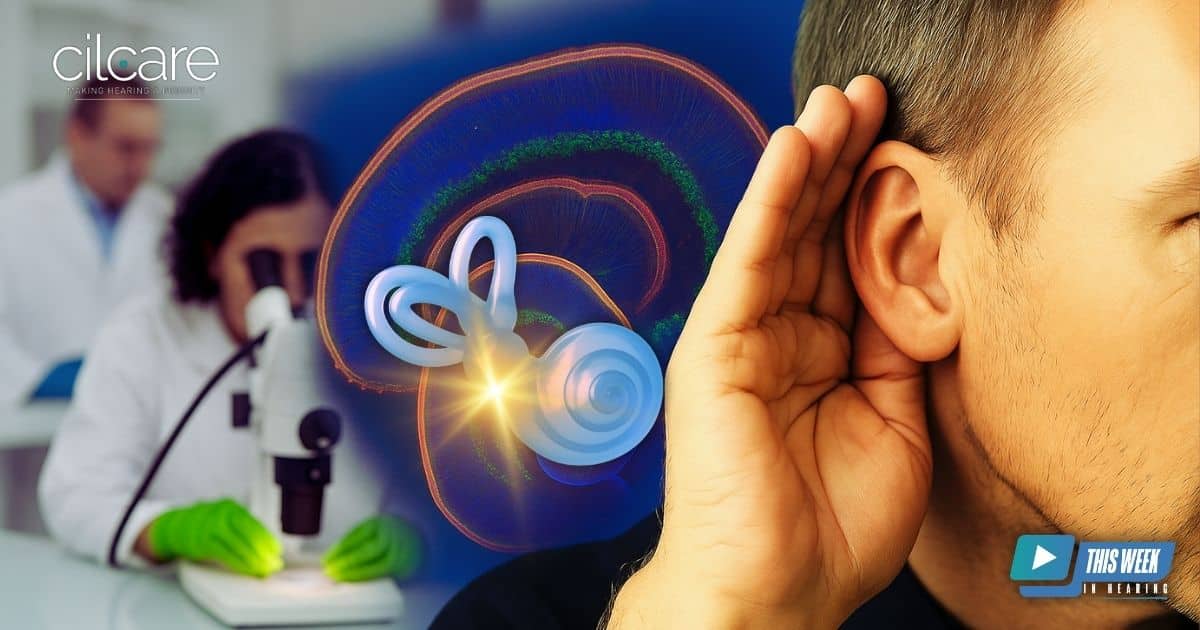
What if we could treat hearing loss before it shows up on a standard audiogram? Celia Belline, CEO and co-founder of Cilcare, shares progress on the company’s lead compound, CIL001, developed to treat cochlear synaptopathy—often referred to as hidden hearing loss.
A Phase 2A clinical trial is planned to begin later this year, targeting individuals with type 2 diabetes who are more likely to present early signs of the condition.
The conversation explores how early-stage auditory synaptic damage may contribute to both hearing difficulties in noise and tinnitus, why timely intervention matters, and what’s ahead for the hearing therapeutics field.
Hello, and welcome to another episode of This Week in Hearing. I’m your host, Brian Taylor. And our topic this week is hidden hearing loss and biotech approaches to treating it. And I’m really pleased to have our guest here today, who is an expert in this Celia Belline, who’s the CEO of Cilcare Therapeutics, which is a biotech company specializing in neurotechnology. Celia welcome to This Week in Hearing. It’s great to have you back. Thank you, Brian. Very happy to, to be again with you. Yeah. Okay? Been a couple of years, I think, and since it’s been a while I thought it would be a good chance to maybe update us on the mission of Cilcare and your role within the company. Yeah. So I’m Celia Belline. I’m a co-founder and CEO of Cilcare. Cilcare is a biotech specialized in auditory sciences. It means that we work both on the detection of some types of hearing loss and the treatment with drugs that we try to, to cure. We started the company back in 2014. We are based in the south of France. This is where our headquarter is. But we also in the US in the Boston area since 2017. So I have teams both in the US and in France. We have a platform, an R&D platform, that enabled us to develop any types of modalities for addressing different types of hearing loss, meaning gene therapy, cell therapy, small molecules, any kind of modalities. So we test the efficacy, the distribution, the treatment scheme the dose that needs to be used. We select the population that we want to target, the disease that we want to treat. So all that kind of things, which is a certain R&D pharma platform dedicated to hearing. And back in 2020, we license compounds that are small molecule with the objective to target cochlear synaptopathy, which is the first stage of age-related hearing loss. So the objective for us was to try to address hearing disorders at the earliest stage as we can to be able to stop the progression and reverse the disease, which is what we do. So we now have a lead compound that is called CIL001 that is ready to enter phase 2A. So in a clinical development from a pharma perspective, it means that we’re ready to start treating patients that have that cochlear synaptopathy with our drug, CIL001. When you do a clinical strategy one of the important points that you need to figure out is how you’re going to demonstrate in a short sample of patients the efficacy of a drug on a given disease. And that is not so easy, because you need a very homogeneous population for which you understand very precisely the disease and where you know the size effect of your drug potentially, so what you will be able to reverse and how much the patient will feel it concretely. And so to do that, what we have done is that we have selected subpopulation of patients that have that disease, so cochlear synaptopathy, earlier and stronger. And before engaging and treating them with our drug, what we have done is that we have tried to characterize very precisely their auditory function to confirm what we thought is which is they have a high prevalence of cochlear synaptopathy and how much they have that cochlear synaptopathy. And the first population of patient that was selected was type two diabetes, because this was already somehow published, not necessarily in the sense that we are demonstrating now, but it was already known somehow that they had that cochlear synaptopathy with a higher prevalence. And so we did a study that is called DIAMANT that we are gonna publish soon. That into which we actually tested more than 330 patients with type two diabetes with some criteria of inclusion and exclusion of course. And we have looked at their auditory function, and we have confirmed the presence of cochlear synaptopathy. Now, I won’t say more because this is gonna be published, so I need to keep the secret. Right. Right. No. I completely understand. If we could step back just a moment, you mentioned this condition called cochlear synaptopathy. Is it fair to say that the, the more common name for that would be hidden hearing loss? That what some people call it, right? Yes. Right. That’s, it’s It’s kind of a hot topic here in the United States amongst hearing care professionals and audiologists. You’re seeing more and more published about fitting hearing aids on people with abnormal audiograms and that kinda thing. Can you tell us a little bit about how common that condition is and somewhat, you know maybe a little bit more about what we think’s happening inside the ear? Yeah. Its extremely common a common condition. If you consider that this is the early stage of age-related hearing loss, so the prevalence is at least as important as age-related hearing loss that is more published than this hidden hearing loss part. What we’ve what we see that in some population of patient is close to 40% of the population that can have that condition at some point in time. What is alerting or, or aggravating or or giving more importance to this hidden hearing loss is that it seems that we see it coming earlier than before. So at younger population, when you talk with those younger population, they already have that condition much earlier than before. And this is certainly leading to lifestyle condition, and headphones, and no silence, and all that kind of thing that you see and you know. So what it what, what it means in the ears, so it’s, it’s aggravating by noise, by inflammation, by age. Its a disconnection of the synapses from the inner ear cells to the auditory nerve, but it’s a retraction of those synapses. So there’s no death of the synapses yet and the fibers are just retracted. And it means that you have about 20 fibers that link the inner ear cells to the auditory nerve, and when you start to have less and less and less connection, the signal is less and less and less good, and this is when you start not understanding speech in a noisy environment. But those synapses and those fibers, they’re not dead, so that’s the good news. And for many years, from what we hear, and, and the key opinion leaders in the field talking about the topic better than I do right now. So they explained that actually there’s a long period of time where you can still have those fibers grow again and those synapses reconnecting, and this is what we try to do with Cilcare. Exactly. No, that’s a very clear explanation. Thank you for that. I’m curious to know, how do you administer the intervention or the therapeutic? How is that, how is that done? Yeah. So it’s a trans-tympanic administration, so that we consider as a standard practice at the ENT doctor. It’s a thin needle that go behind the tympanic membrane, and you go into the middle ear, you inject a gel form or a lipidic form, so something that will actually go on the round window membrane, and by diffusion goes into the cochlea. So with SIL001, we intend to do only one injection, and after one injection, what happens is that the drug is still in the cochlea, in our ear fluid of the cochlea, for 30 days at least after a single administration. So it remain a long time within the cochlea. And what we saw also with our drug is that after, after this single administration, when you treat cochlear synaptopathy in reference model of cochlear synaptopathy, 35 days after the injection of our drug, you have a full recovery of the amplitude of the auditory brainstem response, the (ABR) wave I that we talk a lot about, that, that would represent, you know, if there is a decrease of the amplitude, the presence of cochlear synaptopathy. And we also see, and, and this is of course in pre-clinical settings, a full reconnection of the reborn synapses, pre and post-synaptic connection, and we see a co-localization of pre and post-synaptic marker. So meaning that there’s really a reconnection that functionally is translated into a better hearing in noise. Right. And that’s the trial, the CIL001 trial that you’re referring to? Yeah. So, this study on type 2 diabetes patients is supposed to start at the end of this year, beginning of next year. So that’s the target. So at the moment, we are preparing the study. So we are at the moment where we do what we call the site qualification visit, so identifying the sites that will perform the procedure. In, in our study, the, the don’t say the tricky part, but the originality of the study is that we are making endocrinologist and diabetologist work together with ENT. So there’s a kind of couple into the study, and so we qualify both type 2 diabetes sites and ENT sites, ENT being the one administrating the drug, but the diabetologist being the one identifying and recruiting the patient. That’s very, very good to know. Thank you. I was on your website recently, and I noticed there was another clinical trial, CIL003. Could you tell us a little bit about that trial and what that’s about? So CIL003 is not a trial, it’s another compound. Okay. Another compound. All right. Yeah. So CIL001 is the compound. And then the study, they have names, RESPLONG, RESPOND, REACT. So we have several names, SAPHIR, DIAMANT. So that’s name of the study. CIL001 is our lead compound, so the first one and most advanced. And then we have another one that is called CIL003, and this compound is a little different. Okay. I cannot say a lot about it because we’re still in you know identifying the patents and protection pathway, identifying target population but it’s a, it’s, it’s gonna be a very interesting compound as well. Okay. Well, well it’s a reason to have you back in a few years. Yeah. Another question I have for you is you know, over the next three to five years, if you can kind of project over that period of time, how do you see…… some of these compounds coming to market, how do they address… How, how would they be used possibly in the clinic? If you could kinda give us your take on that. Yeah. So this is a, a huge work that I think every company working in this hearing field is. Is doing. It’s, it’s very important to identify how the drug is going to be administered, what’s the burden of disease, which patient are going to require that treatment and on which basis and what’s effect and added value the, the drug will bring to the patient. So, I, I don’t have a final answer on this. It’s really work in progress. What we imagine, so hidden hearing loss is one thing. The other thing is that cochlear synaptopathy has been described as being potentially one cause of tinnitus, and when you talk about tinnitus, there’s no more question about the burden of disease and people with tinnitus and especially with severe tinnitus, they’re all looking and… This is something we’ve discussed already together, but they are looking for a treatment now. So, it’s, it’s very, very clear. So there are different aspect in how the drug is gonna be marketed and then used by patient. There is the one that say we need to address cochlear synaptopathy because it also affect the active … population and that’s a disability daily not to hear in a noisy environment. But for this, you still need to educate people and make them understand that the earlier they treat hearing disease, the better it is. ‘Cause otherwise, they think it’s an aging disease and so it’s normal that you lose your hearing along the time, which is not the case. And that’s the same for hearing aids, you know, and that’s a barrier to being equipped with hearing aids as well. So unless you really make this link with, you know, cognitive decline, dementia, and you put bad words saying that this is super important because if you don’t do it, there’s going to be something worse happening. Right, right. And, and in that case, they start to understand what the problem is and why they need to address it. Otherwise, it’s, it’s still not really yet in the mind of people that they need to care about their hearing as early as they can. But when you talk about tinnitus, and this is what is interesting with cochlear synaptopathy or, or hidden hearing loss, is that if effectively treating cochlear synaptopathy or hidden hearing loss finally… And I put bracket put all the I would say hypothesis behind that. There’s nothing sure. But if treating and addressing cochlear synaptopathy means that you have an effect on tinnitus, in that case, no question. You’re on the market, and you have patients, a lot of patients. We receive about 20 emails per week of patients that wants to enter into our clinical trial both for tinnitus or severe difficulty of hearing in a noisy environment. I can imagine. The demand for something like this is incredible. Everybody’s looking for a that has it. Thats that’s, that’s good to know. So I think the future sounds pretty bright. You must be optimistic about what you’re bringing to market. I, I’m very optimistic also because we are I think we are all trying to raise awareness about this hearing loss, the importance of caring about hearing, and we are all… And when all, I’m talking about both the, you know, the companies working on technology, diagnostics, the one having drugs, whether it’s gene therapy, cell therapy small molecule, whatever, we’re all trying really to, and we’re working together to raise awareness about hearing care. And and I think it’s really moving very fast at the moment. We see a lot of things happening very promising, and we see new strategies for… Because it’s, it’s also about strategy drug development. It’s not just, you know, bringing something as a solution. It’s how you bring it, how you demonstrate that this is working in a such… In such a short period of time and with, with so few patients finally and, and still a lot of money. So it’s very, very important that all together we try to find new avenue to, to demonstrate the efficacy of, of different treatments or hearing loss. I see. I’m here with Celia Belline who’s the CEO of Cilcare Therapeutics, which is a I guess, US and France-based biotech company that specializes in neuro-otology. And my last question for you, Celia, is can you share with us your website or where our viewers might be able to learn more about your company and what you’re working on? Yes. That’s your easiest question right now. It’s www.cilcare.com C-I-L-C-A-R-E.com. Excellent. And I’ve been on the website. There’s a, a tremendous amount of great information there. And Celia, we really appreciate your time, and we hope we can have you back on and you can share more details about some of the findings from these clinical trials that you mentioned. Yes. Thank you, Brian. All right. Thanks for your time.
Prefer to listen on the go? Tune into the TWIH Podcast on your favorite podcast streaming service, including Apple, Spotify, Google and more.
About the Panel
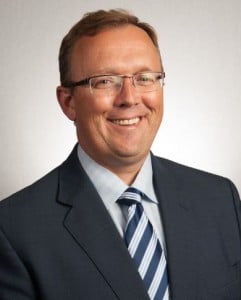
Brian Taylor, AuD, is the senior director of audiology for Signia. He is also the editor of Audiology Practices, a quarterly journal of the Academy of Doctors of Audiology, editor-at-large for Hearing Health & Technology Matters and adjunct instructor at the University of Wisconsin.
Celia Belline is the Founder and Chief Executive Officer of Cilcare. Celia has over 15 years’ experience in the pharmaceutical industry. She worked as the global head of clinical trial logistics and supply chains in Sanofi R&D, was a permanent member of clinical strategic committees, and the Director of projects dealing with major chronic diseases associated with aging, where she developed her interest and expertise in hearing disorders. She trained at ESSEC and London Business Schools, in addition to holding several masters degrees in project management, industrial strategy and health environment.



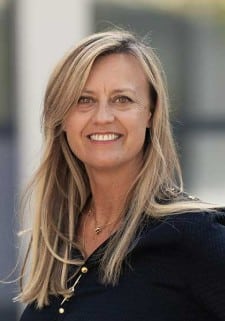 Celia Belline is the Founder and Chief Executive Officer of Cilcare. Celia has over 15 years’ experience in the pharmaceutical industry. She worked as the global head of clinical trial logistics and supply chains in Sanofi R&D, was a permanent member of clinical strategic committees, and the Director of projects dealing with major chronic diseases associated with aging, where she developed her interest and expertise in hearing disorders. She trained at ESSEC and London Business Schools, in addition to holding several masters degrees in project management, industrial strategy and health environment.