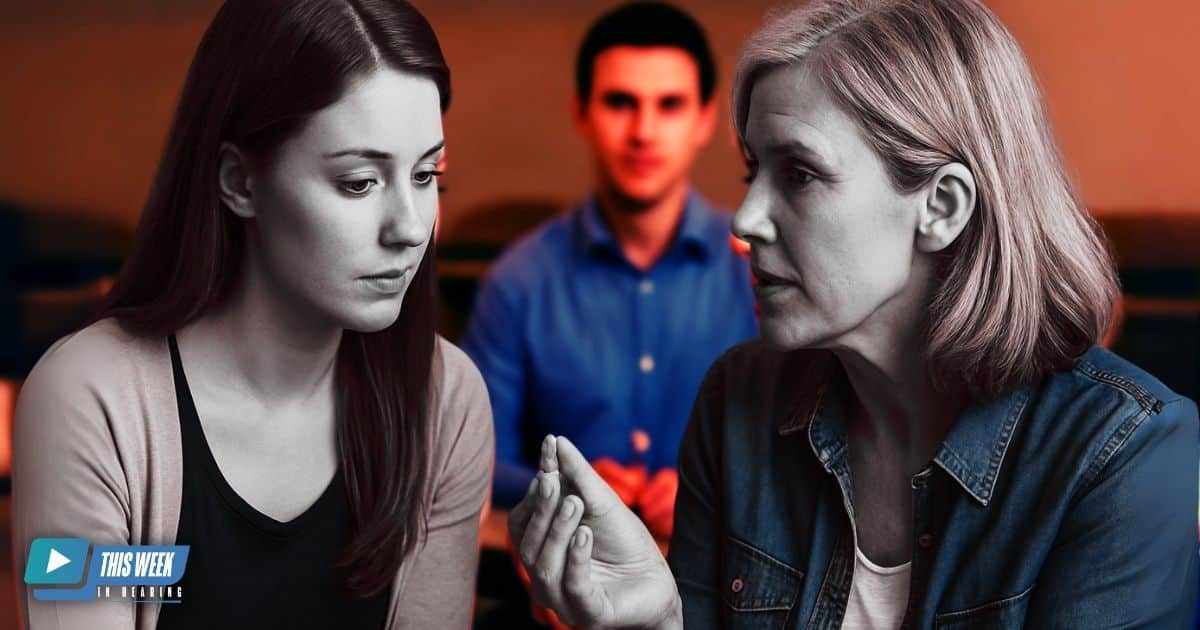
What happens when audiology students learn directly from people living with hearing loss? In this episode, Shari Eberts talks with Dr. Kathleen Cienkowski, audiologist and professor at the University of Connecticut, about her recent efforts to incorporate community-engaged learning into the audiology curriculum.
Their conversation centers around a class project where students read Hear & Beyond—the practical guide to living well with hearing loss co-authored by Shari Eberts and Gael Hannan—and participated in in-person support group meetings through the Hearing Loss Association of America (HLAA). These experiences gave students the opportunity to go beyond technical training and hear directly from individuals with lived experience, helping them develop empathy, cultural humility, and a more person-centered approach to care.
Dr. Cienkowski shares how students responded to these activities and how incorporating the patient perspective earlier in education may help bridge gaps in hearing care, improve trust, and increase the uptake of hearing healthcare interventions.
Full Episode Transcript
Welcome to This Week in Hearing. I’m Shari Eberts and our guest today is Dr. Kathy Cienkowski, an associate professor and program director of audiology at the University of Connecticut. I met Dr. Cienkowski at an ASHA convention about the time that ‘Hear & Beyond’ was published. And we are both passionate believers in the importance of including lived experience and audiology education. And so we hit it off pretty much immediately. And after the conference, we decided to embark on an experiment. Dr. Cienkowski would include Hear and Beyond and other Community Engaged Learning opportunities in her upcoming class. And then we’d report back on the impact and the progress that we were making. And so, spoiler alert, alert. Including the Community Engaged Learning worked very, very well. So thank you, Kathy, for being here on the podcast today. Oh, thank you so much for having me, Shari. Yeah, absolutely. So before we jump right into it, I would love to know a little bit more about you and what got you interested in audiology and how your career has led you to this commitment to community engaged learning. Sure. I got interested or exposed to audiology when I was an undergraduate student. I actually had the opportunity to serve as a volunteer for Deaf Contact, which was a telecommunications relay service. I’m dating myself here a little bit. This was back before we had this widely available and before the Internet was there for people to make appointments online and text back and forth. And that exposure in what I would do is I was the relay operator. So someone would, you know, text in a message and then I would be the voice and make the phone call and make the appointment or place the order for the pizza or whatever it might be. That really opened my eyes to thinking about the experiences that individuals with hearing differences had in the real world. The sort of practical, everyday life events that happened that we never talked about in the classroom. And for me it played, planted a seed about what would become patient centered care that I held onto for a period of time. So I think that’s kind of how I got interested in audiology in terms of community engagement. That’s my journey as an educator. So all the things that I did well, or the things that I didn’t do so well in my career as an instructor I began my career as a clinical audiologist. And so I worked for the VA. We dispensed a lot of hearing aids. As you know, the, the VA is probably the single biggest provider of hearing devices in the country. And when I started my career we were, or I was fitting a lot of hearing aids, but finding that not everybody was necessarily adopting them. And we seemed to be not as successful as I would like. And that adoption rate was hovering around 20, 25%. And it was disappointing. I think I sort of had these ideas in my head, and it wasn’t going very well. And so a lot of that at that time, I thought the devices, and you yourself may have had this experience, as devices from 20, 25 years ago, they weren’t as good as they are now. And then, so it was really easy to say it was the device that was the challenge. And so I did what every good student would do. I went back to school to try and learn a little bit more. And when I graduated and took an academic position, I thought, I’ve got this. Okay. I’m going to teach my students more about the devices and what they’re capable of and how to fit them. And I would go through all of this. And then the adoption rate was still staying around 20, 25%. And it’s been that way across most of my career, unfortunately. And so that sort of led me to start thinking more about what else is going on here. Clearly there’s something I’m missing. It’s not the devices. We have lovely devices these days that do amazing things. The technology is great. The integration across different types of. Is wonderful. And yet still there’s so many people that have a hearing difference that could benefit from many things that don’t seem to take advantage of it. So to me, there’s a piece that’s missing and I started thinking more about what that piece might be. And when you and I connected at ASHA I thought, okay, this is it, right? We. We need to. What’s missing from my education is the stakeholders, the individuals with hearing loss don’t really seem to have a role in. In how the professionals are educated. And there’s so much that we can learn from our patients that we see and their lived experiences that our students just weren’t getting exposed to in a very formal fashion, I think in the classroom. That’s incredible. I love that. And I think that is exactly it’s very well stated what you’re saying, and sort of where our goals align, right, Is to make sure that the person with hearing loss is really represented in everything that impacts them, including the education of the professionals who are going to care for them. So I love that. But everyone might not be familiar exactly with community, engaged Learning. So can you talk a little bit more about what it is, why it’s important and the unique benefits that students are going to get from this type. Of learning The community engaged learning is certainly not a new concept. It’s one that I think other healthcare professions have embraced. So you see it in medicine, you see it in nursing quite a bit where the goal behind community engaged learning is to get students to work in, take their academic coursework and tie it with a meaningful hands on real world experience. So in essence providing services in the community in a way that you’re really interacting with those patients. And it emphasizes collaboration. So in this case the students, the instructors and the community partners, you’re all equal in terms of bringing something to the table to help improve whatever that healthcare services. So in this case with hearing loss, we want to bring individuals in who have that lived experience along with the academic information that I’m giving them about the devices and the treatment options and then the students learn from all together. And it really is such a unique opportunity. It’s an eye opening opportunity I think for students to really see the impact of the work that they do on someone’s life. It allows them to get a broader understanding of the diverse community that they’re working with. It helps them to develop I think a little bit of humility or cultural humility around what they’re doing. You know it’s very easy for a healthcare provider to provide information. You should do this. But I don’t have a hearing loss. And so for me to say that I have a different experience. Right. So I think that that’s helpful. And it really is focused on patient centered care. And so all of those aspects make it a unique experience. And what we hope will happen is that we can build some trust between the community partners and the healthcare providers. So you know, audiology, you know, we have sometimes you know, a good and a bad relationship, you know, in the broader community. And I understand that because we do, I think a lot things successfully but there are definitely things that we can do better. And I think starting this kind of engagement early on helps to build that trust in those providers. And ultimately there’s good evidence to show that if you establish this, that there may be improved uptake in the evidence based treatments. And that’s really what got me into this, is this idea that why are we not reaching all the people that we can. Well maybe this is a way to sort of cross that bridge. And to help to increase the uptake of some of those interventions. That makes sense. So in this experiment, we, or you included the community engaged learning in an advanced hearing aids class rather than sort of an Aural Rehab class or some other class where you would maybe think it was more natural fit. But why did you decide to do that? I think that was sort of a very interesting approach and a very successful approach. But what, what made you decide to do that? I think first and foremost that community engagement can happen in any course in an audiology program, especially ones that are clinically focused. And because at any point that you’re interacting with the patients, you should be engaged with that community. For me at UConn, it was in part because of the way our program is structured. So we, we teach about hearing loss management using three courses that are focused on devices. So we have like a beginning hearing aids class, an advanced hearing aids class, and a cochlear implant class. And then we also have aural rehabilitation classes. But the way our curriculum is structured, the hearing aids classes come first. And so for me, beginning hearing aids, they don’t know quite enough. Thats really just, hey, this is the device, these are the parts, this is how it works. But the second class, the advanced class, really focuses on individualizing that fitting and how you can best match your technologies to your patients needs. And so to me that was a perfect place to put it in. I didn’t want to wait, I don’t want to wait until students are in the second year of their training program to start having them engage with the community of individuals that have hearing differences. They need to, that should be semester one, day one. They should start being, having those conversations because these are the individuals that you’re hoping to serve and you want to get their impact, their input right away in that process. Yeah, no, I absolutely agree. And the, and the earlier that people are exposed to this type of information, it just, it’s like osmosis, right? Like it just becomes part of how they approach all their future learning. So I think that makes a lot of sense. So let’s talk a little bit about the specifics in terms of what you included in the class, what experiences you. So we approach it as community engagement within the context of the hearing aids class. I should say that this is not a service learning class. And if there are educators that are listening to this or watching this podcast that’s a little bit different and a lot of universities, my own included. They have very specific guidelines on what goes into a service learning class. But community engagement allowed us to have opportunities for the students to have authentic engagement with stakeholders within the context of the class. And I included two things. One was when I saw your talk and you said, wow, I’d really like to get this book into the classroom. I was like, oh yes we have a way. I know how we can do this. So that was one was the book and the other is working with hearing loss support groups. So the way that I approached this was for the book. We did a book review. So I was very fortunate in my class that you were able to come virtually and speak to my class and talk about what drove you to write the book, what did you hope people would take away from it, how you thought it might be used. And then I sent the student to. Students off with the book. Because I wanted them to read it and they don’t have a lot of experience at this point. I wanted them to read it with the eyes of someone who might be a patient, how they might use this, how they would use it in, in the context of their practice. And then their assignment was a written assignment based loosely on the discussion questions that you actually provided in the book, which I thought were fabulous. And then I wanted them to think about, okay, now that you’ve gone through this and the information that’s in here, you know, what, what, what would you do with this next? Who, who might you recommend this to? How can you use this? Getting them to think a little bit about, you know, how we can support the patients once they leave the clinic. So that was the book part of it. The other part of it is that I require all my students to attend an HLAA meeting. And it has to be an in person meeting. I know that many chapters since COVID have opted to have online meetings. But I think the biggest benefit for the students is actually to have the side conversations with groups if they’re willing. They learn so much from that. And so they can pick any chapter. And we’re lucky in the Northeast that it’s small. And so within driving distance from my university, there are four or five chapter meetings that my students can get to. So we’re very lucky in that. And so the students pick a day, they go to the meeting, and then I give them a guided reflection framework so that they after they’ve had the experience, I want them to describe to me what happened. I want them to relate that experience back to their own personal experiences. Did they see any connections between their lives and the lives of the people that they were talking to? I want them to reflect on what they learned. Were there things that surprised them? You know, what did they take away from this experience? And then finally, how can they incorporate some of those takeaways into what will be their future clinical practice? I find that that experience is usually eye opening for the students because oftentimes the students haven’t seen any of the clients outside of the clinical visit. So they’ve never seen somebody in a different setting. And just to have that opportunity where there isn’t the professional or the instructor sort of there in the background, just allowing them to have a free conversation has been really quite insightful, I think. Yeah. And I know as a member of one of those support Groups we love when students come to our meetings. We are very, very welcoming because we have so much we want to share and we want to hear their perspective as well. And it goes to building that trust that you were talking about as well. So what were the student reactions to these experiences? Oh, I think that overall the students found it to be a very positive experience. First and foremost, it’s different. And so from, from that perspective, I think they go into it perhaps a little bit reticent because it’s, it’s not. They’re used to me lecturing at them and giving them content, and now I’m telling them to go out and experience something. So once we get over that initial, this is a little bit different. Think that they’ve taken so, so much away from it. What, what I actually did at the end of the experience is I, I asked the students to give me some feedback on both the book activity and the support group activity and some of the things that I got from the students, if I can share. Some of the quotes that the students told me were, for example, with regards to the book it’s not just a book for those who have recently diagnosed, Been diagnosed with hearing loss. Although it’s great for that purpose it should be studied by clinicians so that we can understand how people cope with hearing loss before coming to see us. Right. And how our clinical choices are interpreted by individuals, whether they’re right or wrong. Another student says, we learn in our classes about the struggles and the problems for people with hearing loss. And sometimes I think we, we have to take into account the human aspect. I really want to work towards discussing support groups more and resources with patients. I think that student in particular recognized that we tend to be technology focused many times in our visits. And so she was looking a little bit beyond that. And this other student said, as a future clinician, I want to emphasize to patients that they deserve to participate in their life. Love that. And what a powerful message I think that was to come away from the book. Really I couldn’t have said it any better. And then with regards to the support group one student said, the most important takeaway from this experience for me is that I don’t only want to serve a population, but I want to support them as they move through a world that is not thinking of them. Wow. Very insightful comments from the students. Yeah, they put so much into it and I think they walked away from it. With what I would have hoped was the best outcome is they began to look at the patients as individuals with lies instead of. This is an audiogram that I’ve measured and here’s a device that will address those hearing differences. They really, they took patient centered care and they really put the patient back into that which I think was what I the best outcome I could. Have hoped from that and developed empathy. Right. They were able to sort of put themselves in that situation. And when you join with a patient with empathy that really develops that trust and really just creates the better relationship which leads to better outcomes. So I think that’s, that’s wonderful to hear that, that so if there are other educators listening, they might be wondering how hard this is to do. Can you talk a little bit about that, you know, sort of your experience as an educator bringing this into the classroom and, and any tips that you have for them if they wanted to add community engaged learning experiences as well. I will say from the get go I’m 100% behind it and I do hope that more people will take this on. It does take planning that I will say, but that’s true anytime I teach a course in a new way or I teach a course I’ve never taught before. What worked out well for me is because the course that I was going to offer this in was a spring semester course that gave me the fall to kind of plan and structure it out. But you need to set up a timeline. You have to identify who your community partner or partners are going to be and then create those activities in advance. Also it’s very important to take into account how you are going to interact with the students. So you have to plan for those student deliverables. And think about how you’re going to have the students reflect on what they did so that they can take something meaningful away from it. That’s really important. And then consider, you know, once you’ve gone through this process as, as I have my, my next thing is well, what went well, what didn’t and how am I going to fix it for the next, next go round. But again I think it’s just planning. In terms of tips I would say tip number one is you’ve got to be flexible. I I discovered even though for example we have four or five chapters that are nearby where students could go for their visits. I had a student who available on a Saturday and it turned out that almost all of our chapters were meeting on a Saturday. So I had to have sort of a secondary plan for how I was going to get this student to a meeting and how I was going to allow the student to have that interaction. So that’s one thing when the more people you bring into the mix, the more flexible you have to be with your schedule. The other thing that I think is important is to plan to debrief with the students. I don’t ever want to send a student off to do an activity and then not, not have time to sit down with them afterwards and talk about what they learned. And there was one particular instance when we did it this past semester where a student attended a group and there was sort of something didn’t go right with the technology in the group. And the group members were not happy, rightfully so, that the technology wasn’t working and they needed the technology and they were vocal about it. But it got a little bit tense. And it made some of the students uncomfortable because they weren’t expecting that. And it was good, it was good for us to sit down and have that conversation because they needed to work through that discomfort in order for them to sit back and say, oh, wait a minute, okay. But there’s, there’s a real issue here. There’s, there’s a lack of communication access that should be there, that somebody really needs. And they, they saw it, you know, they saw it real time and. But it was important to have that debriefing in order to allow the students to work through that process, to be able to kind of understand what happened and then think about what might be done differently. So that’s important as well. I think those are some great tips. And sometimes things like that that are unexpected, you know, can be a positive. Right. As long as you have that opportunity to work through it. Because you can see how important that communication access is to the people who need it. Right. And maybe it seems if everything goes smooth, maybe you don’t see sort of that emotion and that real need behind it. So it’s it’s a mixed bag, but I think in, in some ways it’s a positive. Yeah I would agree with you 100%. You, you learn more from things that don’t go well than things that do. Yeah, absolutely. So how can people stay in touch or learn more about this work? You’ve sort of you know, rather than recreate it from scratch, are there ways that people can reach out to you? Or how can, you know, People make this a little easier to take on. I’m certainly happy to have anybody reach out to me and my, you know, my contact. I’m at the University of Connecticut. And if someone just wants to reach out to you or me, I’m happy to get in contact with them. Also you and I did a seminar for Audiology Online, and I think that that’s recorded, so people could go back and they could also listen to that, and I think they could get some great information that way as well. Absolutely. And I would encourage people to reach out to me as well because I’m always happy to come in and provide some patient perspective to any group of students. So. Wonderful. So any last thoughts that you’d like to share before we wrap up? I think my only thought is that it’s a great opportunity, and I’m so grateful that you were willing to come into my class and we started this conversation and this activity. I hope more people will take you up on it and me up on it because to me, it is absolutely an invaluable learning experience for our students. Well, thank you so much. You’ve been a fabulous partner. I’ve loved working on this with you and to continue to work on this with you. And so just to let people know, that AudiologyOnline course is called How to Elevate Aural Rehabilitation Education Through Community and Engaged Learning. If you’re looking for that, or please feel free to reach out to either of us, and we look forward to hearing from all of you. Thanks so much. Yeah, I appreciate it. Thank you so much, Shari.
Resources:
- Watch their full seminar, “How to Elevate Aural Rehabilitation Education Through Community and Engaged Learning”: https://www.audiologyonline.com/audiology-ceus/course/aural-rehabilitation-education-40399
- Learn more about Hear & Beyond: https://livingwithhearingloss.com/hearandbeyond/
- Contact the speakers:
- Shari Eberts: shari@livingwithhearingloss.com
- Dr. Kathleen Cienkowsk: cienkowski@uconn.edu
Be sure to subscribe to the TWIH YouTube channel for the latest episodes each week, and follow This Week in Hearing on LinkedIn, Instagram and X.
Prefer to listen on the go? Tune into the TWIH Podcast on your favorite podcast streaming service, including Apple, Spotify, Google and more.
About the Panel
 Shari Eberts is a passionate hearing health advocate and internationally recognized author and speaker on hearing loss issues. She is the founder of Living with Hearing Loss, a popular blog and online community for people with hearing loss, and an executive producer of We Hear You, an award-winning documentary about the hearing loss experience. Her book, Hear & Beyond: Live Skillfully with Hearing Loss, (co-authored with Gael Hannan) is the ultimate survival guide to living well with hearing loss. Shari has an adult-onset genetic hearing loss and hopes that by sharing her story, she will help others to live more peacefully with their own hearing issues. Connect with Shari: Blog, Facebook, LinkedIn, Twitter.
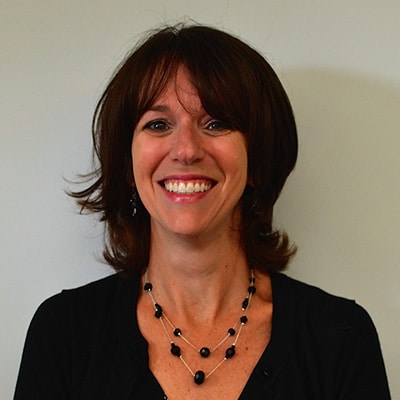 Kathy Cienkowski, PhD, is an associate professor of and program director of Audiology in SLHS. She is also the UCONN LEND Audiology Discipline Coordinator. She studies comprehensive aural rehabilitation (AR) for individuals with acquired hearing loss with an emphasis on care across the lifespan. She is currently investigating factors underlying successful hearing device use, including the impact of health literacy and patient-centered care.