

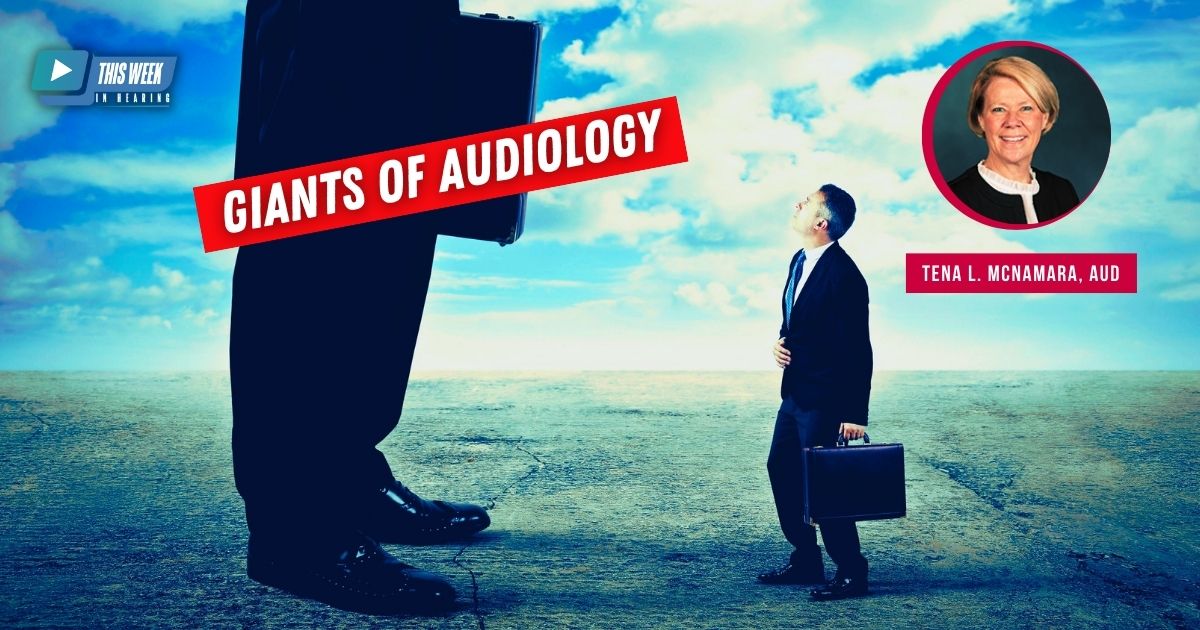
Dr. Tena McNamara’s audiology journey has spanned clinical practice, academic leadership, advocacy, and national service. With more than four decades of experience and dual certification in audiology and speech-language pathology, Dr. McNamara has worked across educational systems, early intervention, and higher education.
She currently serves as a pediatric audiologist at Midwest Children’s Therapy and is the immediate past president of the American Speech-Language-Hearing Association (ASHA). A strong believer in mentorship and lifelong learning, Dr. McNamara has shaped the profession both locally and nationally. She has helped launch multiple audiology clinics, co-chaired major conventions, led state and national organizations, and advocated on Capitol Hill for legislation that expands audiologists’ role in patient care.
In this conversation, she reflects on her wide-ranging career, from rural schools to academic departments, and shares lessons learned about leadership, service, and the future of audiology.

Full Episode Transcript
Welcome to This Week in Hearing and our special series on Giants in Audiology. Hello, I’m Bob Traynor, your host for this episode. And today My guest is Dr. Tena McNamara, pediatric audiologist at Midwest Children’s Therapy in East Peoria, Illinois. Dr. McNamara is also the current, past, immediate past president of the American Speech Language Hearing Association. Tena, thanks so much for being with us today to share your journey from working in the trenches with little kids and school age kids and all the kinds of things that you have been doing all your career, I mean, all. All the way up to the presidency of ASHA. Yeah, it’s been, I think you summarize that very well, Bob. It has been a journey. So. Well let me take a couple of minutes for our, our group to read the bio that is read whenever you do like a talk someplace and that kind of thing. So here we go with that. Dr. McNamara is currently employed as an audiologist at Midwest Children’s Therapy and as the coordinator of the Cultural and Informational Hearing center in Peoria, Illinois. She’s a retired associate professor from Eastern Illinois University, Department of Communication Disorders and Sciences, and as educational audiologist with the Special Education association of Peoria County. After 27 years of service, Dr. McNamara has been a practicing audiologist for over 40 years with dual certification in Speech Language Pathology for 33 years. Her concentration on oral habilitation and rehabilitative audiology and therapy, as well as audiological assessment, literacy and central auditory diagnostics and therapy. So again, thanks so much for sharing your, your time in audiology with us Tena. And let’s kind of start off maybe talking about those early years. Oh, yeah, definitely. Uneventful I was born in a very small town, about 1100 people. Actually my dad was the mayor and my mom was the local hairdresser. So needless to say, you didn’t get away with much because everybody knew your parents. But you know, you often hear people my age and older say, you know, it was a different time, but it was a different time. I mean, in the summers you just got up, went outside, and there was a noon whistle. If the noon whistle blew, you knew to go home for lunch. Or you could decide not to go home. Your parents just assumed that you were okay. And then you’d play outside till the street lights came on. And that’s you know, kind of how you were raised. It was a small town. Everybody was looking out for everybody else’s kids. And I have to admit you know, it was a great upbringing. And I wouldn’t trade but to know that I came from a town that small and you know, a fairly small high school to where I am today. If somebody would have told me that when I was in high school that I was going to be president of an association with 230,000 members, I would have just laughed in their face. But you know, in my high school years, I was just your typical high school student. Back then, girls sports were just coming of age, so there, there weren’t a lot of girls sports, so. And there were guys in the girls sports at that time probably. Yeah, yeah, there, there was we had I, that was just when track was starting. So track was my thing. I, I ran track and still to this day I’m a runner. I do a couple of races each year. The advantage to that is when you’re my age and you run, you’re running as a senior citizen, you almost always get a little medal because there’s not many senior citizens that are still running. So. But I do run in a big fundraiser every year for St. Jude. Its a 30 mile kind of tag team. And we raise money for St. Jude research. And I also tell my husband running saved him from many, many probably dollars that would have been spent on therapy. Running was my release. It was my way to kind of get my thoughts back in order. And so. Well, you told me, you even told me that that your uncle owned a hardware store and a bag of Candy was only 10 cents exactly. So we used to. You can’t even get people to stop. Step over $0.10 pieces on the floor. Now you. No, you. And we used to roam the city and collect Coke bottles. And then we take the Coke bottles to the local grocery store and then we’d go to my uncle’s hardware store and buy our big bags of candy. And I don’t know how I have any teeth left, to be honest with you. They haven’t all rotted out. Well, you know, you also mentioned to me that your brother was quite an influence on you. And you guys were, are still close. And so, and so we are. Its interesting. We’re 11 months and 28 days apart. So growing up, he absolutely hated it because we were the same age for two days and he’s the older one, so he just did not like that I was the same age as him. Now he loves it. He you know, the minute it’s, it’s My birthday and I’m the same age as him. He just harasses me the whole time. But he he really did have a big influence on, on my life and what I do. Not necessarily my career in audiology, but just the fact that I went to college. I kind of just followed in his footsteps and he you know, there back then and I hope people that are my age can understand this. It really if a girl went to college, it was oh okay, the girl went to college. Boys were expected more to go to college. Girls weren’t expected as much. So I think my parents would have been fine if I would have found a career that I, you know, and it didn’t involve college. But he went to college and there was no if and buts about it. If my brother went to college, I was going to go to college and, and he ended up being a big corporate executive and traveling the world. And he is retired now but definitely he influenced that decision of mine to attend higher education. Well, the running component that you mentioned earlier really started in in high school with the girls athletic stuff and all those kinds of things. And and, and really it’s, it’s ladies like yourself that really, really got a lot of this stuff going, you know, back even at that time and said okay, you guys better get some sports for us so we can really show what we can do, that kind of thing. Yeah, yeah. Title 9 was non existent then. I think by senior, junior or senior year they started basketball. But I, I wouldn’t have been good at basketball. So I just need to stick with running. But they did, you know, just. There was a lot of girls at that time that were big influences that helped that trajectory, you know, for those girls sports. Well, you also worked in a, in what I understand it doesn’t look like it’s an exotic Michelob or Michelin restaurant. But you worked at a restaurant in this little town as well? I did. It was perfect for you know, someone that was a little busy in school. I worked on Saturdays from ten to two every week. Waitress debt. It was called Jean and Jerry’s Restaurant. And trust me Bob, I was not a good server. So I even spilled hot coffee on a guy one time. It was, I was like. But she, you know, the Jean who owned the restaurant, she kept me on all four years while I was in high school. And I think probably the reason was because I was dependable, you know. I, she knew I was going to be there at 10 o’ clock on Saturdays and do my job. I was never late. So I think that dependability is something that was ingrained in me from those early, early jobs. Yeah. Well, then, then from what, from what we talked about. You went to Bradley University now? Yeah, I wouldn’t say that Bradley was one of those places that’s on the, on the hot list in speech and hearing at this point in time. But you mentioned it was a, it was a fabulous experience for you. It was the, it was a great program and a great school. What happened was after I graduated sometime In the later 80s, you know how presidency and administration changes things. They had a president that came in that wanted to focus the funds on the larger programs. Well, anybody knows that speech pathology and audiology aren’t large programs. And so they just cut it, they cut it out. And it was really heartbreaking for us that were alumni there. And so it was interesting because I have been a supporter an alumni supporter of Bradley through the years and I’ve had several of the presidents in between have said to me, oh, why did they cut that program? Well, you know, it just happened and it is what it is. But now it’s interesting because there is very strong talks and they’re working very hard to restart a speech path program. They’re not audiology at this time, but. Speech path. But if anybody knows Peoria, Illinois, we’re in the middle of Illinois. So we have the largest downstate medical facilities in the state. You know, Chicago of course has the largest period, but we have the largest downstate medical facilities. So there were tons of medical opportunities for you know, the students at Bradley for externships and things. And it was really a I felt a good area for the program. They had a good program in place and it was just. Yeah, it was heartbreaking. While you may even mention that one of that. That there was a favorite patient that kind of lured you into audiology at Bradley from what I, from what we’ve talked about. Yes. So it was very different back then. We started doing therapy with clients as a junior undergrad, junior year. And so there was a lady that came in. I can still remember her face, I can still remember her name. And she had a significant sensorineural hearing loss. And as you know, technology back then was not very advanced. She wore very powerful hearing aids. But she just had that incentive and drive that she wanted to still communicate with her family and her friends. And so she came in for speech reading, lip reading therapy. And that’s what we worked on. And that really kind of sparked my interest more in the, you know, intervention side of it. And she also taught me some great life lessons, you know, that you know all about being positive and perseverance and It definitely. She was a life changing experience for me. Wow. And. And that was even an under. An undergraduate one. An undergrad junior. Yeah. So. So now we might move to the master’s program and in speech science and hearing science from what I understand too, is, is the. Is is what you were studying then. So where there’s some special people and some special situations that kind of went on during that master’s program. Yeah. Theres a picture that I’ll come up a little later when we talk about people that influence us. But you know, it was. We were placed out immediately in external sites. And I recently did a presentation in Minnesota and I looked over and there’s a gentleman there that looked really familiar to me and he came up to me and we started talking. He was one of my site supervisors in 1980. So. Yeah, and his picture will come up a little later. But I tell you, that was probably the best experience that we had. We were farmed out a lot. We, you know, we. And it seemed that the external site supervisors really understood their role back then. Their role was that we didn’t. We weren’t going to know everything and that they were there to teach just things that we weren’t going to be able to learn in our clinic. Well, and that’s kind of the way it is today. I mean, people need to understand that when you leave your AuD program or your. Or your SLP program, you really only have kind of the fundamental things. You don’t have the real life orientation to the world that people who, as yourself have been in the trenches forever will can offer those young people to give them even a little better launch into the profession. Yeah. And it’s interesting because, you know, when I, I did toy with the idea for a while of speech pathology, and I did take some advanced speech path courses and, and I did student teach for speech pathology. And after I did my student teaching, I really wanted to be in the medical part of that was my thing. I really wanted to be in the medical part and I, and I decided to go audiology. And so that’s when I kind of veered off and went on that track. So. Yeah, and then in the 90s I was working at Illinois State University, and so I just had them analyze my transcripts because I had so many speech path courses. And they did. And I needed to complete a few more clinic hours and I think I needed aphasia. So I went back and did that. And in the 90s, then is when I became duly certified. So, yeah, dual certification is kind of a rare breed anymore. I mean, it used to be, you know, back at a time when, when, when all of us were in school, it was something that people almost aspired to have that, that dual certification. And, and many people had it, but it’s been kind of a dwindling group over, over the years. Yeah, very much so. You There’s a lot more. Well, and I think the, the turning point was when we had the audiology entry level turned AuD, because that really adds a lot longer to a program if somebody wanted to do the dual certification. I think last I checked with ASHA, there’s 600 of us left. Wow. Dual certification. Yeah. There was quite a few back in the 70s, I think, but yeah, you mentioned the AuD. Okay. And I understand that you went to one of my favorite places where I was an adjunct for about 20 years plus, and to the University of Florida. So I understand that was quite a decision to make. And then and then Once it was made, then here, there you were. Yeah, a great program. So I was caught in. I was a mid career audiologist when they decided to transition to the clinical doctorate as entry level level. And you know, you just, you don’t want to be left behind. I mean that’s what it kind of comes down to. So I did research all the programs and I chose University of Florida. And one reason was because they did do. It was kind of a hybrid. So they did let you do some of it, you know, as in home learning. But they also required that you be in person. So every, and I think you taught in that. So it was like every other month we had to meet for a whole weekend in person with our cohort. Basically you would go, you would meet at the beginning, at the end of one class and start the next one. And start the next one. Yeah. My daughters and I were talking about this the other day because my youngest was in junior high when I did it. My, the oldest was in high school. And they were laughing because they, what, what University of Florida would do. They would send you VHS tapes and that’s how you got your clinic. And they said, oh my gosh, mom, we remember those VHS tapes that you used to put in and watch all the time. I just threw away a bunch of those old VHS tapes included even some of the CDs that they came afterward. That came afterwards. So, yeah. And it was in 2002 then when I graduated from University of Florida with my doctorate and just an exceptional program. I’m, I’m really proud to be, to say that I was part of that. Well, and Pi Beta Phi Honor Society and all these other kind of accolades that kind of came with that as well. But it was a little bit of a challenge, you know, when you’ve got a junior high and a high schooler. Absolutely. Yeah. Well, you can all do do math and science and audiology courses at the same time. So. Yeah, yeah, yeah. But, but you didn’t do it without any mentors, as I understand. Right Oh yeah, mentors, I tell you. I strongly believe in mentoring, whether you’re a mentee or a mentor. Theres so much that’s gained from making those connections. One of the biggest influences that helped me to move up in my career is Walt Smosky. He was an audiologist back in the 2000s. He was really nationally known. He worked a lot on billing and coding things. He just really gave me that push and that nudge to go from the clinical to the faculty level. And I always knew he had my back. He really helped me to think and step out of my comfort zone. That was the first time I really stepped out of my comfort zone. And then another one was Gail Richard. Gail Richard was my department chair when I was at Eastern Illinois University. And as you know, Gail was a previous ASHA president. And she again was one that pushed me out of my comfort zone. And I think that is something that people need to realize. If you’re going to you know, move in your career and make advances, you. You’re going to be stepping out of your comfort zone many times. And then it’s always good to have somebody challenge what you think so you can think about, oh, gee, am I right here or am I wrong here? I guess I better go study that a little bit. And sometimes you’re right, and sometimes they’re. Right, and they’re right. Very true. Yeah, very true. And she was very instrumental in that. I tell you, I have. They talk about that imposter syndrome. I have dealt with that a lot, and I’ve done some things that I, after I said yes, I’ve sat there and went, do I really have the experience to do this or the knowledge? And somehow, you know, I come out okay. And the one thing that I have learned is it in all of this, too, is it’s okay to fail. You know, you’re not going to do, especially if you’re challenging yourself, you’re pushing yourself out of that. That comfort level, you’re not going to succeed at 100% and that failure. Sometimes you learn more from that failure than you do your successes. So. Yeah. And the other mentor that I had is somebody that no one will ever hear about or know about. And her name is Judy Stalling. And she was an individual in our area who just was one of the brightest and most intelligent you know people that I ever. Knew she came in. She was a. She was a speech language pathologist and I worked with her for a little bit at Illinois State when I was there. And then she came back to work in the schools because she wanted to be hands on more with kids and students. She changed the whole curriculum of an entire urban school district for reading and never received any recognition for it. She introduced concepts like phonological awareness and things like that into our area and you know, just never received recognition for it. She was just one of those people that you know, really worked for the greater good and will never receive the recognition that she deserved, but made significant success, significant changes in how things were done, you know, that really improved the lives of students. Yeah, there’s a, There’s a whole cadre of unsung Colleagues out there sitting in the trenches every day, working with their patients, just doing a fabulous job of of bringing audiology and speech language just more to the forefront and really doing a fabulous job of working with the kids and the adults and people who have maybe had some aphasic issues and as well as all the other things that we do vestibular people these days are We’re all learning that and some are practicing that. So now and with all the mentors and all the education well, some of the early positions, I assume these were more master’s degree positions you know, beginning in educational audiology, which was in the early 80s. Not too many people knew what educational audiology really was. And I’m surprised somebody probably didn’t say what the hell is educational audiology? I think people still say that sometimes. Yeah, it was interesting because, you know, as I said earlier, I was totally wanted to be in the medical field. That was it. And then what my first job ended up being as an educational audiologist. It was. I look back at it now, I’m not really sure how I did it. I had 20 school districts in five counties. And so I was in charge of assessment, intervention and hearing aid fittings for kids 3 to 18 years of age. Probably hearing screening too, right? Yeah, we did 20 schools. Yeah, we did tympanometry screening. So they had, they had some trained staff that actually did the hearing. And then we followed up with the tympanometry. Yeah, it. The miles I put on my car, you know, that it. But it was a great, great experience. Experience. And that’s when I really discovered that I loved working with children. Yeah. So. Well, you also did some stuff in broadcasting too. Well, you should be on this side of the fence rather than on that side of the fence in some respects because of your broadcasting experience. I think I took a broadcasting class and flunked it at Carney State back years ago. So well, that’s where, how I. Got involved in Western Illinois University, because as the educational audiologist, we shared their facilities. So they asked that we, you know, get involved in things at Western. And so that’s where that experience came from. So. Oh, okay. Well, and then you did some, some, like all of us. You did some time in the ENT clinics, right? Yes. Working for the people who always know more than you do. Right. I was really, I was very lucky. The physician I worked for was very generous and he very respectful and so he really did hold his audiologist in high regard. So I worked in there for a while and then from there I was recruited to be a supervisor at Illinois State University. So I did that. And then that was during the time that I became duly certified. So then the special ed co op in our area. That’s why I say I look sound like a job hopper, which I kind of was a little bit. But they had an opening and asked me if I would come and start their educational audiology program here in the Peoria area. The Special Ed association of Peoria County. So I did that and a little, little speech pass stuff. I can do language and artic. But I always tell people, do not give me a swallowing patient or they will not, they won’t make it. You know, there’s just things I know that are my limit. Then I got recruited back to Illinois State. And this is the other job that I look at that I just shake my head and I don’t know how in the world I did it all. But because of my dual certification, they asked me to come back as the clinic coordinator. And what I did was I did all of the scheduling for our clinic for audiology and speech pathology and did all of the external placements for all of our speech path and odd students. I don’t. I. And when I left, they broke it up, of course. So then they had an audiology and a speech path person. Well, as long as you got somebody there that’s going to really do everything, you keep them there and, oh gee, nobody wants to do all of that. So. So any good chair is going to break it up into kind of a a smaller pod so that people can handle it. Yeah, and that’s when I was at Illinois State. That’s when Walt stepped in. He was clinic. I mean he was our director. Plus also, you know, had been a longtime audiologist in the program. And that’s the person who kind of nudged me to transition from the clinical side to the faculty side. And while being on the faculty side I went back also to help coordinate the audiology placements because I had experience than that before. And then finally in 2009 I moved to Eastern Illinois University. And the reason I did that was that’s when Gail Richard, she was the department chair there. I had an opportunity to get more involved in the ar, the intervention and the auditory training and those kind of things. So what we used to do was we took our graduate students out and we would take them to the deaf and hard of hearing programs in the area and we would provide intervention for those kids, which I absolutely loved, which was my niche of Course And and you led some faculty study abroad projects too. Those were probably partially academic, but partially. Just a whole good time as well. And, and you’re right, seeing places and, and learning about other programs in other countries and those kinds of things. That’s always a real education for all of us when we go places. It was The students were absolutely wonderful. I look back now and I’m like, oh my gosh, what was I thinking taking 28 students across the, you know, across the ocean. But great experience for them. I strongly, strongly recommend any student getting involved, even if it’s just for a couple week, kind of any kind of study abroad or mission trip or something. It really expands their views. I mean it was. The students told me it, it was life changing for them. I and it was very rewarding for me to witness the personal growth that they had and their worldly. One of the best educations you can get is probably with you of course. But the other part of that best education is learning other countries and visiting other places and yes, culturally some of the differences that they may see in the clinic even later. So So that you were also involved with some educational audiology in Hawaii too. Now some of us do stuff in Hawaii because it’s a cool place to go once in a while and others and as well as you know, provide some services and educational things and learn about the population as well. So yeah, their department of education and you know, as you know that their their speech pathologists and audiologists are very spread out. I think they had one educational audiologist for the entire state. So they had contacted me a few years ago and asked me if I’d do some consulting to kind of get some auditory processing diagnostics and intervention going. And so I did that with them for a couple years. And then they had. They hired another audiologist. And from, you know, from that point on, she was a kind of. She was able to take over. But every time we had an IEP meeting, I would say to them, don’t you really think I should be there instead of on zoom? But I could never convince them to send me over there for the meetings. Well, that’s. Their budget is usually pretty, Pretty, pretty minimal. Tried yeah You gotta try it. Yeah. It was a great experience though. Yeah. But even. Even with all of the. The. The ASHA Responsibilities and all the kinds of things that go into the things you were doing at the time, you still were a pediatric audiologist at the Midwest Children’s Therapy place. And I mean, it must be a love for the trenches somewhere along the. Line, you know, and that I, you know, you talk to some people that are kind of not really early career, but not yet quite mid career. And I’ve seen this off and on, especially on social media where they’re just, you know, they’re losing their love for audiology. And my, My feeling is you haven’t found your place place because your love is there. You know, you must have liked it because you went into it, but evidently you’re not working in the right place because if you were, you’re you. That passion would still be there. And I think that’s the thing with me is I was fortunate enough to find places that really fed into what I love doing. And, and I have never regretted being in this field. Never regretting. And I laugh now because I do testing. At Midwest Children’s Therapy, and I do some intervention. I’m kind of waiting away from that more. But my bosses right now there are two gals. One it’s. It’s a multidisciplinary center. So we have speech pathologists, we have another audiologist that comes in part time. We have OTs and PTs. So my bosses are. One is an OT and one is a PT and they’re my daughter’s ages. So. Yeah, that’s always an interesting experience when you’re working with people that. Gee whiz, weren’t you about two years old when I was. Yeah, I could have had them is what it was. But they are wonderful to work for. And the other thing is they have been very kind and gracious in, in the time they have allotted me that I needed for, you know, being on the board at ASHA, and so I really grateful to them. Well, and. And you’ve also done some things on some, Some research projects with, With. With many of your students as well? Yeah poster sessions and lots of mashup presentations, I assume, and things. And still doing it. The picture that we have in there, I took a group of students from Illinois State from. That worked on me, with me when we were in the initial stages of starting that cultural and informational hearing center. And so then we put it in a poster session and presented it at AAA. So. And I do have to tell you, Bob, one of the most interesting projects that I worked on with a student, and this was many, many years ago, we had a student in our program that was from Russia. And so she went back home one summer. And so I sent her on a mission to find out what the criteria was to be an audiologist in Russia and to do some interviews. And she came back and we wrote it up in a paper and had it published. And. But I don’t think we’ll probably have many students from Russia anymore or have those kind of opportunities, but. Well. And. And you’ve also been a consultant doing many things around as more or less a consultant. You know I would think some of the most valuable consultants come from the trenches where you. Where you find the problems and then you present those to the people that are in a place to make. Make those changes, right? Yeah. Yeah. And And you know, it’s. I. The thing that I believe, as far as the consulting part that I am most proud of through my career is I have actually helped start three separate audiology clinics. One was in An ENT office. And it wasn’t even the ENT I worked for. I consulted with a group of ear, nose and throat specialist in Peoria that wanted to start an audiology practice. So I helped them get that started. I did start the one for educational audiology at the school system that we talked about. And then the last one was this early intervention center that I work at now. I came in and helped them to get that program initiated and as a consultant and then of course ended up working for him. So but I think that was if anybody asks what I felt was one of my major contributions in the field and I would say you know, helping to start these you know, centers, these audiology centers because you’re providing services for people that typically wouldn’t have got them before. Well and, and of course could could taking all of those experiences and working into ASHA and AAA committee work and those kinds of things. And was quite, quite an experience. And I think we first met when you somehow called me up and said can you do this? And that had to be kind of a thing because I have a reputation of not necessarily being an ASHA friendly person. Having I think my last ASHA convention I went to before the one you invited us to talk about forensic audiology was about 1994. And and then I think we did a kind of ah in a follow up with Bob Glaser they we got, we got, we got invited to do a short course on, on practice management about 97. And So that was during the wars between ASHA and audiology and so on. And it’s really been a pleasure to get to know you a little bit to find that the war is, is over and, and everybody’s working together and we are and it’s cool to, to see that, that, that you have been part of that process. Yeah And But that hadn’t been a tough call to make. It was. So I, you know I was co chair of the convention and so I was in charge of all the audiology topic. I think we have like 27 topic areas or whatever and I don’t remember how many of them are audiology and knew I knew of your reputation and I needed somebody that was had some knowledge about practice and so out of the blue again out of my comfort zone reached out to you and you were very gracious and consented and you know, so. I think we had, we had some good sessions. We had Amyn Amlani, Deb Abel and some others that just really did a nice job that year. And But So. So you were also. But before you went to ASHA, you were also president of Illinois Speech and Hearing and some other groups that were instrumental in changing some things, you know, locally for. Locally statewide. And then went on to some. Some higher level responsibilities in ASHA as well. But not only ASHA responsibilities, but Educational Audiology Association president and, and understand it wasn’t just once, but it was twice. And Yeah. You know how you find those little groups that are kind of your family, you know, that are really into that area that you’re. And that’s the Educational Audiology Association. And they, they’re not large, but they’re strong and they’re very united. And I was the president and then I was the treasurer, I believe it was. And at that time they were transferred. Another time they were transferring, transferring to a new governance structure. And so they asked if you know, the president that was going out asked if I would kind of put my name back in for president so that they’d have some experience and be able to get this you know, new structure in place. And plus there was just, yeah, a lot of, A lot to it. So of course not being able to say no. But I don’t regret it. I, I love doing stuff for them. I definitely did that. Another one, what that was a big responsibility was our ILAA, our Illinois Audiology Association. They used to have a tremendous fundraiser and they would raise anywhere from which for a state association is I feel very good. They would raise anywhere from 10,000 to $13,000 every year for scholarships. Well, somebody asked me if I’d be on Ways and Means, not really realizing I was going to be in charge of this big fundraiser for two years. That was a lot of work, but that was very fulfilling. And to know that that money was going to Illinois students in audiology. And So Well in 2021 you became an ASHA Fellow. And as I remember, you have to just do a mountain upon mountain, almost a mountain range worth of work as well as be kind of a, a a huge professional in your own right for the fellowship award. So congratulations on that. That had to be kind of a big deal. It was. It. Well, it was the same year I was co chair of the convention. So to have both of those at the same time is. It was very humbling. I, you know, you stand up there on stage with these other people and, and you just feel like, I don’t belong up here. But it was so nice to feel you know, that some people thought you were worthy even though you didn’t. Congratulations on that. As that is a, A monumental kind of an accomplishment, particularly coming from the trenches and sitting across the. Across the table from little kids and yeah, big kids as well. So yeah, now we always have a little moment on the Giants episode where we talk about the coolest things. Coolest moment or moments to date. Now I assume there’s going to be some after. But what’s the coolest thing that has been going on professionally to date? Well, I have to tell you it’s kind of the coolest. And also the worst is the travel that you do because of the people you meet. And you know even like for example, co chairing the convention. I would have never had the opportunity to have gotten to know you and so many other people, you know, without that opportunity. You know, this. This past year as president, like for example, I was And. And this year too was April was pretty demanding. I was gone more than I was home. But the people that you meet and the connections that you make are to me, I, I just could never put it into words what that has meant to me. You know, all of those people, they laugh at home because I always told my husband and my kids before I left, I was going to get a. One of those big cardboard cutouts of myself and just put it on the dining room table. Table. So. And then when I became past present, I kept telling my daughters, oh, it’s. It’ll get better. You know, I’m not present anymore. But it didn’t. I was still pretty busy, but things have really started to calm down now a little bit more. Yeah, but you can bet that those. That those young ladies are extremely proud of mom for sure. So, yeah. Theyre good girls. So but you. But you did some. Some things like kind of a role reversal for the. Where the former student and so on with grandkids and all this kind of stuff as well, right? Yeah. So what I’d say one of the coolest things for me has been when you see a student that you had, that you taught, and it reverses and you become the recipient of the services and they’re the service provider. And we had an issue with my youngest granddaughter who was having. As a baby, was having swallowing issues. And we took her to a swallowing specialist in the area who happened to be a former student of mine. And it was just really honoring and humbling for me to see how. What a competent professional she was and how well she did you know, providing the diagnostic and. And explaining and just to be in that role reversal, you know, it was truly inspiring to me, even at my age. Well, and. And you know, that’s almost a thread that’s gone through most. Many of the Giants discussions is that it isn’t so much what I did, it’s what I get to see my students doing. Yes. And And the kinds of professionals that they became, that kind of thing. So Well, and let’s Now kind of look at you’ve been really involved in. In In developing audiology into a provider level with the ADA colleagues and the AAA colleagues and those kinds of things. So that has to be. In some respects for ASHA to be at the table is kind of foreign, particularly with ADA, who at one time were considered a little bit militant and the AAA people who always were kind of in a little bit interaction not on the positive side with. With ASHA. So, but. But everybody now seems to be sitting at the same table and really assisting getting audiology into the provider level, which is someplace we should have been 40 years ago. But. So how’s that going? I tell you, first of all I couldn’t ask for better fellow presidents from other associations. So the president from ADA and AAA and myself, and we now incorporated the president from. And I have to think it’s the audiology military. I can’t remember. Oh, yeah, yeah. And we need MAA. Sorry about that. How do you say that? Military colleagues. MAA I think. Military Audiology Association. Yeah, I. And we meet every month on every Tuesday, and it’s just us Presidents, no staff or anything from the associations. And we just chat and, you know, talk about issues and, you know, and sometimes even talk about football and, you know, so it’s very, very nice. Very close relationship. And one of the things that we’ve also done is we are working very hard. And, you know, when you asked about things that did not get done during your presidency. Well, we have been working so hard together, aaa, ADA and asha, to move that Medicare Audiology Access Improvement act forward. And did Capitol Hill visits two years in a row as a team, the three associations. You know, I think the passage of this bill will have a huge effect on our field. You know, because what it does is it takes audiologists and it converts them from suppliers to providers. So as of right now, we can’t provide therapy or intervention for Medicare patients. And bill for also takes away the physician’s order requirement for hearing evaluations, which is huge. Which is a barrier a lot of times to get people in for hearing tests. And by being categorized as a provider it’ll put us in that give us that ability also to provide tele health services. So it’s a big bill. I have been working on it since. We’ve had all kinds of versions out there. Since 2009, I’ve been working on it, doing Capitol Hill visits. I mean, that’s just how slow, you know, how that is. Government moves. But it’s just, I think, really neat to see the three associations working together and. And moving this forward. Well, when it’s one of the groups, that’s one thing. Yeah, that’s what you need there. We’re gonna have to work on that. Well, and two of the groups. Well, we might work on that just a little harder, but when three of all the major audiology groups are together chances of moving forward into actually getting it on the table for a vote is a whole lot better. So. Yeah. Again, thank you on behalf of our audiology colleagues and this week in hearing participants for your association with that. And of course, Amyn Amlani and Tish Gaffney. And Gaffney and those others that are really involved in that effort, along with a number of other members of Various associations of all three of the associations that occasionally are hustled to go to Capitol Hill as well, having been one of those at one time or another. So well, you know our discussion is. This is a fabulous discussion Tena. And so from your perspective as a former ASHA president now and on the board, as well as interacting with all these other presidents around the group how do you see the future of audiology and maybe the interactions and the participation of each of the three groups? Because they each have their own orientation. One’s kind of allied to somehow where they think. It’s kind of two professions and one association kind of thing. Another one is more practitioner oriented and the other one is kind of a hardcore audiology, 100%. Let’s move it forward and so on. So with those kinds of. As a lead what do you think the future of audiology is and maybe the interactions and the associations? Well, I, I really honestly believe, and from my interactions with the other association and their staff and their leaders is there’s, there’s a place for everybody, you know and so you know, as professionals we need to work together. I mean, we’re showing that by working together we’re making greater gains, you know, even within legislation and things. And you know, people are going to pick an association based on what’s going to best match their needs, you know. And for me you know, being more into pediatrics I wanted to know what was going on as far as legislation with school related issues. Well, to get that, I’m, you know, ASHA was a better fit for me. If you have a private practice and you want to know, you know, more about you know, building your practice or, or you know, how those kind of issues that are going to affect your private practice, you may lean more towards, you know, ADA. There is a place for all of us, you know, and, and by working together we are going to make greater gains and be able to provide the kind of services that we need in audiology rather than working against each other. And I truly believe that. Well Tena, it’s been truly a pleasure for us to number one, get to know each other over the last couple, three years. Four. Four years or so. But, but also to see that. And I hope this is an inspiration to those colleagues that are sitting in the, in the trenches each and every day doing a fabulous job with kids, adults absolutely. Old people wherever they are, in both audiology and, and those that are involved with speech language as well, because, you know, I may get there someday. And the whole thing is that that, that you can go from that level to another level. And there are people at the high levels now that represent those in the. In the trenches. As well. So so thanks for those of you that are out there. Thanks for tuning in to this Week in Hearing and this episode of Giants and Audiology. Today, my guest has been Tena McNamara audiologist, but she’s also kind of a speechy, too, to some more of an audiologist. Audiologist that uses some speech skills. How about that? Yeah. And the immediate past president of the American Speech Language Association. So thanks so much, Tena, for your fabulous contributions to the profession of audiology and, and to some degree in speech language as well. Because you can’t be the president of ASHA without having both of those things kind of combined. And sharing your career and your journey with us here at This Week in Hearing. Be with me next time when we get to know another giant in audiology. Thank you. It was such an honor. Thank you so much.
Be sure to subscribe to the TWIH YouTube channel for the latest episodes each week, and follow This Week in Hearing on LinkedIn and on X (formerly Twitter).
Prefer to listen on the go? Tune into the TWIH Podcast on your favorite podcast streaming service, including Apple, Spotify, Google and more.
About the Panel
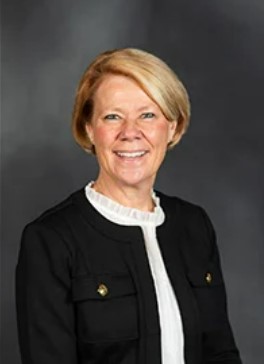 Tena L. McNamara, AuD, CCC-A/SLP, is a past president of ASHA and has served in leadership roles across four professional associations at the local, state, and national levels—three of them as president. Her contributions to ASHA span multiple committees, two terms on the Advisory Council, and leadership roles including Co-Chair of the 2021 Convention in Washington, D.C. She continues to serve on several association committees and remains an active advocate for the professions of audiology and speech-language pathology.
Dr. McNamara’s diverse career includes 25 years in academia and 27 years as an educational audiologist. She currently practices at a private pediatric audiology center and coordinates a cultural and educational resource center for individuals who are deaf or hard of hearing. Her clinical interests include aural habilitation/rehabilitation, audiological assessment, literacy, and auditory processing disorders. She is a Fellow of both ASHA and the Illinois Speech-Language-Hearing Association and is deeply committed to advancing the fields of audiology and speech-language pathology.
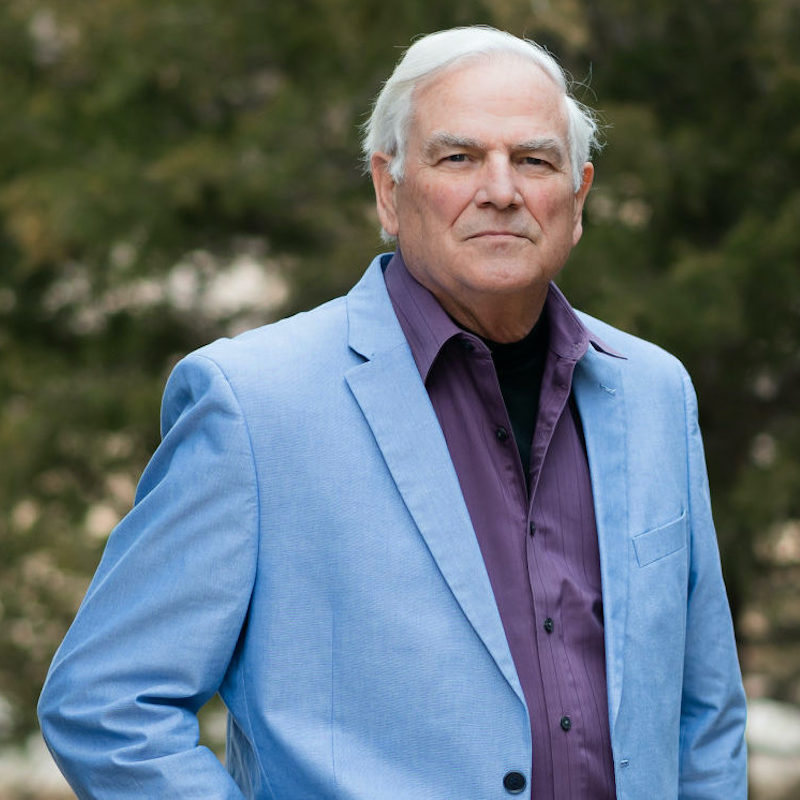 Robert M. Traynor, Ed.D., is a hearing industry consultant, trainer, professor, conference speaker, practice manager and author. He has decades of experience teaching courses and training clinicians within the field of audiology with specific emphasis in hearing and tinnitus rehabilitation. He serves as Adjunct Faculty in Audiology at the University of Florida, University of Northern Colorado, University of Colorado and The University of Arkansas for Medical Sciences.