

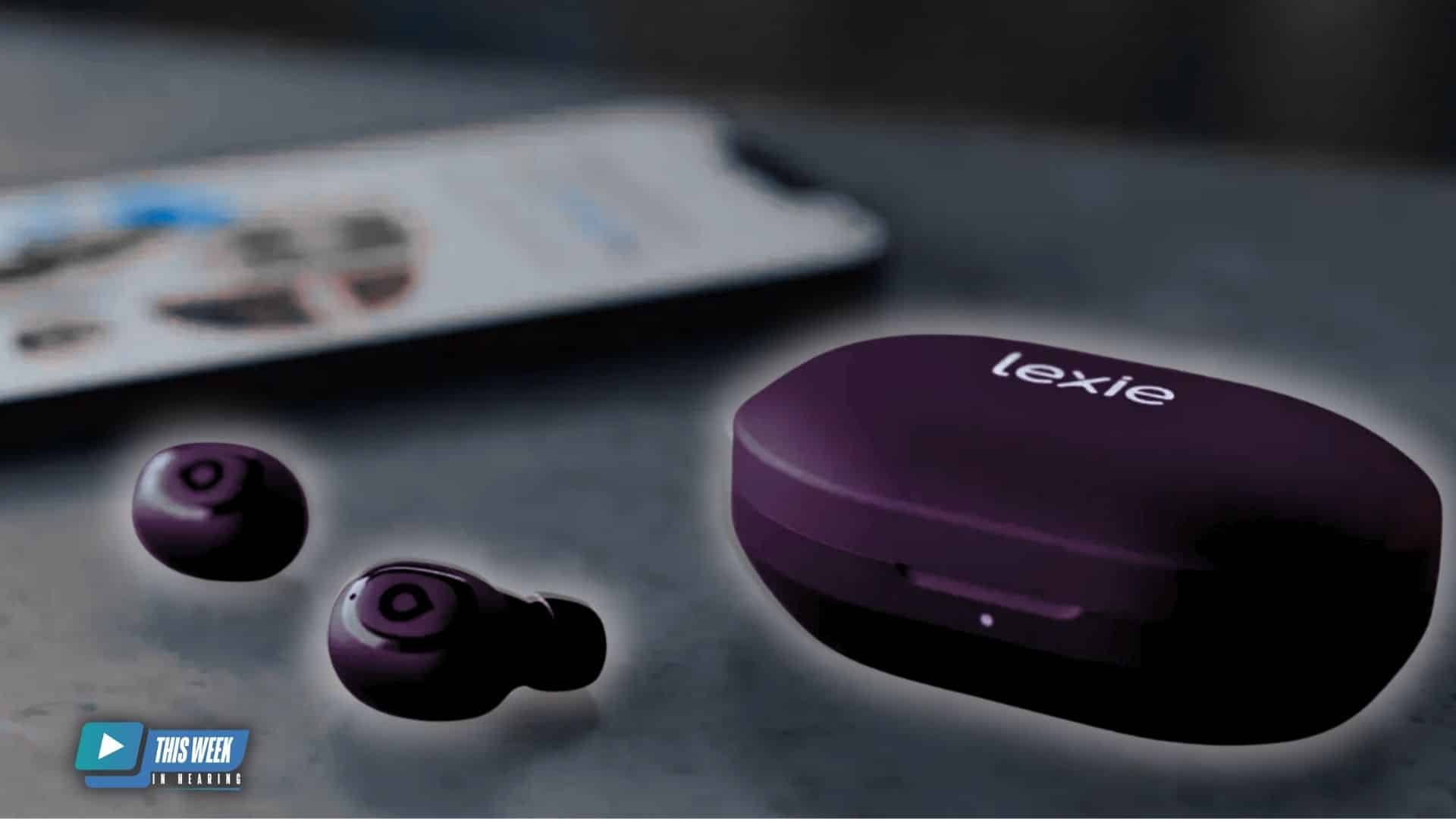
A growing number of people are exploring hearing help earlier, and LXE Hearing believes there is a place for devices that bridge the gap between everyday earbuds and traditional hearing aids. In a detailed discussion, LXE Chief Commercial Officer Brian Maguire explains how the newly formed company—created from the merger of Lexie, hearX, and Eargo—is blending strong hardware engineering with deep software expertise to develop more accessible hearing solutions.
Maguire describes LXE’s portfolio, from diagnostics and screening tools to OTC devices, and emphasizes the group’s shared mission: helping people better understand their hearing and giving them approachable, affordable entry points into amplification. The conversation centers on the Lexie H1 hearing buds, LXE’s new earbud-style hearing device designed for situational use. Maguire explains that while traditional CIC and RIC hearing aids remain their core offerings, a growing group of consumers wants an option that boosts hearing only when needed—especially in noisy environments—without the commitment of full-time wear.
He highlights the H1’s dual purpose: it functions as a high-quality, everyday wireless earbud with streaming and ANC, but also incorporates hearing amplification with preset programs, adjustable gain through the app, reduced occlusion, and features like directivity and noise reduction for speech-in-noise challenges. Maguire stresses that the H1 isn’t meant to replace all-day devices but to complement them, helping newcomers try amplification sooner and giving existing hearing aid users a tool for specific listening situations.
With flexible support, a 45-day risk-free trial, and a $299 price point, he says LXE hopes the H1 will encourage more people to take their first steps toward hearing improvement—at a time when awareness and comfort with ear-worn tech are rapidly increasing.
Full Episode Transcript
Speaker 1: Hello, everyone, and welcome to This Week in Hearing. I have today with me Brian Maguire He’s the chief commercial officer of LXE Hearing, which is the company recently created by the combination of Lexie, hearX, and Eargo, LXE. Brian served more than two decades at Bose, including in the hearing group when they developed and submitted the original FDA De Novo application for self-fitting hearing aid software that actually preceded and influenced the OTC hearing aid world. From there, it was on to hearX, Lexie, and now LXE. Brian, what else should people know about you?
Speaker 2: Andy, great to be with you today. Wow, that was a very humbling overview, background. So, great to look back on some of those things that we’ve all accomplished together in the past. But I think people should just know that I’m super passionate about healthy hearing for everyone, everywhere, which is really actually at the core of what LXE Hearing is about. And just super passionate about making sure that we can help people really understand where they are from a hearing perspective, that especially if they believe it’s important in their life, and that we provide solutions for them to be able to get the help that they need. So I’m a super advocate of this and looking forward to our discussion today.
Speaker 1: Excellent. And of course, we’re here to talk about the H1 in particular, but especially given how you expressed your passion for bringing hearing care to more people tell everybody a little bit about LXE, the products of LXE how the combination company’s working, and how you’re bringing these hearing devices to market to reach more people.
Speaker 2: Great. Happy to do that. So LXE Hearing is a relatively new company. We just formed in April of this year and it was the merger of two companies, one which was hearX which had two brands or continues to have two brands, which is hearX, our screening and diagnostics business, and I’m happy to talk a bit more about that, and then of course, Lexie Hearing which we’ve had in partnership with Bose Corporation for over-the-counter hearing aids. We then also merged with Eargo at the time, who is a leader in virtually invisible completely in-canal hearing aids, and we’re excited to be able to continue to build out lots of wonderful solutions for people in the over-the-counter hearing aid space. So the, merger was a combination of these two great efforts, and it’s really to focus on product design, engineering, and technology, combining us at the core there. And we both had unique skills that we could bring to this. One was a hardware-focused, company. The other was really a software-focused company. So we’ve been able to leverage that and ultimately bring out new products, and one of which I’m excited to talk about today.
Speaker 1: Okay, terrific. So generally speaking, in the marketplace, it looks like you still have Eargo and Lexie as separate brands, but it sounds like under the hood, you’re starting to merge to take advantage of your differing strengths.
Speaker 2: Yeah, absolutely. I think if you look at the company overall, we we have hearX. And for us, this is really the foundation. These are the products that are the screening and diagnostics products. So we have Pure Tone audiometry. We have Digits-in-Noise. We have Otoacoustic emissions testing. And for us, this is really important because it helps us help customers understand from a screening or even a diagnosis standpoint, do they have hearing loss? So that’s always been the foundation for our business, and we expect to continue to build on that. On the over-the-counter side, we’re certainly leveraging the joint strengths of both of the teams who have decades in hearing experience especially when it comes to technology and applications and product and service and support. So, these are things that could be widely applied across lots of different form factors, will continue and currently operate as, as two different brands, Eargo for really completely in the canal, virtually invisible, folks. We find that’s critically important to people who have a stigma or, or have the, the stigma of don’t want to be seen wearing a hearing aid. It’s a really powerful product for them. And then of course, on the Lexie side, we’re really focused on all-day performance and that partnership with Bose Corporation for the, the RIC style design. Yeah.
Speaker 1: Okay. Yeah, and, and it’s an interesting point because right now you’ve had what I’ll call traditional form factors. I mean in-the-canal, invisible style, I would still consider a traditional form factor. And then the RIC style hearing aids from Lexie, and so far overall in the market, earbuds haven’t been terribly popular, and I’m not gonna count Apple here because they’re leading as a music earbud company, even if they put hearing features in it later, right? You can never tell how many people bought AirPods for their hearing. So, you know, other than that, you don’t see a lot of earbud activity. You don’t see a lot of success in earbuds. So why is now the right time for LXE to introduce an earbud with the H1?
Speaker 2: Well, first, I would say you’re 100% right, that we see the dominant form factors that you do. The completely-in-canal is very popular, in addition to RIC style remains the clear focus. But we also want to listen to our customers a ton. We spend a lot of time doing that and looking at market gaps that might exist, and certainly we’re seeing one here. And this is the the wonderful news is people are becoming a lot more aware of their hearing. You can call that the Apple effect. Maybe it’s the Amazon effect. I don’t know. But it’s a good effect, I think, overall for all of us. And I think people are spending a lot more time educating themselves and taking the self-care path, not only in hearing, but in other areas. So as we see this come forward, we see people who are kind of hand raisers for wanting to episodically, moments throughout their day, or situationally is probably better said be able to get a little boost in hearing and be able to hear better in those situations, but definitely aren’t ready to make an all, you know, a permanent investment, whether that’s the financial reason or the actual reason to wear something all day to improve their hearing. So we see a big opportunity here. and we we see it as complementary to what our existing business is today and to be able to help some of those folks.And the reason
Speaker 1: Okay.
Speaker 2: Yeah. I’ll, I’ll let you go ahead.
Speaker 1: Oh, I was just gonna say, just to make sure I understand correctly, I want to repeat what I think you was that whether it’s the Apple effect or whatever you see more people becoming aware of their hearing and enough of those people are interested in a situational solution, which is why the H1 is being introduced now.
Speaker 2: That’s correct. That’s correct. Yeah, I do. And I think there’s also a part of that which is not only the, the form or the situational use of that but it’s integrating into a device that is also multipurpose, that serves multiple needs throughout their day. That at an incredible value that they’re also willing to dip their toe into, if you will to be able to take the leap forward that it’s not a huge, long-term investment that they have to make in order to get their initial experience in hearing with this, yeah.
Speaker 1: Okay. And so then what makes the H1 special? Why will the H1 succeed when other earbud products have not? Tell me about the H1.
Speaker 2: Great question. So first and foremost, it’s a high performance hearing device, right? We want to be clear about that. It’s it is intended for hearing and for folks to be able to get that situational boost as they need it. Without that, it’s just a pair of earbuds, right? So I want to be really clear about that. That was our goal going in, and that’s the folks who are developing this. Secondarily, it’s a high, high-quality, high-performance everyday wireless headphone for streaming, podcasts like we’re doing right now, taking phone calls. Everything people do now, as you know, we’re all connected to our devices or our computers all day long, and there’s no reason that you shouldn’t be able to have high fidelity, high quality audio and even things like active noise cancellation, but yet when you want to be able to hear better be able to activate those features as well. So we believe it’s kind of the best of both worlds, a high performance headphone and also a high quality hearing device. The other piece is, you know, you had mentioned why haven’t items been successful in the past? And it’s a good question. So we wanted to really understand that. Some of the feedback that we also heard was, boy, these things are really expensive. So we spent a lot of time trying to get to a value proposition at a reasonable $299 price point that would really be a powerful value proposition for people. Secondarily, the number two pain point that we heard was about occlusion or the, the self voice, sorry for most people recognize it by that way. So we spent a great amount of time actually adjusting our ear tips, venting them properly, so you can get a high quality music and active noise cancellation experience, but more importantly, when you’re in hearing mode that your own voice doesn’t sound boomy or artificial to yourself. So we did spend a lot of time there as well in addition to adding things, of course, that you would expect that we can talk a little bit more about.
Speaker 1: Okay. No, I’m glad you emphasized the occlusion because I would say, as I’ve tested different earbud form factors, one of the biggest problems I’ve seen is the occlusion problem, especially if you’re just listening occlusion, okay, fine. You know, I’ve got fully sealed 16 driver in-ear monitors. They’re very occluding.
Speaker 2: yeah.
Speaker 1: But I’m not talking while I’m listening to those. But if I go out to dinner with some friends and I can’t hear what they’re saying while I’m chewing it ruins the experience.
Speaker 2: Completely.
Speaker 1: I think that’s a, a good thing to attend to. And in my initial trials of the device, I could see the occlusion’s actually very well behaved and very easy to live with. So hats off to you for that part.
Speaker 2: I’m That’s great. Good to hear.
Speaker 1: I haven’t yet had a chance to take them out into a noisy environment, but in a quiet environment they’re performing quite well. but it does I do want to ask what levels of hearing loss are you addressing in, including numbers, too. I mean, mild to moderate is kind of a general term,
Speaker 2: Yeah.
Speaker 1: like what kind of numbers? My own hearing loss, for example, is pretty good up to 1 kilohertz and then it plunges steeply, so I’m quote-unquote moderate, but I’m not moderate at two and four kilohertz. So what does it look like? What ranges of hearing losses are you talking about here?
Speaker 2: Yeah, so we try to keep it really simple in our… This is a preset device, so it’s not a self-fitting device, to be clear. All the other products that we happen to make are self-fitting devices. So we wanted to make this very easy for the consumer to understand and really focus on them. So we have four presets that we have for hearing loss. You can see, think of them in very simple terms. One is mild flat two is mild sloping three is moderate flat, and four is moderate sloping. And those are really the approaches that we’ve taken, and the way that a consumer can actually adjust that is two ways on the H1. First is, if you’re in hearing mode with the earbuds in, we have a simple tap to control. With a simple tap, you can go between the different programs. And we encourage consumers to go through that process first. Additionally, to see what suits them best. If they know, wonderful. But if they don’t know, it’s really going to come down to trying a variety of different environments, as you know. Two is you can go into the app. So I’m not sure if you had a chance to be able to do that as well. Within the app, you’ll have a greater degree to adjust the gain upwards of six dB within each of the program settings directly. So you can do that. And then of course, we we do offer the support available to anyone. We have a support that’s open six days a week. You can come pick up a phone, contact us. We’re happy to walk you through the device settings and any questions that you have there.
Speaker 1: Okay. And that was part of my question, because I’ve seen other devices that work similarly, and you can get a little bit balled up because if I, for example, select your level three and put the volume in one spot, or I select level four and put the volume in another they can sound similar at
Speaker 2: Correct.
Speaker 1: but you’re not getting the best experience in terms of you know, speech perception.
Speaker 2: Yeah.
Speaker 1: … how then for a person who’s not exactly sure how to, to, to home in on the optimal solution, what kind of support can they get?
Speaker 2: Yeah. So the support that they can get is certainly you can try for yourself. We do have a variety of setup tools and self-help videos as well. So if you’re a on your own learner and you’re not really looking to pick up the phone and call us or do a video chat like we are doing right now you can certainly do that. Secondarily, you can call us as I mentioned, six days a week. We’re available. A human will answer almost immediately. We encourage people to call us. It’s not like we’re a company we’re hiding behind. We, we love to talk to our customers and help them through that process, right? It helps us better understand them, their needs, and also get to the solutions that they will go through. So generally that involves a needs assessment of where they are, you know, both functionally with the device and also what they’re trying to use it for. And then we can provide some guidance in terms of what steps to take in logical order and ultimately have them make the decision for themselves. If that device isn’t right for them, we of course help them, maybe there’s a, a different device that’s probably better suited for them. So that’s part of the process as well. Yeah.
Speaker 1: Do you actually pre-qualify people beforehand? So if somebody, in other do you know how
Speaker 2: Yeah.
Speaker 1: They, they tend to underestimate their hearing loss. By the time they think they have, you know, mild or moderate hearing loss, it might be worse. So how do you actually make sure that it’s a good fit so you don’t run into the trap of, you know, selling products and getting them returned to you?
Speaker 2: Good question. So we do this in a couple of different ways depending upon the place where you happened to purchase the product. I’ll talk about our website, which is for lexiehearing.com. On our website, we have our clinically validated hearing screener, which is provided by hearX, of course. And on there you can take a very simple digits-in-noise test, should take you no more than three minutes, and it’ll give you a good indication of whether OTC is gonna be suitable solution for you. You know, from there you have we also have different tools which help you product finder, which are really about how often will you like to wear your hearing aids, what use cases are you having difficulty in, and that can kind of steer you toward a product line. For example, an earbud style or an all-day RIC style device. So I have a couple different tools. We don’t qualify people out. As you know, you don’t require a hearing test for an OTC device. It’s really about perceived hearing difficulty. So we try to really help them understand, is this gonna be a use for you? And then try it out for themselves. We have a risk-free 45-day trial, many people take advantage of that, and then we help them through that acclimation period.
Speaker 1: Okay. And so you have this sort of through the hearing tests and in person, you have pre-sale support, then you have support when people buy. How long does that support last
Speaker 2: Oh, we have,
Speaker 1: purchase a product?
Speaker 2: … lifetime device support. So what we communicate to our customers is, for as long as you own that device, we will be there to help you. We have a one-year warranty, and of course there’s some things over the duration of owning devices that can happen throughout the life, but in terms of support, we’ll support you for the lifetime of that device. And that’s for all of our products, yeah.
Speaker 1: Okay. No, that’s terrific because I know some companies found, in the beginning they thought they could just ship it in Amazon and they’re like, “We’re done here.”
Speaker 2: Yeah. Mm-hmm.
Speaker 1: But the need for professional support on an ongoing basis has turned out to be pretty important.
Speaker 2: Oh, it’s we believe it’s fundamental to the value proposition. Not only in the app, but to be available on demand for consumers when they wanna be there and we model our customer support hours around that. Yeah.
Speaker 1: Okay. So this is a situational device then. How long does the battery actually last?
Speaker 2: Battery lasts around nine hours if you’re in hearing mode. let’s say you’re gonna be full hearing mode. If you’re gonna be streaming only, it’s about six and a half. So generally it’s gonna be somewhere in between if you’re switching back and forth. It also has four recharges in the rechargeable case that comes along with it, so you’re not really gonna have to plug into power, so to speak, for, a long period of time. But if you do, we also have a fast charge, so about 10 minutes of charging time should give you up to three hours if you need that quick, rapid boost for any reason.
Speaker 1: Okay. So it’s situational, but if there are times when I can top it up, I can top it up pretty quickly.
Speaker 2: Absolutely. Yep. Yeah.
Speaker 1: Okay. And again since it’s situational, I imagine a number of people are thinking about speech-in-noise first and foremost. That’s when, that’s when people first start to think, many people first start to think they have hearing difficulty. They may be fine in a quiet environment, they get to a restaurant, they struggle. So they’re gonna be using this situationally in noisy places above all. What kind of speech-in-noise features does it have? How do you improve speech in noise,?
Speaker 2: Great question. At the heart of I think a a lot of people when they’re purchasing this. So primarily directivity obviously is a popular tool for that, of course, as we know. So the device does allow you to switch between a front-facing mode and an omni mode and that should obviously help in some noisy environments. As I mentioned before, it’s a semi-occluding tip, I’ll call it so it is gonna provide some passive, reduction of the local environmental noise, but does allow that in to reduce the occlusion effect. So I think the combination of those two things will be helpful in that environment in addition to the traditional algorithms that you’d find as part of noise reduction algorithms, and we have a wind noise reduction algorithm, probably not relevant for the noisy restaurant that you’re talking about, but a variety of other ways to ensure that that those voices can be heard. Yeah.
Speaker 1: what kind of improvement they actually because it’s a, you know, key thing they’re looking for.
Speaker 2: Yeah, true.
Speaker 1: you’re doing beamforming and acoustic noise reduction, I know you’re gonna have some benefit there.
Speaker 2: For sure. Yep.
Speaker 1: And then since this is a you know, an all-purpose earbud, if you will, you’ve also got connectivity. Anything we should know, Bluetooth Classic I assume?
Speaker 2: Yes. Yep. So exactly. you’re right on. So Bluetooth 5.3, and it does have Classic for streaming and, obviously for any content that you wanna pull through, hands-free protocol, A2DP, right, that’s part of Classic. And then of course does have the hearing aid functionality and connectivity as well as part of 5.3.
Speaker 1: Okay. And you’re running 5.3, so naturally I’m gonna ask if you’re thinking about LE Audio and especially Auracast.
Speaker 2: Yeah, yeah. Your favorite topic and … which is good for you. So I, look, I love what you’re doing for that. We do not have that functionality just yet, but, I am equally as passionate about that as you are, so something I’m hoping to get in the future.
Speaker 1: Well, and I’ll say I come by it honestly because I learned almost from the beginning when I was first fit in
Speaker 2: Yeah.
Speaker 1: … first off connectivity for example, I’m having this conversation through hearing
Speaker 2: Yep.
Speaker 1: … direct streaming is best, even National Acoustics Labs just did a study that showed that that the two most preferential method of listening to online conversations for people with hearing loss was hearing aids or personalized earbuds.
Speaker 2: Yeah.
Speaker 1: And I guess the H1 was really a hearing aid, right? But it’s also a personalized earbud. And so when you, when you transfer that to the live environment even for people who have, quote-unquote, “hidden hearing loss” that direct streaming is best, which is why I’m enthusiastic about Auracast, because it will give a better live environment experience to many, many more people than you think about traditionally.
Speaker 2: Right.
Speaker 1: And that’s why I have to ask the question.
Speaker 2: No, no, you’re 100% right. You’re 100% right. And I think the other piece that, you know, was in your message there is more and more people are listening to different content through their hearing aids, not just the front-to-front voices. And as we know, what, what a lot of hearing aids struggle to do is deliver full fidelity reproduction. So I think this is also one of the, one of the benefits of a earbud-style hearing aid, is that it can deliver audio quality that’s of a higher quality of depth, at least, in terms of full frequency response, yeah.
Speaker 1: Right. And, and that was obvious when I just tried streaming a little bit of music in the beginning. It’s more, you know, earbud audio quality versus hearing aid audio quality.
Speaker 2: Right.
Speaker 1: Are you also personalizing the audio in the streaming case?
Speaker 2: Good question.
Speaker 1: So if I have it set to preset four, for example, am I getting preset four when I’m streaming music?
Speaker 2: There is no hearing compensation when you’re streaming. So when you turn off hearing the hearing compensation adjustments will transition over to a different mode. However, we do have equalization settings within the music that will be launching in our app within about I’m gonna say four weeks. So within your app you’ll automatically see an update for the app and you’ll be able to customize the equalization for your music settings. Additionally, for that, you’ll see in your app currently that you can adjust the noise cancellation within the app between full noise cancellation, low, or transparency mode. So that’s all available to you through the app or even through a touch on your device as well.
Speaker 1: Okay, so then once the equalizer’s made available, then, for example, I have high-frequency hearing loss, I can tip up the high frequencies for streaming when I equalize.
Speaker 2: You Well, the hearing compensation is not expected to be added to streaming, so we’ll operate those
Speaker 1: What I mean is, when you add the equalizer, then I would be able to go in and dial the equalizer for streaming to compensate for my hearing loss.
Speaker 2: Yeah, yeah. Exactly, exactly. So you’ll be able to make adjustments, yeah. Uh-huh.
Speaker 1: Okay. Okay, excellent. And then let’s see. I’m trying to think. Anything else we need to cover here? What am I missing about this product that makes it really interesting and different?
Speaker 2: Yeah, well, I think, really for us, it’s having people experience what hearing amplification can introduce into their life, and for those folks who are just trying it out for the very first time. And if you’re someone who really either does wear hearing aids all day every day and you’re actually, but you also have a pair of AirPods or something else that you might happen to use for music ’cause you might not be satisfied with the full fidelity sound or for active noise cancellation or any other reasons, it’s a really good complementary solution as well, right? So not only is it for that first person, but it’s also a good complementary solution, I think, for a lot of existing hearing aid owners. And we’ve honestly heard some of that in our feedback was, from customers, was like, “Boy, I wish I had something that did this.” Which is one of the great reasons. So we’re really excited about it. I think it comes at a very interesting time where, you know, everyone is constantly consuming information on their phone or they’re on the go, and it allows you to flexibly go between all the aspects of your life and the episodes that you have throughout your normal day and add hearing as a real benefit to that daily routine.
Speaker 1: Yeah, I, I like that value proposition for first-time people who are trying it out situationally, because they probably own a set of earbuds or two already.
Speaker 2: Yeah.
Speaker 1: And so this doesn’t look very different. If there’s anything, the only hurdle to overcome is to get used to the sort of reverse stigma of wearing earbuds while you … in a social situation.
Speaker 2: Yeah.
Speaker 1: And, and do you see that starting to break down and be reduced, which is why you see a greater chance of success, people wearing this in social situations?
Speaker 2: Yeah, I personally do, right? I mean, I think a lot of There’s a couple categories for that. So I think in, you know, cosmopolitan or city life, you see that on a regular basis. People are constantly either wearing a single earbud in their ears or they’re more comfortable talking to each other with a physical device being worn, which was very uncommon just, you know, three to five years ago, right?
Speaker 1: Mm-hmm.
Speaker 2: It was kind of, boy a social turnoff or a I’m shut off from the world type signal. The other place I see it is in, we’re, you know, constantly on video calls and Zoom calls and things like that. People are wearing headphones more and more. And it, the more that happens where it’s normal to have a conversation with someone and they’re wearing something in their ear, the more it translates to the real world as well where it just becomes a little bit common and reduces that overall stigma. I don’t think it’s overnight. I’m sure everybody has a different opinion on this. But I do think that will be, become less of a hurdle as time continues to, to go on, yeah.
Speaker 1: Well, I, I very much hope that that’s so, because if you can get people when they’re at situational stage to start using hearing devices and being comfortable wearing hearing devices, then they begin their journey sooner
Speaker 2: Exactly.
Speaker 1: they lead better qualities of life sooner and you reach more people sooner, which I think is all to the good. So you know, when, when I look at the features of the H1, I think it checks all the boxes, like you say. It has ANC, so if I wear it on a train, I can reduce the
Speaker 2: Yeah.
Speaker 1: … me. I can music stream. I can go into a loud restaurant and-… I’ll get, you know, noise reduction performance that helps me hear better. So, you know, I, I very much wish for the success of this product. I don’t see it competing with your all-day devices, but
Speaker 2: No,
Speaker 1: as a lead-in to those. So …
Speaker 2: Yeah. Yeah, and just so we’re… That’s not our intent either, and you’re, you’re directly right on. It’s really as a complementary device to that and we can open the front door, right? And have people, as you said, start trying things out younger or earlier than they might normally put off without the biggest financial commitment that they have to make perhaps. And if you’re listening to the customers now and really listening to the marketplace, people are seeking value, right? They’re seeking value in their lives no matter where it is, and they’re making difficult decisions about how to do that. So it’s another factor for us that we thought it was the right time, as you asked about before, of how is this the right time to launch the product? And we, we believe it is, yeah.
Speaker 1: And because I’m … Like you, are passionate about reaching more people sooner with hearing care that’s more accessible, I, I wish you every chance for success. …
Speaker 2: Well, thank you. And hopefully we are going to overcome as you said, the challenges of previous earbuds that have been launched and we’re well aware that there’s there’s some well-worn paths here that haven’t been as successful. But I do believe everything the timing of things, the value proposition of, of items, and also the benefits that you can put forward for people do really matter, and when you get those right, you can have a, a fantastic product that can enhance a lot of people’s lives. And if we can do that, I think we’d be very happy as a business, and I think that would be helping lots and lots of people.
Speaker 1: Well, I’m very much looking forward to see how the product does in the marketplace. And again, I wish you success. Thank you very much for joining me today.
Speaker 2: Andy, thanks. Thanks again. I really appreciate it, and appreciate everyone’s time.
Speaker 1: And thanks everybody for watching or listening to this edition of This Week in Hearing.
Be sure to subscribe to the TWIH YouTube channel for the latest episodes each week, and follow This Week in Hearing on LinkedIn, Instagram and X.
Prefer to listen on the go? Tune into the TWIH Podcast on your favorite podcast streaming service, including Apple, Spotify, Google and more.
About
 Brian Maguire is the Chief Commercial Officer at LXE Hearing. He has been serving as Senior Vice President, North America, at Lexie Hearing and hearX Group since 2022. Prior to that, he held a number of leadership roles at Bose Corporation, most notably leading their Health Division which was responsible for the company’s first OTC hearing aid and their Consumer Electronics Division which achieved CAGR of 19% over 5 years, and top two industry market share. Brian has a B.A. in History from the University of New Hampshire, and is a Certified Lean Six Sigma Yellow Belt, with continuing education certifications from Columbia Business School and Northeastern University.
 Andrew Bellavia is the Founder of AuraFuturity. He has experience in international sales, marketing, product management, and general management. Audio has been both of abiding interest and a market he served professionally in these roles. Andrew has been deeply embedded in the hearables space since the beginning and is recognized as a thought leader in the convergence of hearables and hearing health. He has been a strong advocate for hearing care innovation and accessibility, work made more personal when he faced his own hearing loss and sought treatment All these skills and experiences are brought to bear at AuraFuturity, providing go-to-market, branding, and content services to the dynamic and growing hearables and hearing health spaces.