

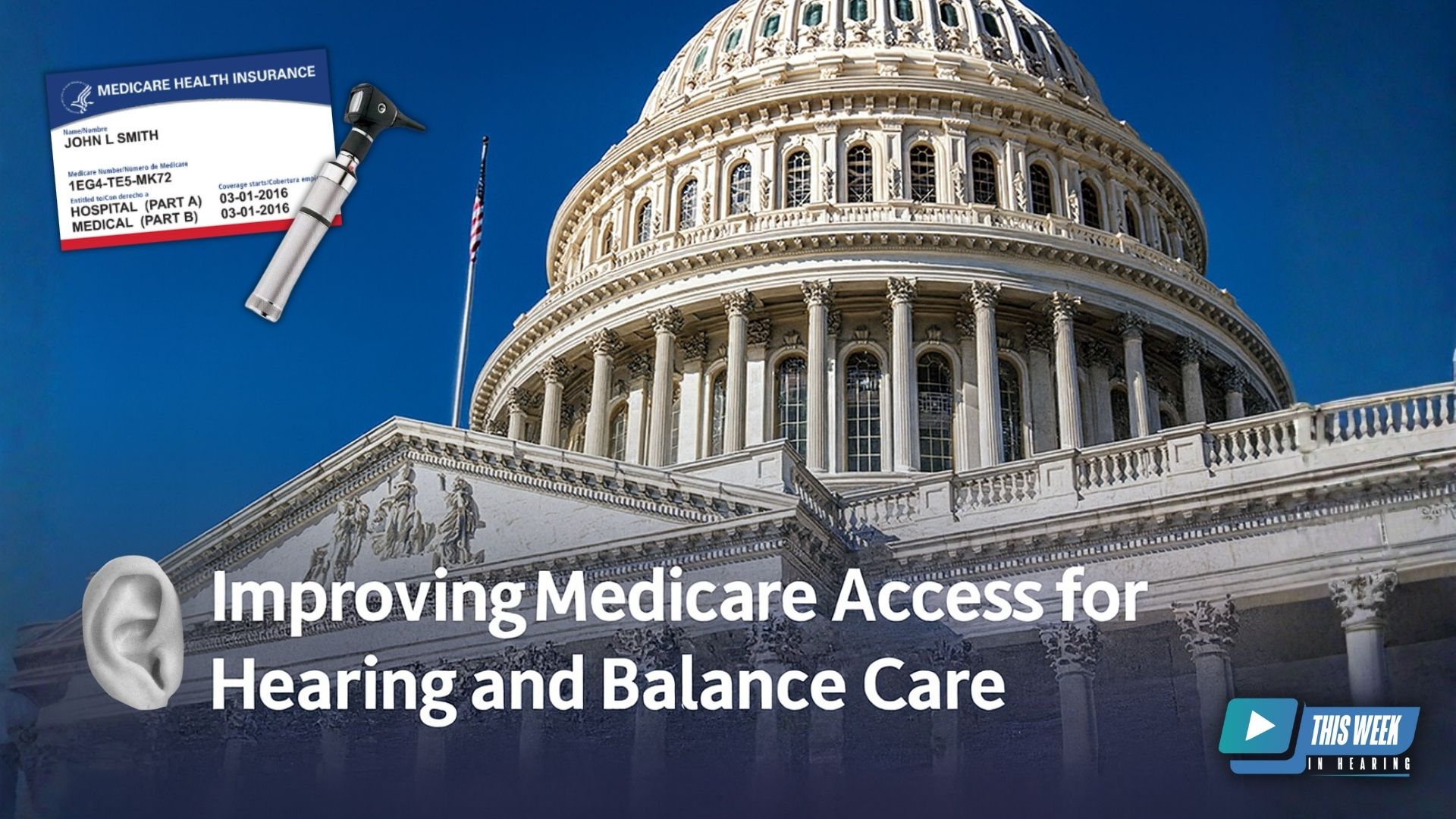
Audiologists took to Capitol Hill on Thursday, September 25, 2025, to advocate for better patient access to hearing and balance care as part of ADA Lobby Day in Washington, D.C. Held during the Academy of Doctors of Audiology’s AuDacity conference, the event brought hundreds of audiologists, students, and supporters together to meet with legislators and promote the Medicare Audiology Access Improvement Act (MAAIA).
The bill seeks to modernize Medicare by recognizing audiologists as practitioners, removing the outdated physician referral requirement, and allowing them to practice to the full extent of their training. In this episode, host Andrew Bellavia speaks with participants and policy advocates to explore why this legislation matters, how it impacts patient care, and how advocacy—both in Washington and back home—can help move the profession forward.
- Learn more and get involved: ADA provides advocacy resources, including information on MAAIA and how to contact your legislators, at https://www.audiologist.org/resources/advocate/advocacy-resources
Full Episode Transcript
Speaker 1: Hello, everyone, and welcome to This Week in Hearing from the US Capitol in Washington, DC, where hundreds of members of the Academy of Doctors of Audiology have gathered to visit nearly 200 offices of senators and congresspeople to lobby for the Medicare Audiology Access Improvement Act. Now, lobbying gets a bad name, but all it really means is that somebody visits the offices of legislators to advocate for issues that are important to the constituents. Let’s go see how the process works and learn more about the act itself.
Speaker 2: Hi, I’m Charla Penn. I’m with Winning Strategies Washington, and I’m a healthcare lobbyist for ADA here in Washington, DC.
Speaker 1: Well, thank you for spending some time with me. Now, for hearing care professionals and others back home, if they look at the top-line news, it can be easy to become discouraged that anything like this could even advance. What would you say to those people?
Speaker 2: I would say to those people to have a little faith. Sometimes when the big issues, we, we can’t come together, it’s the smaller ones, the meaningful ones where people can come together and make a difference, and MAAIA is certainly one of those things. It is not a partisan issue. It is about helping people have access to hearing care, and that’s something everybody could agree on.
Speaker 3: I’m Noel Thayer. I’m an audiologist, and I have a private practice in Bronxville, New York.
Speaker 1: And so you came from New York to DC to help advocate for this bill. Why is the bill important to you?
Speaker 3: It’s important to me because it’s important for my patients. I see a lot of elderly individuals who have Medicare, and it’s a burden for them to have to go to their primary care physician first to get an order to come see me. And a lot of times, there’s a lot of back and forth. If the person has wax in their ears, and I’m trained and licensed to do wax removal but Medicare won’t reimburse me for it, I have to either have the patient pay out of pocket or send them back to their primary care physician who may not do it either. Then they have to go to an ear, nose, and throat doctor. It’s a lot of running around.
Speaker 1: It’s impossible for legislators to personally look at every bill that’s proposed. Instead, they have trusted staff who evaluate proposals and decide which ones are appropriate for the legislators’ attention. All right, so let me make sure I understand this correctly. I’m 64. I’ve been going to you for 10 years now. Now, I turn 65. I get on classic Medicare parts A and B. I come to your office for service that you’ve been giving me like, say, ear wax removal. What happens then?
Speaker 3: Yeah. So if you had private insurance before, I could have billed your private insurance for that service, but now I would have to give you the option of paying out of pocket or making another appointment, which could end up taking a lot longer time to get that appointment.
Speaker 1: So in other words, it’s not covered under Medicare. If you provide that service you already were providing me under private insurance.
Speaker 3: That’s right.
Speaker 1: But I still go somewhere else, like, say, even an urgent care facility to get it done because it’s bothering me.
Speaker 3: would be covered there, and that person may not be as well-trained to do the treatment as I am, but they’re covered the, would be reimbursed if you went to that facility but not if you came to me.
Speaker 1: And what is the reason why that’s the case with Medicare part B today?
Speaker 3: It’s because the statute is very old. It was written in the ’60s, and it was when audiology was a simpler field back then, I suppose. We have come a long way since that time, and the statute needs to be updated to reflect the current state.
Speaker 1: Now let me ask where MAAIA is in the process, and what was the overall goal of all the meetings today?
Speaker 2: Well, MAAIA was just introduced earlier this year. We have a House bill and a Senate bill, and we’re gathering cosponsors, so that means to show support for our bill. So today, we went around and met with over 200 offices to ask them to cosponsor our bill and show the support for MAIA.
Speaker 1: Each meeting was different, depending both on the priorities of the legislator and also the background of the staff person we met. Some were grounded in healthcare, and that was a focus for them, so they had an easier time getting right down to the meaning and the value of the bill. Others needed some grounding in what audiology was and the range of services audiologists provide to their constituents. And how does this work with other nonmedical practitioners like, say, rehab facilities and so on?
Speaker 3: My understanding is that other professionals such as physical therapists like optometrists who are not physicians but are recognized as practitioner status, they get reimbursed from Medicare, but because we’re, the statute still has audiologists listed as suppliers instead of practitioners, we’re the only ones that are excluded from that type of reimbursement.
Speaker 1: In all cases I participated in, the staff member was engaged, asked questions, and wanted to know more about the bill. Some were more focused on the fiscal impact, and others wanted to know how this worked in the context of Medicare and the medical profession more broadly. Okay, thanks. Anything else that we should know?
Speaker 2: Everybody should get their ears checked and should protect their ears and they should reach out to their representatives to express how important this issue is to themselves and their family and community.
Speaker 4: ADA had also set up two hearing screening stations in one of the House office buildings and had invited all the staff to come. When I was there, there was a steady stream of staffers, many young people, getting their hearing tested. That was really encouraging, both for awareness of hearing and also MAAIA. And if I were a hearing care professional or other interested person, what would be the most effective way to help advance the cause of this bill when I’m back home?
Speaker 2: Communicate, and you can do that in many ways. So when you’re back home and your member of Congress or your senator is having hours you can go see them in your hometown, you should go and see them. Make an appointment, talk to them, talk to their staff about the importance of MAAIA and why they should support it. If you don’t wanna have time, if you don’t have time to have a meeting, then you can always write a letter or make a telephone call and just tell them who you are, what MAAIA is, and why you expect their support.
Speaker 4: And it’s kind of easy to think, well, that just goes into a hopper. Is that really true, or do they pay attention to these things?
Speaker 2: They absolutely pay attention to these things. This is how they keep track of what their constituents are interested in and what their constituents want them to do.
Speaker 4: Now it’s time to act. The Medicare Audiology Access Improvement Act ensures that seniors have direct access to hearing and balance care from audiologists, the doctoral-level providers best trained to deliver these services. This is about modernizing Medicare, improving patient care, and advancing our profession. I urge you to contact your senators and representatives today. I also encourage you to have your patients contact their senators and representatives. Together, we have the opportunity to advance this important legislative policy.
Be sure to subscribe to the TWIH YouTube channel for the latest episodes each week, and follow This Week in Hearing on LinkedIn, Instagram and X.
Prefer to listen on the go? Tune into the TWIH Podcast on your favorite podcast streaming service, including Apple, Spotify, Google and more.
About
 Andrew Bellavia is the Founder of AuraFuturity. He has experience in international sales, marketing, product management, and general management. Audio has been both of abiding interest and a market he served professionally in these roles. Andrew has been deeply embedded in the hearables space since the beginning and is recognized as a thought leader in the convergence of hearables and hearing health. He has been a strong advocate for hearing care innovation and accessibility, work made more personal when he faced his own hearing loss and sought treatment All these skills and experiences are brought to bear at AuraFuturity, providing go-to-market, branding, and content services to the dynamic and growing hearables and hearing health spaces.