


Early detection of hearing loss shouldn’t stop at birth. In this episode, Dr. Bob Traynor speaks with Dr. James W. Hall III, an internationally recognized audiologist, educator, and author with more than 40 years of experience in clinical and academic audiology.
Together, they discuss a new evidence-based approach to preschool and early school-age hearing screening that goes beyond traditional pure tone testing. Dr. Hall explains why combining Distortion Product Otoacoustic Emissions (DPOAEs) with tympanometry provides a faster, more objective, and more accurate way to identify hearing loss before it impacts speech, language, and learning.
Drawing from large-scale studies and decades of expertise, he outlines how clinicians, pediatricians, and schools can apply this updated method to close the gap between newborn screening and school-age identification — ensuring no child with hearing loss is overlooked.
Full Episode Transcript
Speaker 1: Welcome to This Week in Hearing. Hello, I’m Bob Traynor, your host for this episode that presents a new evidence-based approach for hearing screening of preschool and school children. Today my guest absolutely needs no introduction as Dr. Jay Hall is well known to all of us with his work in many areas of the profession, but especially in objective hearing assessment. Thanks for being with us today, Jay, here at This Week in Hearing.
Speaker 2: My pleasure, Bob.
Speaker 1: So in the US, almost all newborn infants now undergo hearing screening at birth, and school children’s screening programs have been around almost since the inception of audiology. So what’s the rationale for preschool hearing screening?
Speaker 2: Well, you’re right, Bob newborn hearing screening is at least universal in the United States, many other countries as well, and the technology exists. Obviously screening a newborn infant would be impossible using pure tone hearing screening. And as you point out hearing screening with pure tones has been around literally for 100 years. It actually predates the beginning of audiology. Here in my office I have a 1920s era Western Electric screening device, which was used for, for school screening. So, and I remember being a master student in speech pathology at Northwestern in the early ’70s, going out with a little Beltone audiometer. We all remember those, little black Beltone, pure tone audiometer. So yes, it’s been around but the problems with pure tone screening have been recognized for, for almost as long as it’s been available. And for many years we had no other alternatives. But the, the, the concept of screening newborns kind of raises the issue up that we use some of the techniques that we use for newborns also for screening older children, particularly those in the preschool years that are kind of, they’re, they’re not quite ready for pure tone screening, at least not by a, a technician or someone who’s not an audiologist.
Speaker 1: So while that’s for sure and we use a lot of technicians in the areas for newborn hearing screening for sure, but what factors contribute to the increase in the prevalence of childhood hearing loss between the newborn period and school entry period?
Speaker 2: Well, that’s actually the motivation, the primary motivation for screening preschool hearing in preschool children, particularly the younger ones. So they’re, they’ve left the hospital and they’re not yet in school, sometime between maybe three to four months after birth and when they enter kindergarten. The reason for, for screening those children are more, there are many reasons, but the primary reason is many more children enter school with hearing loss than were born with hearing loss. So let just give you an example. If you took 100 children in kindergarten, all of whom had a hearing loss, who had been diagnosed, and went back to their, records, their medical records for when they were born, you’d find that only a smaller percentage actually had, a hearing loss at that time. So most of the hearing loss in children by the time they enter school was not congenital. It was acquired at some point in the preschool years. So that’s one main motivation for for a preschool screening. There are numerous Joint Committee on Infant Hearing has identified numerous risk factors for either delayed onset hearing loss which means they start out with perfectly normal ears but then they developed hearing loss, or progressive hearing loss. So they may have actually had some subclinical degree of hearing loss when they were born, but over the preschool years it progressed. So the prevalence of hearing loss at school age is about almost 10 times higher than the prevalence of hearing loss in infants. It’s, amazing. So you, you really can’t assume that you’re identifying all children with hearing loss just because you’ve got a, a very successful newborn hearing screening program. Now, there’s one other factor I would just add here, but that, that’s the children who have acquired loss. But even in the United States where you have universal newborn hearing screening, not all the children who fail the screening in the nursery end up getting the diagnostic testing they need, and there are multiple reasons for loss to follow up in that population. And then even a smaller percentage of the children who actually fail the screening at birth actually get to, at the intervention stage. So in other word, some of the children get, they are diagnosed with hearing loss and then something happens and they never end up getting the intervention. So in some states, less than 50% of the children who fail a screening, who probably have some degree of hearing loss, actually get the intervention they need. This pure tone hearing, I mean preschool hearing screening is one mechanism for finding those children who slip through the cracks and make sure that they, they don’t go on with hearing loss throughout their preschool years.
Speaker 1: Well, now just so we say something about it pure tone hearing screening of children is pretty commonplace in, in school audiology programs and that type of thing. Just so we say so though, what’s, what is a new screening approach and, and and, and really why is it really needed? And, and I, and I know that it’s needed and we all know it’s needed, but let’s just kind of go over why it’s maybe needed in, in the children that are preschool age and and school entry age.
Speaker 2: Sure. That’s a very good question, and, There are multiple reasons why it’s needed, of why an objective approach is needed. Let me just talk a little bit about pure tone hearing screening. Even though we all know it
Speaker 1: Yeah.
Speaker 2: … let’s kind of look at it first.
Speaker 1: So, we’ve all read it a couple of times, right?
Speaker 2: That’s right. Now, there’s no question when a child is in the second or third grade, and older, pure tone hearing screening is a great option. They understand the instructions, it can be done pretty quickly as long as you have quiet environment and the results are adequate. In other words, you can identify hearing loss that might influence school performance. But when you move into the preschool population, or even kindergarten, I’ve screened thousands of kindergarten students myself, you you have some kids that just can’t understand the task. They may have a hearing loss, they may not, but but they just can’t be screened. And then as you, and of course this is by an audiologist, the literature clearly shows that non-audiologists, the people that actually do the screenings, whether it’s in a school or a pediatrician’s office, they struggle with pure tone screening, with understanding getting the kid to understand the task, and actually completing the screening in an adequate way. That’s even in kindergarten kids. When you move down to age four, three and younger, the statistics clearly show that the false failure rate is horrible, you’re failing a lot of kids, or just not able to screen them. So these kids are written off, which is a shame. Here you have a group of children, but because they’re younger, people say, “Well, we couldn’t test them, we’ll have to wait until they’re older.” There are alternatives, and the newborn hearing screening experience has kind of guided us to those alternatives. So, we’ll get to talk about it a little more in a moment, but bottom line is our research and the research that’s been published recently shows if you combine distortion product OAE screening, we’ll talk about the technique in in a moment, and tympanometry, you’ll pick up all the kids in preschool era or age group with hearing loss. You’ll do it quickly, anybody can do the screening, they’re pretty much automated techniques, and you won’t have to deal with the many problems of pure tone screening.
Speaker 1: So so how do you go about doing this particular procedure on these preschool kids, Jay? And there could be colleagues out there that figured this out already and they’re doing it, but what’s your recommendation to how we go through with this with the preschool children?
Speaker 2: Well, I, first I’ll just comment on what you just said about colleagues out there doing it. I guarantee they are. There are people using pure tones and I mean DPOAEs and tympanometry, not pure tones, just ’cause it works, and it’s quick, and it’s much more effective. And when I’ve done training of non-audiologists, just technicians or volunteers, when I’ve done training of them before they go into the schools to screen, when I give them all the training, here’s how you do pure tone hearing screening, here’s how you do DPOAEs and tympanometry, they beg and plead we need to allow them to use DPs and tympanometry on all the children. they really realize how simple it is compared to pure tones. So here’s here’s the approach. For DPOAEs it’s a little bit different than it is for newborn screening. For newborn screening we just say, is there a DP there? Is it six dB above the noise floor, usually up in the 2 to 5000 Hertz region? If so, they pass. That’s not adequate. That’s not rigorous enough for pure for a school screening. We want to match the sensitivity of pure tone screening, so we want to make sure the kid has no hearing loss, not that they might have a 20 or 30 dB hearing loss, but it’s not gonna have a great impact on their speech and language acquisition. We’re interested in identifying any hearing loss. So, for DPOAEs, very simple any DPOAE screener, handheld device, just a little bigger than a cell phone, can easily be programmed by anyone to present four frequencies, 2,000 Hertz, 3,000, 4,000 or 5,000, present the tones, look at the DP, the machine analyzes the DP. And it’s got to meet true criteria. It’s got to be at least six, the DP amplitude’s got to be six dB above the noise floor, just like for pure tone screening. But the the second criteria is the DP’s got to be at least greater than zero dB SPL. In other words, it’s got to be a reasonably good DP, it can’t be way down in the negative region. That will eliminate the possibility of passing a child who actually has a cochlear hearing loss. Now, the other component, tympanometry, which we’re all familiar with, been around for over 50 years that is very important because that identifies, tympanometry identifies middle ear disorder, the most common reason a kid in preschool or even kindergarten fails a screening. It’s not a permanent pure tone, I mean a permanent sensory hearing loss. The reason most children fail screening is a middle ear problem, so the tympanometry picks them up. If you have a child with normal tympanometry and a failed OAE screening, you can be quite sure there’s a cochlear loss. If they fail both, it may be conductive, may be sensory, more diagnostic testing would be needed. And if they’re never gonna fail the tympanometry and pass the OAE screening, ’cause they’ll have middle ear problems. So in a matter of literally a minute, minute to two minutes, you know pretty much who has a hearing loss, who doesn’t, and even if you know who to refer to. Middle ear problems, refer to the physician. Sensory problems, send them to an audiologist.
Speaker 1: But isn’t that a whole lot different than the old VRA techniques where it took us a couple of operations to figure out whether one to get one frequency sometimes, and but,
Speaker 2: Well, let can I add can add to that, Bob? ‘Cause I’m glad you brought that up, the VRA. If you look at the clinical practice guidelines for childhood hearing screening, the old ASHA guidelines from 1997 or even the more recent American Academy of Audiology guidelines for 2011, when they’re talking about pure tone screening-Immediately in the guidelines they’ll say, “Well, you know, sometimes you’re gonna have to use condition play audiometry with these children.” Well, gosh. I mean, you’re not gonna find some poor technician or volunteer in a school knowing any… They don’t even know what condition play audiometry is. So you’re right. It… Those kinds of strategies have their place in diagnostic pediatric audiology, but not in hearing screening. It’s gotta be the physicians want something simple, it’s gotta be reliable and it’s gotta be feasible. It’s gotta be something that actually can be done outside of an audiology setting.
Speaker 1: so there are differences then in how we approach the DPs with this population we’re talking about…
Speaker 2: Mm-hmm.
Speaker 1: … preschools and in entry into school than with the newborn hearing screening programs.
Speaker 2: Yeah. There’s a protocol and I’ll make sure that that protocol is available to you so people can actually see the differences, and they’ll recognize them right away. Yeah.
Speaker 1: Now that I assume that the advantage of using the tympanometry is to rule out the conductive element because most of those kids will… I’d say the prevalence is extremely high in that group of having some sort of conductive whether it be a very mild thing or whether it be something that’s… that creates big issues. So that’s the rationale behind using the tympanometry with the DPs. And if the… if it’s a go on the tympanometry then it’s a then we go on… move on into the DPs.
Speaker 2: Yeah, it can be done either way, Bob, and that’s exactly right. If you… you only use DPs it’s not a bad thing. It’s still better than pure-tone audiometry in preschool population. But when they don’t pass the DPs you don’t know why. Whereas adding tympanometry… And we all know how quickly that can be done. And you can… By the way you can use the same probe size for a kindergarten or four year old for both the DPOAEs and the tympanometry. So I’ve done this, as I said, in a matter of two minutes. I’ve done both on both ears. It’s very, very quick. And so the… Adding the tympanometry. And the research, an excellent research published in 2023 on thousands of children show that just by adding that tympanometry component you increase the sensitivity to any problem, even as you pointed out, maybe a little eustachian tube problem that’s gonna lead to otitis media, even refer that patient and maybe even prevent a hearing loss from happening. So the combination DPOAE plus tympanometry is much better than certainly either technique alone.
Speaker 1: Now you mentioned one of the, one of the studies, but how much research is there out there on. Because not, not only do we want to come up with a new process that’s going to be more efficient and more effective than what we’ve been doing with pure tones, we need to have some sort of evidence to to hand off to special ed directors and people that run this, that, that are, oversee school screening programs and those kinds of things, as well as to physicians and other colleagues that are responsible for these kids.
Speaker 2: Right. Well, there are dozens of articles describing DPOAE hearing screening of preschool children versus pure tone audiometry. And they, most of them have been done by audiologists, although there are some that, have been done by other groups. Of course there are many articles describing just pure tones. But this study I was referring to in 2023 is the first study of, almost 1,500 children in Alaska all ages from preschool up through early school age. And that, that’s the first study that statistically confirmed that pure tone screening just can’t match up with a combination of DP and tympanometry. And so the next step, you, you mentioned school boards, but the next step is for audiologists and pediatricians and, and those who work in school systems to revise their clinical practice guidelines to include this new technique. Now, if someone’s, only has a pure tone audiometer, that’s the existing standard so to speak, that could still be done. But as school officials and audiologists begin to look at better ways to screen preschool kids, these new techniques, DPOAEs plus tympanometry, really should be in the clinical practice guideline.
Speaker 1: Well, you know schools are always concerned about costs and they’re always concerned about, “Oh, gee this is gonna have me add some expense,” and that kind of thing. But this equipment is not ridiculously expensive anymore from what I remember was when we started to what it is now. And,
Speaker 2: Yeah. That’s okay,
Speaker 1: And so… I’m sorry, Jim, you… Would, would
Speaker 2: You nailed it. You, you’ve hit upon it critical, probably the biggest concern or objection that’s gonna be raised to say, “Well, we’ve already got the pure tone audiometer or screening device. We can’t afford this other equipment.” We had the same discussions and arguments, debates back in the early years of newborn hearing screening in the 1980s. And you have to look at the big picture. Say, “Okay, yeah, you have to buy an ABR system or you have to, you know, buy a, an OAE system. It’s more than a pure tone audiometry.” But let’s look at the, the big picture. First of all, you’re gonna screen all the children. So you’re not gonna have… I can you imagine a preschool kid who’s in a school where preschool screening’s done but for whatever reason can’t be screened, later found to have a hearing loss. Parents go to a lawyer and says, “Hey, I was promised my child would have their hearing screened so that they could be identified early. They’ve been going with three or four years with a hearing loss and nobody’s done anything about it.” So, I mean, I’m not suggesting the medical legal is the most critical, bigger issue is there’s a lot of wasted time and effort when you try to screen a child with pure tones if they fail but they shouldn’t have failed. They’re failing ’cause they’re immature, they didn’t understand the instructions, or there’s too much noise in the environment. There’s concern on the part of the parents, they’re going here and there for diagnostic testing. Wouldn’t it be better just to find out one way or the other? And if, you know, do they pass or do they fail? Do they have a hearing loss or not? The research, and there some excellent pediatrics articles showing that if a child undergoes pure, or if a bunch of children are screened with pure tones and they keep failing, they get to the pediatrician or they get to the audiologist and they have normal hearing, everybody starts to distrust the screen.
Speaker 1: Yeah.
Speaker 2: So you might as well not go through the whole effort. So yes, you’ve got to buy the equipment and and of course in a school system it could be used in different schools. It could be shared. If you come, if you actually look at the cost per head of the child, the screening, I’ve done that for, for Head Start and preschool it’s, it’s minimal. It’s around $30 ultimately. And there are groups, most schools can go to the Lions Club or Sertoma sometimes that they’re more than happy to say, “Yeah, you need a couple thousand for this newer device that’ll do a better job? We’ll provide you with one.” So I don’t think cost ultimately should be used as the, as the determining factor.
Speaker 1: Every time advancements happen in, in, in medical kinds of things, there’s always costs initially. Now indeed, many of the costs in the development of, of the immittance audiometry technique as well as, as OAE techniques, many of those costs have already been absorbed by clinicians and clinics and hospitals. And now manufacturers have more say reduced feature products that can be used for screening. So costs may not be quite as much as, as we think it is, and that would be for our school audiology people and maybe those that handle preschools to really do that. Now having been and all of us have been at one time, most of us anyway, have, have been at one time responsible for a preschool child and-Preschools are a Petri dish for a lot of the things that go on in, in the auditory system, and we all know that from our own clinical experience, but probably as much or more from our personal experience with the raising of children ourselves. So but with all of that said, is there gonna be any residual role for the pure tone technique in working with these children, Jay?
Speaker 2: Yes. I’m, I’m glad you mentioned that too. Yeah. We’re not, I’m not saying throw away your, your pure tone hearing screening device, you know, and, or avoid it like the plague. There is a role, of course. And, and we know the cross-check principle. It, it always involves using multiple methods. So here’s, here’s my protocol, and this is supported by the evidence, which is based on my experiences as well, is in the preschool kids right up to age five and six, so only some kindergartners are six years old, but kindergarten, early first grade, just use DPOAEs and tympanometry. The research shows that’s the best approach. But once the child gets… if they fail those two techniques, and if you have a pure tone screening and you have time to, you could do pure tone screening just to get a, a rough idea. Now you’ve got three methods that might show a failure. That’s gonna compel everyone, pediatricians, parents, say, “We gotta do something about it.” But the most important role for pure tone screening is in the children age seven and older, so six, first or second grade and older. You can, you can perform it in almost every child. We know that hearing loss due to noise and music exposure, the prevalence is increasing in, in adolescence because they’re listening to personal audio players. And so using pure tones and adding 6,000 hertz, that’s a critical deviation from the normal protocol. So you use 1,000, 2,000, 4,000, and 6,000 hertz rather than stopping at four. That will, in the older school-aged children, start to pick up noise-induced or music-induced hearing loss. And the research that I referred to earlier, this huge study conducted in Alaska showed that, that adding 6,000 hertz to the pure tone screening in kids seven and older will detect, early detect, will lead to early detection of noise or music induced hearing loss, which then allows you to prevent it. So yes, there’s a, still a very clear role for pure tone hearing screening.
Speaker 1: Well, you know, and of course we all in, as audiologists and as we want to promote the profession and of course our we would hope that the people that would be doing this would be school audiologists, would be audiologists that have contracts, say, with a preschool program, those kinds of things. But that said now what would you think about the pediatricians and family practice individuals that might use this kind of a technique to even find these kids maybe just even a little earlier or maybe a little more easily because they’re having routine checks with their physicians over this period of time?
Speaker 2: Oh, that’s a great point. Yeah. I mean, first of all, the, the… talk about the contract arrangements, and I’ve done that myself as an audiologist. An audiologist who makes a modest investment in an OAE and tympanometer and they already have a pure tone screen they can develop contracts with I’ve done this with Head Start, with preschool programs and actually generate revenue. Send a technician out to do a screening, 10 charge five or $10 per child for the initial screening and any follow-up that’s needed and actually make money. The pediatricians, though, that’s you hit the nail on the head. That’s the, the key difference. A pediatrician can, or their nurse or PA can in their office use tympanometry and DPOAEs very simply. They might even be able to bill for it ’cause they’re screening codes, but then we’re catching the children at a very young age. They’re, they’re almost always going to go to either a public health clinic or a pediatrician. And, and you went mentioned the manufacturers earlier. The other benefit of that is now there’s a whole new market for the screening equipment, which will probably end up driving the cost down over time. So pediatricians are ready to do it. They’ve shown interest. They’re not gonna do it with pure tone screening in the preschool population. But if, if they’re approached with the data, they’ll say, “Yeah, I wanna help my children. I can do this at six months old, one year, two years, three years,” and solve the… you know, detect these problems in the pediatrician’s office. They’re in child… ultimately in charge of the child’s health. So they want to do it. It’s just a question of, you know, educating them about this, well, these techniques that are now feasible and available.
Speaker 1: And I would think that the family we could add the family practice people to that as well. Because many of those, many of those clinics have PAs and nurse practitioners and those assisting the, the physicians with their heavy loads usually. Well, since we’ve now described the problems with pure tone screening of this population and added now tympanometry and DPOAEs into the mix how about a summary of kind of why and what we do?
Speaker 2: Well, everything we do clinically should be evidence-based. It should be based on research findings. So I will admit that up ’til the last five years maybe there was… there were plenty of anecdotal stories about how you didn’t need pure tones, you could rely on either DPs or DPs plus tympanometry. But now the data’s unequivocally clear. So in summary, I’d say we need clinical practice guidelines that reflect this modern evidence-based approach to pure tone screening that are produced by groups like the American Academy of Audiology or American Academy of Pediatrics. That’s number one. Uh, number two we need to make sure that as audiologists that we’re communicating with school systems and with pediatricians, with family practice people and saying, “You know, there’s a different way of screening children, a newer, a better way, other than pure tone screening.” So we need to spread the gospel so to speak. And people are slow to change. It’s hard to initiate a whole new movement. We ran into that with newborn hearing screening. But ultimately it will the evidence will lead us to the, in the direction that we should go.
Speaker 1: The only addition I might make to that, Jay, is if you are a private practitioner and you talk to your referral sources about this type of a new evidence-based screening approach you look like the highest level people because you’re the person that’s telling them about something they don’t know about.
Speaker 2: You’re differentiating your practice, Bob. We’ve talked about that before. No, exactly right. And this is my friend. What… They’ll, they’ll come to two conclusions. One is, “Hey, this, this person really knows what they’re talking about.” And the second is if they You convince them to do the screenings, you know, they’re going to be sending you more children and more patients in general so they are benefiting, the patient’s benefiting, and of course your clinical practice is also benefiting.
Speaker 1: Right. Well, I think that concludes. We, we beat this horse a little bit little bit hard today but honestly, it’s something that’s absolutely necessary. And thanks so much for being with us today, Jay, and all of you out there consider this evidence-based new method of hearing screening for preschool and school children. And thank you for being with us at This Week in Hearing.
Be sure to subscribe to the TWIH YouTube channel for the latest episodes each week, and follow This Week in Hearing on LinkedIn, Instagram and X.
Prefer to listen on the go? Tune into the TWIH Podcast on your favorite podcast streaming service, including Apple, Spotify, Google and more.
About the Panel
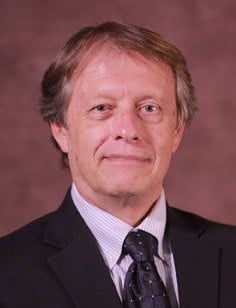 James W. Hall III, PhD, is an internationally recognized audiologist with 40-years of clinical, teaching, research, and administrative experience. He received a Bachelor’s degree in biology from American International College, a Masters degree in speech pathology from Northwestern University and his Ph.D. in audiology from Baylor College of Medicine under the direction of James Jerger.
During his career, Dr. Hall has held clinical and academic audiology positions at major medical centers. Dr. Hall now holds academic appointments as Professor (part-time) at the University of Hawaii and Salus University in the USA, numerous adjunct and visiting professor positions, and also as Extraordinary Professor at the University of Pretoria in South Africa. He’s also president of James W. Hall III Audiology Consulting LLC.
Dr. Hall’s major clinical, research, and teaching interests are clinical electrophysiology, auditory processing disorders, tinnitus, hyperacusis, and audiology applications of tele-health. He is available for instruction of Doctor of Audiology students, continuing education of audiologists and physicians, consultation regarding audiology services and procedures, and service as an expert witness. Dr. Hall is the author of over 150 peer-reviewed journal articles, monographs, or book chapters, and a number of textbooks including the 2014 Introduction to Audiology Today and the 2015 eHandbook of Auditory Evoked Responses
 Robert M. Traynor, Ed.D., is a hearing industry consultant, trainer, professor, conference speaker, practice manager and author. He has decades of experience teaching courses and training clinicians within the field of audiology with specific emphasis in hearing and tinnitus rehabilitation. He serves as Adjunct Faculty in Audiology at the University of Florida, University of Northern Colorado, University of Colorado and The University of Arkansas for Medical Sciences.


