

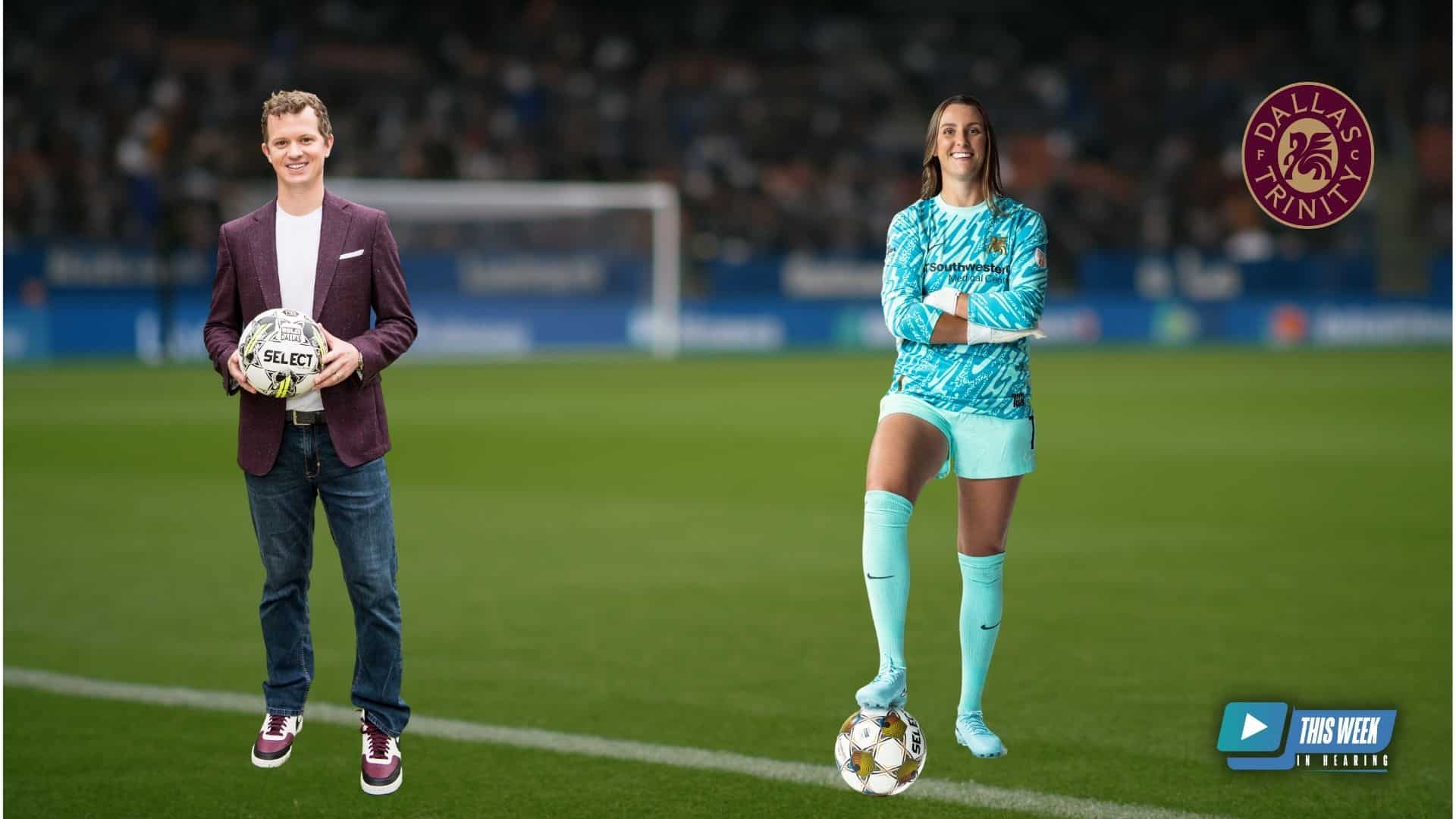
Professional soccer players Rylee Foster and Trip Neil share their inspiring journeys of living—and thriving—with hearing loss, both on and off the field. Foster, a Phonak Ambassador and the first athlete with hearing loss to sign with a Division I professional women’s soccer team, uses her platform to raise awareness and advocate for hearing health.
Neil, founder and COO of Dallas Trinity FC, brings his perspective as both a player and sports executive, emphasizing how communication, inclusion, and leadership help create more supportive environments for athletes with hearing challenges. Hosted by Shari Eberts, this discussion explores how hearing loss impacts communication, teamwork, and focus in competitive sports, along with the mental and physical strain of hearing fatigue.
Both Foster and Neil reflect on the lessons they’ve learned through their experiences—how hearing loss has strengthened their resilience, sharpened their awareness, and deepened their commitment to advocacy and accessibility in athletics.
Full Episode Transcript
Speaker 1: Welcome to This Week in Hearing. I’m Shari Eberts, and this week we have two guests, Rylee Foster, the first ever athlete with hearing loss to sign with a Division I professional women’s soccer team, and Trip Neil, the founder and COO of Dallas Trinity FC, the team that signed her. Neil is the former president of the USA Deaf Soccer Association, and like Rylee, he also made history by holding the most career appearances of any US Deaf men’s national team player. And while busy as a goalkeeper for the team, Rylee is also a Phonak ambassador, so she’s here hoping to spread some awareness about hearing loss, break down stigmas, and shine a light on the importance of wearing hearing devices. So thank you both for being here. I really appreciate it.
Speaker 2: Oh, thanks for having us. Really appreciate it as well.
Speaker 3: Thank you, Shari.
Speaker 1: Excellent. So every person as we all know, right, with hearing loss has a story, and so I was hoping to just hear a little bit about yours. When did it start, how it progressed, and maybe we’ll start with Rylee for that one.
Speaker 2: Yeah. I think to like simply put it, I was born into a family of hearing impairment. My mom is hearing impaired. She had progressive hearing loss at a rapid rate, and by the time she was in her early 30s, I wanna say, even late 20s, she had basically little hearing left, and that’s what led her to become a candidate for a cochlear implant. And at the time, Canada was doing research to prove to the government that adults would be more efficient with two cochlear implants rather than one. And I know for us, it would make so much sense, like having two ears to hear like the general population, but obviously research needs to go into that. So my mom’s hearing impaired. And then when I was a kid, my younger, or my middle sister, there’s three girls and I’m the oldest. The, the middle child was struggling in school at the time, so they had her tested, but they wanted to use me as an example of what good hearing should look like. I was successful in school. I didn’t have any complaint. Funny story is I ended up being the one with hearing impairment, and my sister was completely fine at that time. So that’s kind of the stage where I found out that I was hearing impaired and that was in the third, second, third grade. And then from there, it just… Luckily for me, it was a stable, like, impairment, I would say. My hearing loss hasn’t significantly dropped. After my car accident, that’s when I kind of explored it a lot more seriously because I noticed what fatigue and everything like that, I was not hearing as well. Yeah.
Speaker 1: Right. That’s funny that you I guess you were doing so well compensating, I guess, for your hearing loss. Everybody just assumed that your hearing was typical, which, you know, often happens to people, right? Because we do use all those communication skills almost naturally because we have no choice.
Speaker 2: Exactly. And in my household, it wasn’t like I was born without where I didn’t have people who could communicate well to me. We had to communicate well for my mom, so that was kind of a normal thing. Screaming, yelling at each other very much so enunciating our words and proper mouth techniques, I guess, is probably the best way to say it. So I, I wasn’t going without, and in the classroom, I was very cognitively focused. I, I really concentrated a lot, and little did we know that was a compensation method for my lack of hearing, so yeah.
Speaker 1: Interesting.
Speaker 2: Yeah.
Speaker 1: And so Trip, what about you? What’s your story?
Speaker 3: Yeah. So I, I was actually born hearing and I contracted bacterial meningitis when I was one and a half years old. You know, my parents got me to the hospital and obviously grew that battle. Ended up losing my hearing completely in my right ear and partially in my left ear. So I, I wear an aid in my left ear, but my right ear is not a, not a candidate, not even for a cochlear, so but I did do Deaf school and speech therapy kind of growing up through kindergarten and, and then at that point I just transitioned full time to mainstream. But my mother was a special education teacher by background, so you know, I think that those skill sets and tools that she kind of picked up in her professional career really helped out a lot with my development and my ability to, to kind of get over into the mainstream world.
Speaker 1: Excellent. Yeah, so both of you were high achievers academically despite any challenges with hearing loss, which is, which is great to hear. So it’s not every day that people meet two accomplished athletes, or at least for me, that is not my everyday occurrence especially athletes with hearing loss. So what got you into soccer in the first place?
Speaker 2: For me personally, I was a very active child. This area, I come from a background of English heritage, so my grandparents and my dad’s side are from like, from England. So playing soccer for you guys, football for me was kind of a no-brainer. But in general, multi-sports was what I was brought into. Funny for me, it just a way of at a young age for my parents to get free babysitting because I was running around rampant climbing fences, jumping off of roofs and stuff like that. That was just my personality. So on a weekend or like once or twice in a week as a very young kid, it was a way to exhaust me, to a point that was manageable. And then after that it just became a passion. I think my mentality as a kid growing up, no matter what sport I played and took seriously. I probably would’ve excelled, maybe not to this level, but to a high level. It was just a natural I know, quality I have, the resilience and the determination just to be great and the perfectionist at everything I do. So that’s how kind of soccer became the, the means of who I am and what I’ve been able to excel at a young age.
Speaker 1: Fabulous. And Trip, how about you?
Speaker 3: Yeah. For, for me, I mean, I started when I was four or five years old. It actually my mother that got, got me into, into soccer. My father had played collegiately, both soccer and baseball, and, and baseball was his passion. But you know, having a chance to, to, to play you know, could recreational soccer at that age was awesome. And I think it, it took me a couple of years to really, like, understand and, and develop and start to excel at the sport. And I think once that happened, it was kind of like an opportunity or an arena where, you know, in the Deaf world, where I’m, you know, struggling to do things as well as other people around me, this was an opportunity where, “Hey, look at me, I’m, I’m just as good, if not better than, than, than you guys.” And so I think that played a role for sure in my love of the game and my love of the sport. And obviously that passion still burns true today.
Speaker 1: So as a, I guess, a non-athlete I would think that good hearing would be pretty crucial to communicating on the field. Is, is that true? And, you know, do you feel like your hearing loss has impacted your careers? I mean, Trip, you just kind of said that this was a way to excel you know, despite the hearing loss.
Speaker 2: Want to share?
Speaker 3: Sure. Yeah. I, I do think it, communication is key, especially in as you get older in those competitive levels where it’s less about the pack, running and chasing the ball. There’s, there’s so much more that goes into tactics and strategy and, and split second decisions, where that communication is key. So, so yes, it, it is a barrier that I would say Rylee and myself have had to overcome in our playing careers. I, I think that one of the beautiful things about that is you, you find other ways to pick up the slack. So like, our vision, I’m, I’m, I speak for myself here, but I, I feel like I have pretty good peripheral vision and sense, sensibility as to where people are on the, around the pitch.
Speaker 1: Mm-hmm.
Speaker 3: That’s just a, a natural development, because I can’t hear where everybody else is or, or hear when someone’s calling for, for the ball. So you know, you, you can get, you know, some edges in other areas. But, but certainly, yeah, not being able to hear what the coach is trying to communicate or your defenders or goalkeeper for that matter, that’s, it definitely puts you at a disadvantage, not an advantage.
Speaker 2: Yeah. I see the same thing. For me personally, my position, I’m quite an isolated position. I’m a goalkeeper, so unlike Trip being in the middle of the pitch and whatnot, have an … everyone 360, I kind of give the instruction. So I’ve learned that my communication for other people to hear me, knowing that I can’t hear them properly, has to be very, very precise, very articulate, short, sharp, to the point. However, when it comes to getting instruction from the touchline, especially at the Cotton Bowl, where everything is so far away and there’s noise coming from one side and the other side, and then you have planes flying over your head, I typically struggle in that avenue. But that’s where you rely on your coaches to, like, translate information from the team and then it gets back to you. But for the most part, I agree. Like, when you have one sense that’s, like, decreased or, like, being hearing impaired for us, like, your other senses take over. And I agree that my vision, my peripheral vision is so good. And it’s almost so good to a default, because I always see things five steps ahead. So maybe I’m not making the easy pass, I’m looking, “Oh, no, like, they don’t have another option further up the field. That’ll probably come bust us later on.” And then the alternative, it’s as, a weird thing to describe, and I always try to say it to my husband, but like, you can just feel when things are going on. And I, I don’t mean feel as in vibrations, but you just have this innate, like, ability to know what’s being … Like, you know when someone’s speaking to you, but you can’t hear them. It’s a weird thing that’s going on. So you’re always switched on cognitively. Your focus is heightened. I can’t… Most players can probably walk around and go, “Oh, yeah, like, look at the flowers,” so I don’t know. They’re just taking the surroundings. Like, the minute I switch off is the minute I miss probably a whole episode of what just happened, because I can’t hear it naturally. So there’s a, a positive of that, meaning that I’m switched on all game. Like, 100% switched on, 100% focused. I’m taking in every little picture that I see. And I think that’s a very positive thing to… It becomes a super power in a way. My husband always says that. Like, it’s a super power ’cause you get to be able to do everything else at a heightened level. So you, you compensate for it differently. And my reaction, as a goalkeeper, are so much more quicker because of the fact that I’m seeing things faster, before it even happens. You’re anticipating where players are. I know where I need to be. I know if can get across or a block. Like, there’s a goal that went against us the other day. I had seen that player probably five seconds prior to the ball actually getting to her. You it’s just a visualization, and you have to be able to see it.
Speaker 1: Mm-hmm. So you’re kind of anticipating, right? Because you’re, you’re just on that high alert. I think that happens with… not even in it obviously happens in sports, but not just in sports, that I think people with hearing loss, because we’re using so many other senses, we are sort of at this heightened state of awareness. Even just walking down the street, right? Like, is there a bike coming? Is there a car turning? Is there a pedestrian here? Is that a sound? Speech. Should it be… I, you know, be looking over here? And so it’s interesting you’ve been able to translate that into success on the playing field. So that’s wonderful to hear. I love that. So when you guys are playing, do you talk about your hearing loss to your teammates? Do you disclose that and, you know, what reaction have you found from that? And are there ways or things they can do to help you? Are you really sort of on your own in terms of that?
Speaker 2: I think it’s really good. From my experience, I’ve only grown up in the I guess it’s the more able side of sports. So not playing at the … on the Deaf teams and whatnot. And I think for the longest time in my life, not that I was, like, afraid to own who I was and my disability per se, ’cause I embrace my mother all day. Like, it’s normal to me. I… There’s no issue in my, my life about it. But it wasn’t something that I get on a pedestal and be like, “Hey, guys, by the way, this is my disability. I need assistance here.” It was more something I just coped with, because I don’t think I really truly realized how much I compensated for it. So, it actually wasn’t until my car accident where I sustained a brain injury and I realized how much mental fortitude, mental focus, and mental, like, energy I had used to hear. When I couldn’t allot all that spare energy I had as a natural person without a brain injury, I could hear no problem, or what I thought. But as soon as that energy went away and I didn’t have to, like, I couldn’t actually put it towards focusing on hearing, I became so exhausted. I wasn’t hearing. I actually thought I damaged, had more damage to my ears after the car accident. But the reality was, it was just, I didn’t have it in me anymore. So, that’s when I had to speak up. That’s when I had to become more articulate about my disability and embrace it a bit more. And it wasn’t until I came to Dallas, to be fair, where I was just like, “Yeah, this is who I am.” And I think that’s just, like, a maturity thing, because first of all, I’m coming into a club that was very accepting… When I, at first time to club, I had no idea what I was like, the community I was walking into, put it easily. And then my dad is actually the one who said, “Oh, by the way, like, your ownership group are very invested in the hearing community.” And that’s when I started emailing Trip and being like, “By the way, we’re best friends.” That was humbly what I said. And I thought it was really unique to be able to come to an environment. Like, my first meeting, we had a medical meeting to go over all the people who are invested in our medical side of the, the game. And one thing that kept on being spoken about was, everyone needs to hear, so speak with a microphone. Everyone deserves to hear. And I thought, “Wow, like, that’s really powerful.” Because, yeah, there’s two people in the room who are hearing impaired; however, even if you’re in the back, not everyone articulates well. It, it was just a really unique experience. I’d never had had that before. So, I’d say my journey of being able to be proud, articulate, and, like, I’m immersed in a culture that really accepted it, kind of has come full circle now at Dallas Trinity, versus before everyone accepted it. They’re like, cool. They had a lot of questions, but it wasn’t something that was toll-… Not tolerable, but no one really adjusted anything. It was more just spoken about, “Cool, you’re hearing impaired. What does that… Like so how do you hear me now? Like, but you’re not wearing your hearing aids on the pitch, how does that work?” It is more curiosity rather than there’s actual action being taken at the, the pitch level and then higher up, to allow people with disabilities, myself and Trip, but there’s more people who have different varying disabilities and whatnot who are able to, to be effective in the environment, which is really positive.
Speaker 1: So Trip, how did you, you know, how did you cope with it when you were playing? And then now also, it sounds like you’re setting this great example within the team and the management to make sure things are accessible.
Speaker 3: I, yeah, I, you know, my father was my coach growing up until I got into competitive club soccer. And then it was just letting my coach know. It, it wasn’t something that I, like, like Rylee talked about, didn’t want to get on a pedestal and announce to the whole team, “Hey, look at me, I’m Deaf and I need you to compensate for that.” that was never my experience either. Same thing in college. Like, my college coach knew, and you know, my, my teammates that were close friends knew, but it wasn’t like I really, you know, went around and, and shared that information or, or came forward with it. But it’s interesting. I didn’t play with hearing aids either. Like, that, that was just my comfort level around it. And, and maybe I’m, I’m much older than Rylee unfortunately, but you know, the technology is so good nowadays, maybe, maybe that might have been different if I was getting into the sport this day, at this day and age than when I first started. But yeah, I think, I think the other side of that experience is obviously getting a chance to play for the US Deaf Men’s National Team where that was open and inclusive. And, and part of, like, our team meetings and our bonding opportunities is to learn everybody’s story and understand how they got to where they are today and how they got to be a part of the club or the Deaf Men’s National Team. And so that, that journey’s been eye-opening ’cause that, that’s really rare. We do talk about it and we do understand what each other needs. And, and obviously in, in the Deaf sports world it’s a little different than trying to level the playing field where nobody has assistive devices, so you’re not so focused on, on, on that individually, but more on like, how do you communicate as a team collectively with an interpreter and a coach on the sideline? So yeah, I think, I think it’s just different experiences across the board there. But can certainly relate to know, it’s not like a badge of honor that, that I wear around announcing. And, and quite honestly when when Rylee was getting signed by our club, I love that we signed her for her talent. We… I had no knowledge that she was Deaf at all. I had no, no knowledge of that, and I thought it was so cool. It was just like, to me, the, the, the way the world works. I mean, it’s… I’ve spent a lot of time working in Deaf soccer and advocating for so many opportunities for others, not just in, in Deaf soccer, but in the disability world too, to come and get an opportunity to embrace their career, extend their career, or get involved in, in the sport of soccer, whether it’s on the field or not. And so, to, to be able to have our, our, our goalkeeper on our club also be a part of that journey is just, it’s really cool.
Speaker 1: That is very cool. And, funny that, like, you didn’t know that until it sort of all played out. So that’s like fate or kismet or whatever you want to call it, right? It’s funny when things like that happen. So, what about in your life outside of sports? Can you talk a little bit about how hearing loss has impacted your life outside of sports?
Speaker 2: Yeah. I think for me personally, again, like everyone’s experiences are different everyone’s friend groups are different and where they live and the culture they’re from affects that, but I think for me personally, I don’t think I realized how much I struggled on a social level until I got older, until I realized like why maybe I was apprehensive. Why did I just develop so many anxiety? It, it was really interesting to, to reflect on. again, I always circle back to the car accident that I was part of and the, the setback that put me on, but it, it made me have a lot of introspective moments and I became like physically disabled for a long period of time, so I had to rely different things, but I struggled with just regular relationships, like communicating within relationships, and it wasn’t necessarily the one-on-one, it was the big groups, and I think being a female especially, big groups are normal. Everyone’s part of a big girls group, right? Like, everyone has their friends in high school and elementary school that that was never me. I was never the person part of like a team sport who was in the huddle of all the girls talking ’cause I really struggled to hear them. I really struggled to take all the voices at once and put ’em in my ears and be like, “Yeah, I get what everyone’s saying.” Like I had to focus on one. But the problem is in, in girls groups that 15 are talking at the same time. I cannot pick up on all of them. Right? So it’s quite challenging and … it’s a funny joke in my family, but I’m considered the mute one and I talk a lot, I’m always talking to people, I’m always expressing myself, but I, I’m a lot more reserved ’cause I’m analyzing and hearing everyone. And you think that’d be unique in a Deaf family where we have multiple people who are hearing impaired. So it’s, it’s a weird balance. But I struggle socially. I really did in school, I spent all my energy learning and being present in my classes so that when it came to social hours or lunch hours or whatever, there wasn’t time for that. And that’s why I think I thrive, like I thrive so much as a goalkeeper, because that’s so independent. I’m in my own little world. I don’t have to communicate with every single person all the time. I’m working on myself I’m independent and I think, yeah, outside of footy, like that’s where my independence comes from. It’s just figuring it out on my own. But it took me until my adult ages and later on in my life really to, to actually acknowledge that and no longer do I get that, like, fear of going out and not understanding. Like, why don’t I wanna go out for dinner with the whole team and sit at the table? Why don’t I wanna go to an escape room with the whole team? It’s because that’s actually exhausting. That’s … It’s not even the fear of not being able to hear, it’s the, it’s the exhaustion after, the mental exhaustion that, that’s … That I see a lot when the Deaf community and the hearing community, like struggle with.
Speaker 1: Oh. And I think that whole exhaustion aspect really speaks to the idea that, like, we hear and communicate with our brain, really, not just our ears, right? And so it’s just all that extra energy which maybe for people who have typical hearing, you don’t have to expend so much visual energy, right? Looking around, making sure that you’re attending to something important, using visual cues like lip reading or body language to, to understand. So yeah, it makes sense that that would definitely impact your relationships growing up, and I think it impacts our relationships all along. We need to make sure that we’re advocating for ourselves so that our communication partners can understand that, you know, there’s gonna be, be a little bit extra work on both sides of the equation to make it work.
Speaker 2: Yeah. I think what’s also really important to note is that being hearing impaired, there’s so many other levels of how you hear. Like, just because we wear aids, for example, doesn’t mean I can hear better. It’s an like, it’s like glasses. Glasses make people see better, but if you take those off, you can’t see. With hearing aids, they input the sound, but how our brain registers the sound is completely different to how a like a lens would make someone see.
Speaker 1: Yeah.
Speaker 2: It, like you actually have to work on hearing. You can’t just hope it’s gonna work. Like I know my mom has cochlear implants, and God bless her, she has like ninja robotic hearing compared to the average person, but she still can’t hear, ’cause you have to actually focus and consciously be present all the time. There’s no switching off. A lot of people talk about hearing fatigue, you get home, take them off, and you go, “Oh, this is so much calmer.” So that’s the kind of stuff that people kind of neglect, and, and that’s why I think it affects socially, ’cause when we’re on the pitch and we’re working, you’re in a, in a work environment, corporate world, whatever, you’re on all the time. When you get home, there’s no time to go for a coffee with everyone else. There’s absolutely no energy for it. Like you need to reserve that, because then the next day I have to perform at that level all over again and expend all that energy just to be able to hear. The technology is getting better with assistance but it’s still not like that.
Speaker 1: Right. Yeah. I think a, a lot people misunderstand that about hearing aids and, and hearing devices. They think like, oh, it’s just gonna be like glasses where you sort of put ’em on and it’s like snap, everything is sort of back to normal or, or, what have you. And you know, the technology is fabulous for hearing aids, but that hasn’t gotten there yet. So, I think that’s an important thing, you know, for people who wear the devices to understand, and sometimes it’s hard for us if people don’t tell us that upfront, right? We have different expectations and it’s important that, to that to explain to our communication partners about that as well, because they may have assumptions that are not accurate and not because they’re trying to hurt us, but because they just don’t have that information.
Speaker 2: Exactly.
Speaker 1: And what about you, Trip? How about your life outside of sports?
Speaker 3: Yeah. Absolutely. But just to, just to piggyback off of the exhaustion standpoint,
Speaker 1: Yeah.
Speaker 3: my niece on my wife’s side, so not genetically related, right? Unfortunately went through a very similar experience that I had. So she had bacterial meningitis and ended up getting a cochlear out of it, and she is going through that process where she’s learning how to, to do the hybrid hearing with natural sound in one ear and cochlear in the other. There’s programs and there’s tutorials and, and she is exhausted by the end of the day. I mean, that, that is a real, a real factor in it all. I can relate a little bit, like, so my experience off the, the pitch, right? As a kid I mean, I would come home, this is, again, what my mom would tell me. I don’t remember doing this. But so I would come home and and just take my hearing aids out and throw them down. I was, like, exhausted from all the inputs that were going in, or hearing aids, sorry, and throw it down. I would always have, like, a second lunchbox. It was like lunch, and then the other one was, like, the AM/FM system that the teacher would wear, and then I would have, get all, all plugged in. But yeah, I, I don’t think I realized how much I was missing until, like, really in college when I, I remember, maybe after college, when I started watching some TV shows with captions. I, I never used captions. I was like, reruns of old shows you know, Friends episodes or whatever, I was like, “Oh, man. This is like three times as funny as I realize.” I just didn’t catch all the jokes or the humor. I remember seeing Elf after I’d seen Elf in the theaters, but, like, later with captions and was just blown away by how funny, funny that movie was. But there was other coping mechanisms too, like obviously sitting in the front of the classroom asking for teachers to turn and, and face, you know, a lot of lip-reading. That was, like, I’m really dependent on that, like if you’re facing in the same room but facing the other way. Like I’m, I’m gonna struggle. And, and sometimes it’s just like naturally just, you know, answering “Yeah, that sounds great,” or, “Okay,” not knowing what somebody said. And so different coping mechanisms just to not always have to, “Hey, can you repeat yourself? Can you do, can you, I couldn’t hear you. Say it again, say it again.” So my wife, I, get in those habits sometimes at home. My wife, my wife will catch them. “You, you didn’t hear what I said, did you?” Like, “All right, you got, you got me on that.”
Speaker 1: Ha, good for her when you
Speaker 2: Yeah.
Speaker 1: spot it, right? Yeah.
Speaker 3: So, but I’m mindful too, ’cause I’ve got, I’ve got kids. I’ve got four kids. And I’m careful about, like, asking them too much to repeat. “Hey, daddy didn’t catch what you said. I, I can’t hear you.” Like, when I’m driving them and I can’t see their lips, that is a hard, a hard experience. So but yeah. That’s, that’s part of life. We’ll get through it.
Speaker 1: Absolutely. Absolutely. And that’s part of part of in our book, Hear & Beyond, we sort of put out this operating formula for living more skillfully with hearing loss, because it’s not something that you necessarily learn from your audiologist that first day, or, you know, if you don’t have anyone in your family that can sort of show you the ropes. How do you find out about all these other coping mechanisms so that you can find that energy in yourself, right? That mental energy and physical energy to advocate for yourself and to educate others so they know how to communicate better with you, right? So that maybe you don’t have to ask for repeats all the time, because they’re looking at you and they’re enunciating and they’re, you know spelling this hard word if you’re not catching it. And so it’s really just like a, a two-way street that we have to, you know, be the, the leader, obviously, but we can bring people along the way to assist.
Speaker 2: I agree.
Speaker 1: So, Rylee you’re a Phonak ambassador now. So can you talk about how that got started, why you decided to do that, and sort of what are your, what are your goals for this?
Speaker 2: Yeah. So again, everything kind of stemmed from my car accident. Like an epiphany
Speaker 1: Put my life
Speaker 2: Put my life back into perspective when you get to that point. But I was struggling a lot post-car accident hearing. And it was frustrating to me, stressing me out. I couldn’t really explain. Just went through a lot physically and mentally already, so I don’t have that as a problem too. I thought, “Oh, like, great. I went through this car accident, do all these injuries, break my neck. I’m getting told all these things, now I can’t hear on top of that. Like, really, could it really get much worse?” And it felt like I could never catch a break. And I’ve worn Phonak hearing devices since my first diagnosis. That was what my family wore. That’s what I’ve always relied upon. And I had a set that were probably about, like, 12 years old. So, that really goes to show how on top of my hearing health I was as a, a young adolescent and in college. I really did not put much emphasis to it like I should have. So I actually reached to Phonak. I said, “Hey.” And I didn’t want like a … wasn’t about getting freebies. I already had, I actually just had gotten a new set that were updated, super cool, super, super radio, super Bluetooth, super cools But I reached out to them. I said, “Look, this is my story, and I wanna do more. I, I wanna do more. I have this platform, and everyone’s so fixated on me breaking my neck. Like, that’s not who I am. I’m not, I’m not breaking my neck and telling a story about that. Like, I have so much more to share. If I’m gonna have a platform now because of that, I wanna make sure I use it the right way.” Being a professional athlete, you’re blessed with the opportunity impact other peoples’ lives, to be a role model, to be a leader. And I just didn’t feel like I was connecting, not that I don’t connect to the kids that are able, but I was disabled. I am disabled in a way, right? And I, I felt like I needed to do more. So, that’s why I reached out to Phonak. like, “Can we just work together at some, some space?” And I didn’t realize it would transpire into something so powerful and unique. And to become a, a global brand ambassador for the company is absolutely amazing. They’ve allowed me to not only embrace my hearing and to make sure that I’m getting the care that I need, that I probably would … I mean, it’s like glasses. How long do people have glasses and not go get their eyes checked? You know what I mean? Like, it’s one of those things. And Phonak enabled me to take control of my hearing health to new level, but also to use my platform and now in opportunities like this to actually speak. And did I know I was gonna be the first hearing-impaired division one athlete? No. I had no idea. Like, that, to me, it’s not the research I do, but thank gosh everyone else does it, because now there’s moments that we get to, to impact younger children’s lives. And I don’t know about you, Trip, but I didn’t have a person to look at and go, “Wow, you’re hearing-impaired.” But now that I’m part of Phonak’s Brand Ambassadors, there’s so many different people who are also hearing impaired, competing at the, like the highest level. And, like, I won’t include names just for their own, their own privacy and, and whatnot. But there’s people competing at the Olympics and X Games and whatnot, and Phonak supports them, and we use all of our our abilities. And musicians even, like, the highest level of performance, all wearing Phonak and, and working together to deliver the same message and sort of advocating for, for our community and, and disabilities in general, because everyone’s included. And that was really important for me to, to have that. I come from a family of people who struggle, not only my immediate family, but my mom’s side of the family. It’s something that’s becoming so much more common. I moved to America and I have little girls coming up to me, and boys, with hearing aids, and I’m going, “Whoa.” I never saw that as a kid. Like, I was the only one in the room, only one in the, the, the community. So, to see that is just crazy, and to have them come up to me, come talk to me, not just, like, say, “Hi, can I have your autograph?” And tell me that they’re hearing impaired. That means… Like, my first preseason game here Trip’s mom brought up a little girl who was… Had hearing aids on. I thought, “Wow.” Like, she’s playing with them. She’s embracing. Like, I didn’t have that ability. I didn’t have a me to look up to. And to now be able to work with Phonak and all the opportunities that transpire and to hopefully continue to go in to advocate not only at, like, the community level. Like, I have opportunities to go speak at, in European Parliament. Unfortunately, didn’t, like, come to fruition last year, but these are the type of things that I want to do and to make a change. Like, everyone deserves access to hearing. Everyone deserves the ability to succeed at the same level as the, the able-bodied community. So, how can I I know I’m one person, how can I make that possible amongst a bunch of other people like Trip and, and the Phonak community who want to keep on bringing forth access and education to the general population and, and the hearing population.
Speaker 1: I love that. Very well said. And it’s so important to have role models, right? For any type of disability, any type of life challenge. If you feel that you’re alone in it, it just makes it harder, and to see other people who share that challenge and are succeeding with it gives you hope that you can do it too. And I think that’s just such a lovely opportunity that you reached out for, and you’re really making the most of it. So, well done. I really love to hear that. So, as we’re wrapping up here, any final pieces of advice for people living with hearing loss, athletes living with hearing loss, or just any final thoughts you want to share?
Speaker 2: I think just, like, to reiterate that, that you’re not alone. We talk about it when it comes to mental health. We talk about when it comes to physical disabilities and whatnot. But just because your, your disability’s invisible doesn’t mean that no one should know and, and, and it can’t be spoken about. So it’s just, like, don’t isolate. Keep yourself in, in the present and, and talk about it with other people. And if you don’t have anyone to talk about, I think my DMs are always open. I always see messages, and emails are always open, but allow yourself to have someone to talk to, and own who you are. Like, that to me is the most important. Everyone has their own thing going on, and no one’s perfect in this world, not a single soul. So, don’t let a hindrance, what you think is a hindrance prevent you from achieving your goals and whatnot. Because I promise you, like, like my husband tells me, and he’s the first one who ever told me about that hindrance, my hearing impaired disability, it’s a superpower. And that allows me to become who I am today, play the way I do today, and as a person who I am. So, if I could be a role model to that one person, then let that be.
Speaker 1: Love that.
Speaker 3: I, I would just share that you know, there’s, there’s a place for everyone. You know, and, and that’s, that’s established by groups like Phonak and, and obviously, you know, the, like, USA Deaf Sports Federation offers, offers a lot of opportunity for people in the United States that are interested in sports that have, you know … That may be Deaf or hard of hearing, and, and there’s, there’s a place for them to pursue their, their athletic dreams. There’s a lot of local chapters and leagues that you can, can, can get online and find out about. And, and we’re not the only country that does this. You know, there’s a, there’s a whole mission behind it. I’m involved in a, a nonprofit here locally called Power Sense that really is just … It’s not sports-focused, but it’s about Deaf and hard of hearing community and bringing parents and kids and siblings all together so that we can all exchange ideas and learn from each other and enjoy a unique experience or a fun experience together. And I think people like Rylee are, are, are excellent ambassadors for the young kids in the community to look up to. And they You, you … I’ve been to training camps, for example, where … Or, or Deaf and hard of hearing clinics for kids where we see a kid come in with a cochlear, shy, and they see a Deaf national team player wearing their cochlear, and that just that moment just is magical, and it, it, it brightens up, you know, creates a smile and an opportunity for these kids to go flourish and, and thrive. And so, I think creating more of those opportunities a good thing. And then, then for those of us that, that have had a chance to benefit from the hard work and support from so many others, like myself and Rylee have been able to benefit from strong family foundation, from groups like Phonak and, and, and good resources all around, you know, to, to find ways to get involved and get active and, and give back to your community, I think that would be the, the other area I would encourage people to, to do. I personally am investing in a, a company that, that is trying to make better technology for cochlear implants. I don’t wear a cochlear, but I just know that that’s a good mission and there’s a lot of work that can be done to improve the lives of, of others. And I think really appreciate what you’re doing, Shari. I mean, getting, getting a podcast and an episode out there and, and, and sharing the message is, is all another step in the right direction for, for this community. So thank you.
Speaker 1: Oh. Well, thank you both. I love it. I This has been a terrific discussion. I thank you both for being on the podcast today, and, and really being open and sharing about your experiences, and I wish you both continued success in your careers and with your hearing loss journeys as well. So thanks so much.
Speaker 2: Thank you. I appreciate it.
Speaker 3: Enjoyed it. See you.
Be sure to subscribe to the TWIH YouTube channel for the latest episodes each week, and follow This Week in Hearing on LinkedIn, Instagram and X.
Prefer to listen on the go? Tune into the TWIH Podcast on your favorite podcast streaming service, including Apple, Spotify, Google and more.
About the Panel

Shari Eberts is a passionate hearing health advocate and internationally recognized author and speaker on hearing loss issues. She is the founder of Living with Hearing Loss, a popular blog and online community for people with hearing loss, and an executive producer of We Hear You, an award-winning documentary about the hearing loss experience. Her book, Hear & Beyond: Live Skillfully with Hearing Loss, (co-authored with Gael Hannan) is the ultimate survival guide to living well with hearing loss. Shari has an adult-onset genetic hearing loss and hopes that by sharing her story, she will help others to live more peacefully with their own hearing issues. Connect with Shari: Blog, Facebook, LinkedIn, Twitter..

Rylee Foster is a professional soccer goalkeeper and Phonak ambassador who became the first athlete with hearing loss to sign with a Division I professional women’s soccer team. She uses her platform to advocate for hearing health awareness, inclusion in sports, and breaking the stigma surrounding hearing loss.
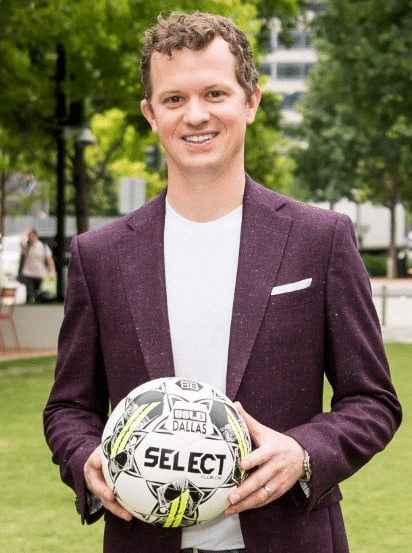
Trip Neil is the founder and COO of Dallas Trinity FC and a former president of the USA Deaf Soccer Association. A decorated athlete who holds the most career appearances for the U.S. Deaf Men’s National Team, he continues to champion accessibility and opportunity for athletes with hearing loss.