

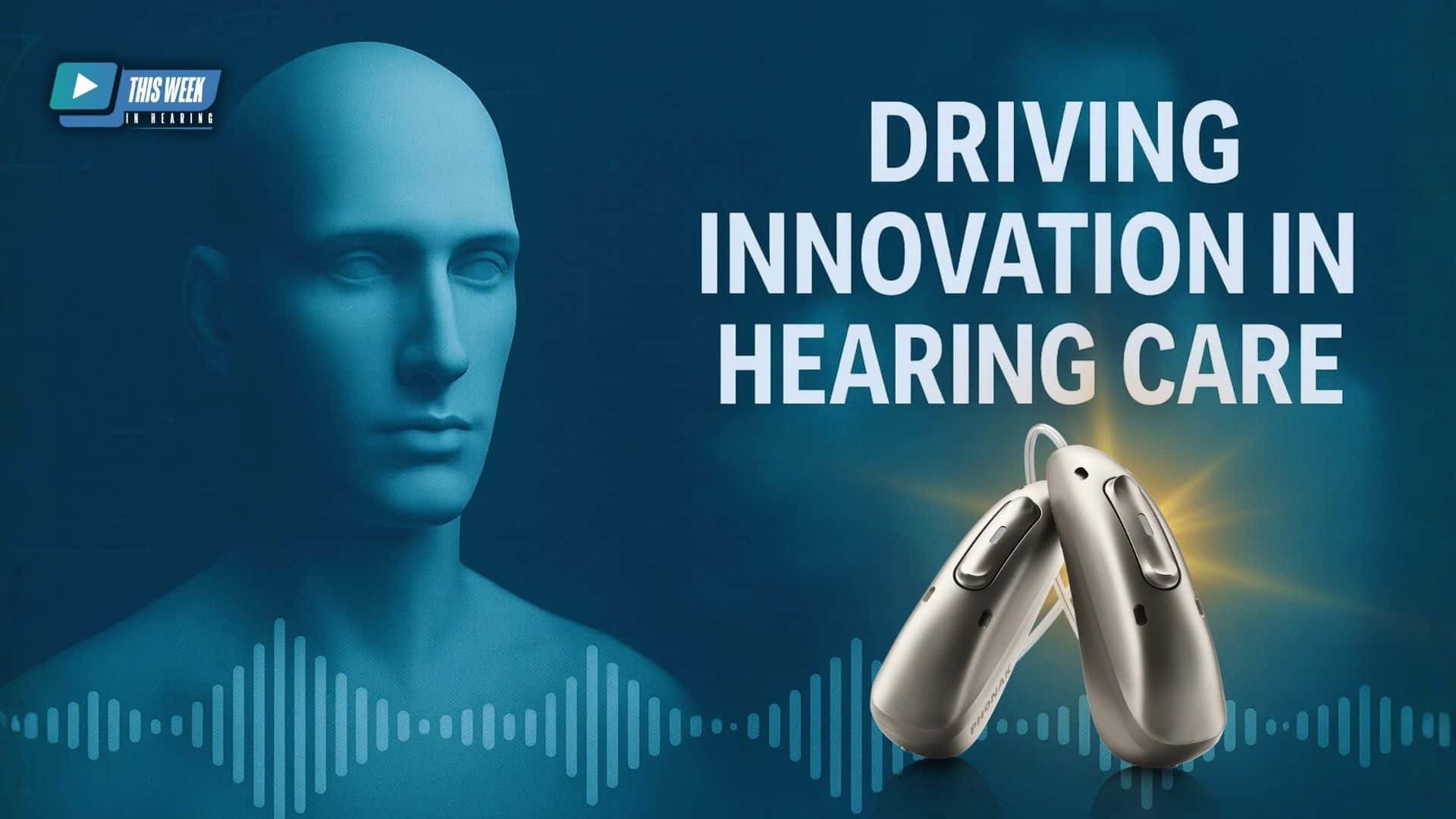
What will shape the next era of hearing care, and how are global research, AI-driven advancements, and shifting perspectives on healthy aging coming together to redefine the field? In this conversation, Dr. Stefan Launer, Vice President of Audiology and Health Innovations at Sonova, reflects on his three-decade journey from psychoacoustics researcher to leading some of the company’s most influential developments in hearing science.
He discusses the evolution of digital signal processing, the emergence of deep neural networks for speech enhancement, and how large-scale real-world datasets—sometimes involving thousands of participants—now guide product performance and patient-centered design. Dr. Launer also highlights Sonova’s global network of research centers and their role in understanding cultural and regional differences in hearing care, as well as the value of cross-disciplinary collaboration in exploring hearing, cognition, and healthy aging.
The conversation explores the reduction of stigma, the future of hearing instruments as holistic health tools, and how audiologists can play an essential role in prevention, motivation, and long-term patient support.
Full Episode Transcript
Speaker 1: Welcome to This Week in Hearing. Hello, I’m Bob Traynor, your host for this episode. We have a very special guest is with me today. Stefan Launer from Sonova. Stefan is the Vice President at Sonova for audiology and health innovations, and he’s with us here today to kind of look at various issues that are going on with some of the innovations at Sonova in Switzerland. So thank you very much for being with us today, Stefan. It’s always a pleasure to have the high-level executives for the, our, our main companies that we work with here at This Week in Hearing. Now, one of the things that I always didn’t understand when I was sitting in the clinic working with patients every day is where do these executives come from, and, and what kind of a… I think if, it would really help us to, for looking at the philosophies and so on a little bit later in our discussion if, if the clinicians had a pretty good idea maybe on your journey from through audiology, or through business, or whatever, that brings you to being the vice president of audiology and health innovations at Stafa.
Speaker 2: Yes. Thank you, first of all Robert, for having me. It’s a real pleasure and honor to be, to be here, and, and talk to you, discuss with you. So my journey actually began with Phonak back 30 years ago.
Speaker 1: Wow.
Speaker 2: I did my Yeah, quite a while. I did my PhD in hearing science. I’m a physicist by training, and then did my PhD in psychoacoustics developing loudness models for, for hearing impaired. then I joined Phonak, now Sonova, to build a clinical research team doing clinical studies with hearing instruments, and I started my journey building this clinical research team. I was part of the development team of the first digital hearing instrument, and then took on more leading roles in the organization, doing a lot of basic audiological acoustic digital signal processing, and even system and, and, and chip design work. I was overseeing the entire research and technology and also IP program for the Sonova organization. And as Phonak grew from Phonak to Sonova, I basically was allowed to grow within the organization, and took more and more and broader roles. Helped acquire AB and InSound, and, and various other things. And basically, so I grew in the organization, and today I’m overseeing what we call audiology and health innovation. Sonova today basically has the hearing instrument arm, the retail arm, and for them, I’m looking into a lot of the basic new functionalities for the hearing instruments, for the fitting procedures, but also for the entire care delivery. And we recently built a new program on holistic hearing care where we changed the perspective on hearing care and how to put it in a broader context of healthy living and aging. So it’s been an exciting 30 years for me, I have to say. Audiology is a really cool and very exciting field, and I look forward to see how this profession develops in the future.
Speaker 1: You know one of the, one of the discussions that Jason and I had the, when we did our discussion was that his, his idea was he, when he finished his doctorate, if he could go to a university and do research and have his own students, that would be a small group of individuals that would that would benefit from the kinds of things that he was doing. And but yet he chose to go on the manufacturing side, and based on some of the stuff that those guys were doing, thousands of people would benefit from those things. And it sounds like that, well, that’s been a, a kind of a nice journey for you as well, ’cause many of the things you have perpetuated over the last 30 years, we’re all seeing in the clinics with the products, and it has had a huge, thousands of individuals have benefited from those kinds of developments that you guys have put on in the manufacturing sector, whether it be Sonova, or whether it be some of the other four major manufacturers that are out there. But it’s guys like yourself that take the science and, and then apply it to people and then some innovations in how it’s presented that has been quite different than I think the last generation of executives in many in manufacturers and so on.
Speaker 2: So from, from my end, it’s been a really fascinating journey because at Sonova, we do invest a lot in bringing basic science forward and also bringing it to clinical practice. We have four research centers around the world, in the US, in Chicago, in Toronto, in Canada, in Switzerland, in Stafa, Zurich area, and then in, in China, in the Shanghai area…. where we drive a lot of internal work, plus we have a very strong network of external research collaborations where we can really engage in long-term collaborations. We have been working on topics of hearing care, hearing intervention, and the risk of cognitive decline for more than decade. We partnered with the Achieve team, supported this trial. So it’s been really fascinating to be part of this field to help drive it forward and to take on big challenges with a mid to long term perspective and bring them from science to clinical practice. That’s been really a fascinating journey.
Speaker 1: Well, and along with the journey comes differences in the countries and differences in various issues, and my understanding is that some of the reason that a guy might do a project in China might be because the regulatory modifications from one country to another make some differences in in the kinds of research that you can conduct.
Speaker 2: Well, that is definitely one aspect, but I think for us the main driver for having research centers in different parts of the world is to be closer to to the patients, to the people in need, and to understand their needs. So in the US, in North America, Canada, in Europe, but also in China where you speak different languages, total languages, you have different cultural backgrounds, you have different types of hearing losses. So for us, a main reason is to also really be able to adopt our solutions, the solutions that we offer more to to the local needs and to do studies with our devices and show that the effectiveness in different parts of the world with different cultural backgrounds, with different types of hearing losses. So for us, it’s really to meet the needs of a global population and drive work forward. Also to leverage local resources and also help develop work, you know, especially when you think about China where the audiology community by no means is as large and as strong as we have it in North America or in Europe. I think we can also contribute quite a bit to help growing audiology as a profession in these parts of the world. That’s a fascinating journey, very rewarding also, great pleasure to be able to drive that work forward.
Speaker 1: I know that when I was doing some work with one of the other Swiss companies we would go to different parts of the world and people would not even know what audiology is. They would know what hearing aids were and they would have a distributor there, but it was such a rewarding component that we were able to teach a little audiology as well as how to run the products, and sounds like that is continuing not only at Sonova but with some of the other some of your other colleagues out and competitors as well. So but to me, it was great to watch people come to the US or go to Europe, Manchester was a big place they went to to learn audiology and they’d take all that home and they’d start audiology programs in places like Sao Paulo and other places where those programs didn’t exist before.
Speaker 2: Yeah.
Speaker 1: … sounds like that’s continuing to move audiology not only just in the more developed countries but also down into some of the ones where things aren’t quite as developed as well. So
Speaker 2: Absolutely. We also developed an online training program especially to support … regions where, where there is no strong audiology profession or where there are no strong education programs. So, there is a lot going on to really help develop audiology on a global scale.
Speaker 1: Great. At that time, we didn’t… I think Skype was all we had, and it was pretty intermittent at the time back in the ’90s and early 2000s. So we’ve come a long way since we could do that. And of course, now that… Now, with all the communicative kinds of things, with the online programs that will really help to foster audiology in places where it hasn’t been before. So what kinds of things do you see, kind of, with, with your hearing science background and your, now your audiology background, plus the, the at least the people I met, the fabulous staff that you have at Sonova working with with the products, and the technologies, and all the things that we have these days. What kinds of things do you see for the future of of working with our patients in the clinic to facilitate their hearing impairment and possibly tinnitus as well? So…
Speaker 2: Yeah. I mean I mean for me, I think it’s been a super fascinating journey. And we are at a we are delivering audiological and hearing care services in a, in a pretty fascinating time. So first of all, on the product technology level, on the product performance level, I would like to emphasize, we made great progress over the past three decades. And I think we are now embarking even on a new journey, on a new level of product performance. Because with these large and really powerful DNN solutions, where you can apply deep neural networks for direct speech enhancement you can extract the speech signal, and present a speech signal at an unprecedented clarity and provide really excellent speech intelligibility, even in highly dynamic and, loud conversation situations. So, we can really provide good, strong additional performance and benefit to the people using the devices. And it’s remarkable what this technology will offer us also in the future. Today, we use it for direct speech enhancement. In the future, we might extract different speech casts. So not only speech in general, but specific voices. That’s something that is now becoming technically feasible. We will adapt the, DNN solutions to be more selective, to identify specific sounds. We will use the DNNs more to even improve on the automatic selection of different algorithms for different listening scenes. So from a performance perspective, I think we have a lot of opportunities in the near to midterm future, thanks to this new technology that we have now embarked on. Today we need a really powerful chip to run these big networks. But in the next years, that will scale down and it will become more widely available. So on the product level, we have huge opportunities. But not only there, I think also on the care journey, we better and better understand the needs of the clients, how to move them along in the journey, how to talk to them. And we will develop fascinating tools, you know, apps to help counsel them, help support them, and troubleshoot their hearing instruments, help move them along their journey, and support them with apps. And also be able to track them and support them remotely, and help to motivate them to adopt and adhere, adhere to solutions. So, also from the care pathway, I see quite a lot of potential for us to help the patients, the clients better. And the third point for me that is pretty fascinating at the moment, and where I see huge potential also for audiology as a profession, is that I think there is quite a trend in the world going on that tries to create a different perception of aging. In the past, there was this association with aging of decline just getting older, declining with all sorts of skills. But I think people are taking a more positive spin on age, aging, especially trying to maintain healthy aging, good lifestyle, good quality of life. Aging does not mean you have to decline. And there was a lot of work on longevity and putting, getting a different perception of aging. And hearing is such an important contributor to that, because the most important factor of healthy aging is an active social lifestyle. And that’s when you need language and especially also hearing to support. So, hearing care, from my perspective, is an essential, crucial part for all this work on longevity, healthy aging. And that provides a lot of really interesting opportunities for audiology if we team up with other fields, with other professions in this field of longevity and age research. I find it very fascinating to think about the opportunities here.
Speaker 1: Sometimes some of the, some of the coolest things that have happened in audiology and in hearing care have come from ideas from other professions studying comorbidities and a lot of those kinds of issues. And and it’s, and it’s really, really an innovation, I think, to see manufacturers looking at those issues and where some manufacturers might be scaring people by saying, “If you don’t buy a hearing aid, you’re going to get dementia.” And others are, “How do we work around all that so that we can keep people from having those disorders in the first place? What are we going to do to facilitate communication to make things a lot better?” But one of the things I’ve seen over the years is that the more we listen to people on the outside of audiology, the better our profession grows and the better things happen in the interactions. One of the ones that, that I was very impressed with the other day when, when I had the discussion with Dr. Galster, was the idea that you’re now using some ways that you can have research conducted on a, on a thousand people at the same time rather than just four or five, which has always been one of our biggest nemesis in the research is that our N’s are always very small. And but now that with the possibility of you putting something on the phone and, and analyzing where they are and doing those kinds of kinds of things and then maybe downloading that into a hearing aid in the future, wow that’s, that’s like, like taking a trip to Mars from where you and I remember hearing aids, at one time or another.
Speaker 2: Yeah, absolutely. You know, I mean you touched upon a couple of topics. First of all, all this work on comorbidities. I remember when my colleague Ulrike Lemke approached me for the first time to discuss and came back with a proposal to study that, that was like, “Oh my God, why would I be doing this? What is the benefit?”
Speaker 1: Yeah…
Speaker 2: … but she convinced me, and it was I thought it’s a, it’s a, it’s a wild idea. I didn’t see why, but I thought, “It’s a wild idea. Let’s give it a try,” you know, and it turned into a whole body of research putting hearing care in a broader context of healthy living and aging, which was so stimulating and inspiring today. And, and we learn a lot and we, we take a different perspective on hearing care today. So that was a huge progress and it was partly stimulated maybe not from the outside, but through a dialogue we had with other professions. You know, I think this is a crucial point. It’s listening and talking. It’s this dialogue, it’s this exchange. What can we do together? What can we learn from each other that moves us forward? And here also we work with neurologists, brain scientists, and we did some fascinating studies in the lab on doing behavioral tests, some brain imaging work and some EEG work on the brain in in the same subjects. And we could show fascinating results how people performed better with the DNNs behaviorally, how they consumed less energy through their through the imaging data, and how their brain processing improved which we could measure through the EEG. That was work conducted by Ann and Dave Eddins and their team from the University of Central Florida, which was fascinating. And, and now we also progress with doing the clinical studies not only with the techniques we have in the lab, but also with the mobile phones, with the data logging we have where we can really collect feedback and also usage data from thousands of participants at the same time. And we have conducted studies where we looked at usage data, … we collected feedback on mobile phones from 8,000 people, and then we used language models to analyze their written feedback. That gives a very different insight about the benefits and also the topics we have to work on, where we have to innovate. And that is very impressive to see. And also, the usage time, if you can follow the usage time, and you see that hearing instruments are worn on average 12-plus hours per day, few hearing instruments are not worn for more than an hour per day. It’s less than 3% to 5%. So you can clearly see over years, hearing instruments are worn and they perform well. Few end in the drawer. That is super fascinating to see, and you can collect real-world evidence and feedback that gives us a lot of insights into the needs of our patients. So, so yeah, it’s a great time to explore the benefits of, of hearing care very broadly now.
Speaker 1: Now, you remember also something that seems to be, now, it’s still present, the stigma is still present with, amplification. The stigma’s still there. But I recall back when I began as an audiologist and had my practice beginning to blossom people had to be almost 95 years old and couldn’t hear anything, and yet they still didn’t admit they had a hearing loss ’cause they didn’t want to use any, any products to facilitate that ’cause they didn’t want to look old. Now, I, my guess is when you’re about 95, you’re gonna look old anyway, but other people don’t perceive themselves that way. And, and, but I see over the years, that’s less and less and less, and a lot of it is technology-driven. About the time you could take care the two biggest problems I saw early well, I say before about 2015 or so, the two biggest problems were the phone and the TV. And once we had a streamer, and then once we had the phone capabilities, that took care of a little bit of that stigma, because all of a sudden, these guys don’t look old, they’re, they’re all technological, hooked up, and all these things. And now, we can facilitate and move, move some of the comorbidities away as sounds like you guys are beginning to do. To me, a study of 8,000 people in audiology is like, again, going to Mars, because we never were able to do that before. And …
Speaker 2: Yes, absolutely. It’s really, it’s really fascinating. And there was some really cool work driven by Louise Hickson, Barbara Timmer, and the team from the University of Queensland. It was a broad team that recently published a special issue on stigma as well. I think it was in the International Journal of Audiology, and, and they really looked into the topic of stigma very, very broadly and deeply. And one learning I took away from the study was that stigma is maybe less associated with the hearing aid itself, with the device itself, and it’s more related to the association of hearing aid with aging and being an older person. But I hope we can address this, first of all, by, as I said, changing the perspective on aging. Aging doesn’t mean decline. If you live healthy, if you are socially active, you can maintain a pretty good health up to an, an older and a higher age. So, you can have a positive perspective on on aging. That’s that’s number one. And I think if we talk more about the benefits of hearing care beyond just hearing the birds chirp again, beyond just hearing the TV at a softer level, if we talk about the emotions associated with hearing, how you can be integrated and be socially more active how you can enjoy and participate more in life, enjoy music, I think then it has a very positive impact not only on hearing, but on health in general, on your physical fitness, on your cognitive health. I think that’s the way how we have to talk about hearing care, how it facilitates healthy aging, how it contributes to healthy aging, not threaten people that hearing aids reduce the risk of cognitive decline. I think that’s the, the wrong way.
Speaker 1: It is
Speaker 2: Have a positive spin. Talk positively about how hearing care contributes to to healthy living and quality of life and social participation in general.
Speaker 1: And I think my clinical colleagues will even admit that that they’ve seen this stigma kind of go away, go down over, over the years, and that it, it really is a semi kind of a cultural issue as well as a as an aging issue. But the idea is that these things are, are beginning to be reduced because of all the hard work that guys in hearing science are doing and the interactions among the professions and a number of those kinds of things are, are working to reduce that. And and so with a, with a more positive look at the aging process and the able to, ability to interact and socialize it’s gonna be a, a big difference in the, in the stigma that’s often been associated with hearing loss, so yeah.
Speaker 2: I think audiologists have a lot to offer, to healthy living and aging. They meet people early in their, if you will, health career. You know, they meet them at age 60, 65, 70, couple of years, half a decade to a decade, before other major health issues really take off. So they can contribute to prevention a lot. They can do a lot of counseling, and I think they can, through in doing that, they can also motivate people to adopt a a hearing aid as a, as a solution. Also, I think when you look at modern hearing instruments, I mean, they have so many new features, like the wireless connectivity that facilitates easy conversations on the phone, or easier conversations on the phone or allow to listening to audiobooks, streaming media. So, I think they have, they have turned into really very useful devices that provide a ton of benefit beyond classic hearing care beyond the classic hearing benefits. And what is always important for us to emphasize is that it is not about the hearing aid or the technology in itself. It’s about hearing care. It’s about the intervention. It’s about helping people to adopt a solution, motivating them, guiding them, counseling them, and find helping them to find the right solution for them, and then supporting them in the process of adopting. So, it’s about hearing intervention or hearing care that makes the it’s, the difference. It’s not the technology per se.
Speaker 1: I totally agree with that, as I’ve, as, that’s how I worked with my patients over the years. However, the technology kind of facilitates that healthcare innovation too. they kind of work together, thus your title of Audiology and Health Innovations Stefan, so.
Speaker 2: Yeah.
Speaker 1: So my guest today has been Dr. Stefan Launer, the vice president of Audiology and Health Innovations at Sonova, and I want to thank you very much for a very interesting discussion, and also the knowledge now that I think the executives in the major manufacturers are now listening carefully, not only to the audiologists, but also to the patients, and taking studies that have as many as 8,000 people involved in them. So again, we very much appreciate this time, energy, and effort that went into our discussion today, ’cause I know it was quite a hassle for us to get set up and get things done here Stefan. But the deal is that we are very appreciative to talk with you here at This Week in Hearing, so,
Speaker 2: Yeah. Thank you very much Robert for having me. Thank you for a very inspiring, interesting discussion. Always, always great to talk about this fascinating field and future prospects as well. So thank you.
Speaker 1: So those of you out there thank you very much for listening to us in a fascinating conversation with executives at Sonova, who have the time, energy, and effort to take with us, but also the background and years of experience in listening, and beginning to listen to clinicians and patients that we all deal with every day. Thank you for being with us today, and thank you for listening to This Week in Hearing.
Be sure to subscribe to the TWIH YouTube channel for the latest episodes each week, and follow This Week in Hearing on LinkedIn, Instagram and X.
Prefer to listen on the go? Tune into the TWIH Podcast on your favorite podcast streaming service, including Apple, Spotify, Google and more.
About the Panel
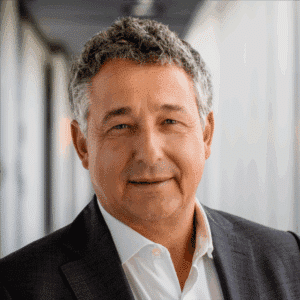 Stefan Launer, PhD, studied Physics at the University of Würzburg and completed his PhD in Hearing Science and Psychoacoustics at the Universities of Göttingen and Oldenburg, joining Phonak in 1995 where he held leadership roles across audiological engineering, digital signal processing, and acoustic design. He currently serves as Vice President of Audiology and Health Innovation at Sonova
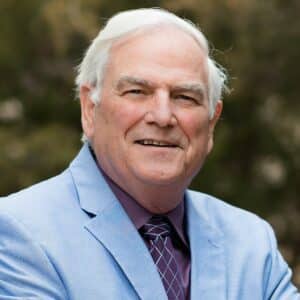 Robert M. Traynor, Ed.D., is a hearing industry consultant, trainer, professor, conference speaker, practice manager and author. He has decades of experience teaching courses and training clinicians within the field of audiology with specific emphasis in hearing and tinnitus rehabilitation. He serves as Adjunct Faculty in Audiology at the University of Florida, University of Northern Colorado, University of Colorado and The University of Arkansas for Medical Sciences.