


Can lost hearing cells be replaced? Lineage Cell Therapeutics CEO Brian Culley returns to discuss the company’s new collaboration with William Demant Invest. Together, they’re advancing ReSonance™ (ANP1) — an experimental cell therapy designed to replace damaged auditory neurons and potentially restore communication between the ear and the brain.
Culley explains how the partnership combines Lineage’s regenerative cell technology with the audiology expertise of Eriksholm Research Centre to move this therapy toward first-in-human testing.
Backed by up to $12 million in research funding, the multi-year effort could represent a new frontier in treating hearing loss in the future.
Full Episode Transcript
Speaker 1: Hello, and welcome to another episode of This Week in Hearing. I’m your host this week, Brian Taylor. And joining me this week is Brian Culley, who’s the CEO of Lineage Cell Therapeutics, and he’s here to discuss some of the new and exciting developments in the world of neuronal cell therapy. Brian, it’s great to have you back on the on the show.
Speaker 2: Thank you, Brian. It’s my pleasure to be here.
Speaker 1: Well, I know it’s been less than a year, but I thought it’d be a good idea to maybe catch everybody up with or reintroduce at least and talk a little bit about Lineage’s involvement just in broadly speaking in in cell therapies. Could you maybe tell us a little bit about some of the areas that you’re conducting research in or where you have a presence in?
Speaker 2: Of course. Our, our company is involved in what I only semi-jokingly call manufacturing replacement parts. So there are, there’s a long list of diseases and conditions for which the hallmark is the death or the dysfunction of a very specialized type of cell. And so we have technology by which we can manufacture in our labs replacement cells that look, feel, and behave like the ones that are lost. So some of the, some of the good examples that come to mind are, are conditions like age-related macular degeneration with geographic atrophy. It’s a long, a long way of saying specialized retina cells die off. So, we entered into an almost $700 million deal with Roche to partner for the replacement of manufacturing retina cells to try to bring back vision. We’ve had some really exciting results. But we’re also working in the area of spinal cord injury, where we have been manufacturing a special cell of the spinal cord and transplanting that into people who have suffered from debilitating and paralyzing injury. And yes, we’re quite excited that one of our programs in hearing loss has recently enjoyed a partnership with a hearing loss company, and yeah, it’s a, it’s another great approach of replacing the cells that are absent in order to hopefully restore the function that you otherwise would enjoy.
Speaker 1: Yeah, I’m glad you brought that up. Well, we’ll talk about the, the partnership in a second. I thought we, if you could, maybe refresh everybody’s memory around the Resonance program what that is, and who the patient population, the intended target of that approach might be.
Speaker 2: Yeah. Resonance is our internal term for the, the hearing loss program. So you know, as, as sound makes its way through the, the external auditory canal, you know, eventually it gets into the, the hair cells, and the, the information is passed off to auditory neurons. But when your auditory neurons become damaged or dysfunctional, if they are lost, destroyed, outlived, any number of reasons can cause you to lose normal functionality of these highly specialized cells. Well, our approach is to manufacture cells that are going to function just like the auditory neurons that you naturally would have, and we’ll deliver them. We’ll deliver them with, with microscopic surgery right into the cochlear space where they normally are found. And if those cells can then function, if they can receive the information from the hair cells, send it down the nerve cells and, and provide you know, the accurate communication and signal to your brain, we may be able to either stop hearing loss or perhaps as we have seen in the eye perhaps bring some of that function back. And so that’s what the Resonance program is about. It’s manufacturing replacement auditory neurons, delivering them to the inner ear in order to bring back hearing and, and stop the loss of further hearing.
Speaker 1: Yeah, thanks for the refresher. I think that our audience will appreciate that. You mentioned this new collaboration or this new partnership with a very well-respected company, William Demant. I think a lot of our viewers know their flagship brand, Oticon. This seems like a pretty big ramp up into hearing loss therapy. So can you tell us a little bit about how this partnership works and how the two companies might align?
Speaker 2: This is such a, a fantastic sort of convergence of people that know about cell therapy, which is Lineage, and then people that know about hearing loss, which is the, the William Demant Invest Foundation. And so what we have what we have sought to do in this alliance is bring together these areas of expertise because replacing the auditory neurons does require not only a sophisticated understanding of the, of the hearing process, but there also is the, the delivery consideration. The cell manufacturing is, is very difficult. And then you need to know what you’re going to measure and, and how to get it through a regulatory process until you can actually get to a therapy that can help people. So Lineage, with our area of expertise, we are going to be contributing, all of the manufacturing of these cells. We have expertise in regulatory compliance. We’re familiar with running human trials, clinical trials. Demant, on the other hand, they’re, they’re a world-leading company in, in hearing healthcare. So they’re contributing their research expertise. So that involves the technologies that they’ve developed around hearing aid hearing diagnosis, all of the all audiology and, and outcomes measurements to, to see if the cells are, are behaving and, and providing a function, as well as a really wide network of, of opinion leaders and thought leaders in the healthcare hearing healthcare space. And those are individuals that we don’t even know who, who they are, let alone have relationships with them. So I think by pulling together their expertise in hearing loss along with our expertise in manufacturing and understanding cell therapy we’re really nicely aligned with not only the William Demant Foundation’s purpose, which is to further and advance technologies in the field of, of hearing loss, but also Lineage’s interest and excited mission to manufacture new therapies by delivering specific and discreet cells to people in order to bring back function that they otherwise would have.
Speaker 1: And, and I think part of this collaboration is with their esteemed… You know, a lot of people know about this group inside of our profession, the Eriksholm Research Centre, which is over in Denmark, I believe. Can you tell us a little bit more about how you see that, you know, talking about your capabilities, their capabilities, can you tell us a maybe a little bit more about how the scientific responsibilities around the Resonance program might align?
Speaker 2: Yes. Broadly speaking you know, I think I would just describe it this way that we make the cells, and then we ship them to them for testing. So they have their Danish facilities. I’ve been over there it’s really very impressive. You know, when you don’t know an area, when you don’t know a field, as I’m not an expert in hearing loss, and you go there and you see what’s happening, it’s really extraordinary. So they have incredible resources to hopefully make this program very successful. And then we also will be relying, to a certain extent, on third parties. You know, there are some there are some models and tests that can be done that wouldn’t be done by either their foundation or by our facility, but they could be contracted for third parties. But as a general matter, we’ll make the cells, we will deliver them to them, they will oversee the testing and the pre-clinical testing, and what we hope to accomplish from this is to develop a product candidate that can go into clinical testing, go into its initial human testing, which is really exciting because when you do these what are called phase I clinical trials, almost always those are just safety studies. You wanna make sure that the safety of the therapy that you’re developing is acceptable. But with hearing loss, you also may be able to detect some activity, even in a phase one, a small phase one trial, because these these are situations where people only get worse, you know? People are not spontaneously regrowing auditory neurons. So if you do see an increase in performance even in a small trial, it’s very evocative about what might be possible here.
Speaker 1: Yeah, that’s really interesting, and you know, I wanna echo what you said about Eriksholm. I think that’s a first-class operation when it comes to all their research that they do so kudos to you for partnering with them. I guess my next question is around success or the roadmap to success. I know it’s a long, arduous process to bring something like this to the market commercially, but can you give us a little flavor for how you might define success in a commercialized product down the road?
Speaker 2: Well, it has to start with the patient being satisfied, you know? individuals are requesting this, asking their doctors about this technology, if they wanna get on to clinical trials that we would hope to conduct in the future you know, that shows you not only the strong unmet need but also that we may be producing a product candidate that has, the profile that fits and suits with people. We envision this to be a one-time administration of cells. Once the cells are established in the in the inner ear there’s no particular reason that we know of that they would not continue to remain there and function for the life of the patient. And we’re also very excited about data that has come out of a close field, gene therapy. There have been some really wonderful cases of data in the gene therapy field that have shown that absolutely you can bring back hearing function to individuals, but what’s notable about cell therapy versus gene therapy is that gene therapy requires you to hit just one gene, so you’re really tackling one very narrow and well-defined problem, and the vast majority of people typically don’t have, for example, OTOF deficiency, so with cell therapy, it doesn’t really matter what gene is broken or if a whole bunch of genes are broken because we’re basically delivering an entire genome, right? We’re delivering a cell that has the entirety of the human genome within it, and so as such, we think that we might have really broad benefits across all sorts of different kinds of hearing loss, provided that what they have in common is dysfunctional or absent auditory neurons.
Speaker 1: That’s good. My final question to you is our primary audience are hearing care professionals out there, many of them dispense hearing aids have been doing that for a number of years how do you see cell therapy complementing or maybe enhancing what they do day to day? I mean, this may be down the road a while, but I’m kinda wondering what your vision is with how hearing care is practiced down the road.
Speaker 2: Well, if we think this will be successful, our view is that the first and best place to try it is in conjunction with cochlear implants, and so we can envision that at the same time that an implant is being implanted, that the cells could be delivered at the same time We have not yet defined exactly what the ideal patient population is. This is really new frontier technology but I would add for your listeners that I remember five or six years ago talking about what we were doing in the eye and it seemed so far away and people were very skeptical, and as I sit here now, there are four or five companies that have shown that they can regain vision in patients that have lost it due to macular degeneration. We aspire to do the same thing. We’re just now on the side of the head instead of the front of the head, and it’s really exciting because the possibility that you may be able to figure out how, where to deliver these cells, have them be functional, have it be a safe procedure one time is really profoundly exciting to us because it could change not just the caregivers but, obviously, again, the individuals who are suffering from that hearing loss.
Speaker 1: I’m with Brian Culley who’s the CEO of Lineage Cell Therapeutics. We’re talking about their partnership with the William Demant Group. Any… I guess my last question is if people wanna learn more about clinical trials or some of the other projects that you have underway, where’s a good place to find that information?
Speaker 2: Well, there’s a lot of information because we’re a publicly traded company, and all of that’s available at our website which is lineagecell.com.
Speaker 1: And we’ll put a link in the show notes. So thanks again, Brian, for your time. Really appreciate it. Good to see you again.
Speaker 2: Thanks so much, Bryan. I look forward to being back with more news as soon as we have some.
Speaker 1: Sounds good.
Be sure to subscribe to the TWIH YouTube channel for the latest episodes each week, and follow This Week in Hearing on LinkedIn, Instagram and X.
Prefer to listen on the go? Tune into the TWIH Podcast on your favorite podcast streaming service, including Apple, Spotify, Google and more.
About the Panel
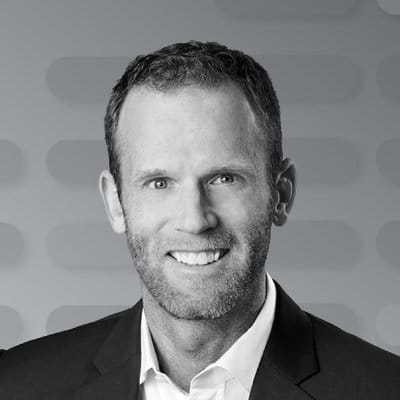 Brian Culley joined Lineage as Chief Executive Officer in September 2018. Prior to joining Lineage, Mr. Culley served from August 2017 to September 2018 as interim Chief Executive Officer at Artemis Therapeutics, Inc. (ATMS). Mr. Culley previously served as Chief Executive Officer of Mast Therapeutics, Inc. (MSTX), from 2010, and was also a member of its board of directors from 2011, until Mast’s merger with Savara, Inc. (SVRA) in April 2017. Mr. Culley served from 2007 to 2010 as Mast’s Chief Business Officer and Senior Vice President, from 2006 to 2007 as Mast’s Senior Vice President, Business Development, and from 2004 to 2006 as Mast’s Vice President, Business Development. From 2002 until 2004, Mr. Culley was Director of Business Development and Marketing for Immusol, Inc. From 1999 until 2000, he worked at the University of California, San Diego (UCSD) Department of Technology Transfer & Intellectual Property Services and from 1996 to 1999 he conducted drug development research for Neurocrine Biosciences, Inc. (NBIX). Mr. Culley has also served on the Board of Orphagen Pharmaceuticals, Inc. since May 2017. Mr. Culley has more than 25 years of business and scientific experience in the life sciences industry. He received a B.S. in biology from Boston College, a masters in biochemistry and molecular biology from the University of California, Santa Barbara, and an M.B.A. from The Johnson School of Business at Cornell University.

Brian Taylor, AuD, is the senior director of audiology for Signia. He is also the editor of Audiology Practices, a quarterly journal of the Academy of Doctors of Audiology, editor-at-large for Hearing Health & Technology Matters and adjunct instructor at the University of Wisconsin.


