


Every year, World Hearing Day brings global attention to one of the most common — and often overlooked — public health challenges: hearing loss.
In this discussion, experts from the World Health Organization and the global hearing health community explain the purpose and impact of World Hearing Day, an international initiative focused on improving awareness, prevention, and access to ear and hearing care worldwide. The conversation explores how the effort has expanded into coordinated activities across countries, reaching policymakers, professionals, educators, and communities.
Dr. Carolina Der, Technical Officer in the WHO Ear and Hearing Care Programme, and Dr. James Saunders of Dartmouth Hitchcock Medical Center discuss this year’s theme — From Communities to Classroom: Hearing Care for All Children — and why school-based screening, early detection, and public awareness are critical to improving global hearing health.
They also share practical ways clinicians, organizations, and individuals can participate and help expand access to hearing care worldwide.
- For more information about World Hearing Day and how to get involved, visit: https://worldhearingday.org

Full Episode Transcript
Welcome to This Week in Hearing. I’m Shari Eberts. What’s on your agenda for March 3rd this year? I’m hoping your plans include celebrating World Hearing Day. For those who may not be familiar, World Hearing Day is an annual global advocacy event focused on raising awareness about hearing loss and promoting the importance of proper ear and hearing care. It has been sponsored by the World Health Organization each year since 2007. If you’re unsure how to mark the day, today’s guests are deeply involved in World Hearing Day and are sure to have ideas to share.
Thank you for the invitation. Yes, thank you very much. I should note one small correction—I am actually the former co-lead. My apologies, I still associate you closely with that effort because of your impact. Perhaps co-lead emeritus. It was a pleasure working together in the early days of that workstream, and we have both since moved on to other initiatives.
Let’s talk about how you both became so involved in hearing healthcare. My journey began with work in Nicaragua, where I saw firsthand how much of the world’s population lacks access to hearing care. That experience led me to work with the American Academy of Otolaryngology in humanitarian health, where I later became involved in international coordination. During that time, I met audiologist Jackie Clark, who was doing similar work, and together with colleagues Carl White and JoAnn Travers, we realized there was a need for a multidisciplinary organization to support these efforts. This led to the formation of the Coalition for Global Hearing Health in 2009, and later collaboration with the WHO and involvement with World Hearing Day. It has been a gradual journey, step by step.
From my perspective, as an ENT surgeon and neurotologist, hearing care became deeply meaningful because it is not just technical—it is personal. Working with people who have hearing loss means becoming part of their daily lives, their families, their work, and their schools. I felt this was where I truly belonged. In Chile, I worked closely within the public health system and led a cochlear implant program at a pediatric hospital until about two and a half years ago. Eventually, I was invited by the WHO to support their efforts in ear and hearing care. My career path may not be typical for someone working in a UN agency, but my passion drives my commitment every day. I truly believe this work is essential to advancing access to hearing care globally and changing the paradigm.
It’s wonderful to hear how both of you arrived from different paths and now contribute to the World Health Organization and the World Hearing Forum. Diverse perspectives bring tremendous value. Let’s talk more about World Hearing Day—how did it begin, and what is its purpose?
World Hearing Day has been around since about 2007, but the real growth came with the formation of the World Hearing Forum. When the Forum was established, efforts were organized into several workstreams, and collaboration increased significantly between WHO, professionals, and community stakeholders. Around 2017–2018, participation in World Hearing Day activities grew dramatically—from roughly 100 events to hundreds more globally. This collaboration between professionals, organizations, and communities has been a major driver of its success.
At the time the Forum began, I was involved as a stakeholder before joining the WHO. The Forum gave World Hearing Day a powerful boost, making it truly global. Interestingly, March 3rd was chosen because the number three resembles two ears—an easy way to remember. Since then, the number of activities has expanded significantly, and the workstream continues to play a critical role in this growth.
With hundreds of events taking place, the message reaches hundreds of thousands of people each year. It is one of the most important awareness efforts we have. Advocacy is powerful, but we must go beyond our own professional community and reach policymakers, other health workers, and the broader public to improve access to care.
Hearing health is still widely misunderstood by the general public. Many people don’t fully understand what living with hearing loss is like. World Hearing Day helps bring hearing loss into everyday conversation, even if just for one day, and that awareness can carry forward.
Many events are organized by professionals, but community members and students are increasingly involved, especially this year with a focus on schools. Engaging young people helps carry the message forward in meaningful ways.
Activities don’t need to be large or expensive. Even small actions—such as a webinar, school screening, or distributing educational materials—can make a difference. This year’s theme emphasizes how hearing supports learning and encourages school-based screening and inclusion of ear and hearing care within health systems for children.
This year’s theme is “From Communities to Classrooms: Hearing Care for All Children.” Themes are always evidence-based and shaped by input from WHO regional offices, stakeholders, and global needs. Recently, WHO developed a school-age screening pathway that combines hearing and vision screening and is launching a low-cost screening app to improve accessibility worldwide.
One of the challenges is ensuring screening tools and knowledge are widely available. Identifying hearing issues early is the first step toward intervention and support.
Each year follows a cycle: WHO selects a theme in the fall, materials are translated into many languages, small grants support local initiatives, and activities culminate on World Hearing Day. Afterward, a global report documents the year’s activities before planning begins again.
Organizations and individuals are encouraged to register their activities at worldhearingday.org so they can be included in the global report and inspire others.
There are many ways to participate—screenings, school visits, educational talks, community runs, art contests, and policy engagement. Creativity is encouraged, and any activity that raises awareness is valuable.
World Hearing Day resources are available through WHO and worldhearingday.org, where materials, information, and activity registration can be found. The goal is to promote inclusion and recognize hearing care as a normal part of life, not something separate.
Thank you both for joining today. Here’s to a successful World Hearing Day this year and many more to come. Happy World Hearing Day.
Be sure to subscribe to the TWIH YouTube channel for the latest episodes each week, and follow This Week in Hearing on LinkedIn, Instagram and X.
Prefer to listen on the go? Tune into the TWIH Podcast on your favorite podcast streaming service, including Apple, Spotify, Google and more.
About the Panel
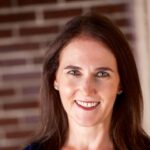
Shari Eberts is a passionate hearing health advocate and internationally recognized author and speaker on hearing loss issues. She is the founder of Living with Hearing Loss, a popular blog and online community for people with hearing loss, and an executive producer of We Hear You, an award-winning documentary about the hearing loss experience. Her book, Hear & Beyond: Live Skillfully with Hearing Loss, (co-authored with Gael Hannan) is the ultimate survival guide to living well with hearing loss. Shari has an adult-onset genetic hearing loss and hopes that by sharing her story, she will help others to live more peacefully with their own hearing issues. Connect with Shari: Blog, Facebook, LinkedIn, Twitter.
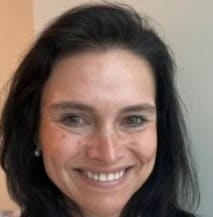 Carolina Der, MD, PhD, is Technical Officer for Ear and Hearing Care at the World Health Organization and an ENT surgeon and neurotologist by training. With extensive experience in public health and clinical care, including leading a pediatric cochlear implant program in Chile, she is dedicated to improving global access to hearing care. Her work at WHO focuses on advancing evidence-based strategies, awareness, and inclusive hearing health systems worldwide.
 James Saunders, MD, MS practices otology/neuro-otology at Dartmouth Hitchcock Medical Center and is a long-time advocate for global hearing health. His research spans the causes and treatment of hearing loss in low-resource settings, including cost-effective interventions, large-scale screening technologies, and environmental and genetic contributors to hearing loss. He previously served as co-lead of the World Hearing Forum’s World Hearing Day workstream and remains actively involved in international efforts to expand access to ear and hearing care worldwide.