

 Let me start by saying that my writing is evolving and becoming more polished, but, I am NOT a technical writer by any means. So, if any of you readers want to add technical information in the comment section, I am all for it! That being said, here we go!
As the world of fitting hearing aids moves toward completely wireless, I wonder how many of us have notes in charts, on programmers, etc., telling us not to use wireless programming and streamers around the necks of patients with pacemakers. The question has received some recent audiology blog scrutiny but a conclusive answer remains elusive or at least not spelled out yet for Audiologists.
A few years ago when streamers and wireless programmers were first coming onto the market we all wondered, how does the signal work? Yes, it is Bluetooth, but that is only part of the equation with many of the manufacturers. HIMSA reported that the Noah Link had a 15-mm safety margin. A cell phone test conducted at the University of Oklahoma found the emission from the NOAH Link well within the required 6-inch (15 cm) area and less than most cell phones. The NOAH link uses 2400 MHz.


There are only two manufacturers that do not use a streamer type of wireless communication: Starkey and GN Resound. They use 2.4-GHz in one form or another. The other manufacturers that use an intermediary device (streamer) employ some form of magnetic communication. A pacemaker is placed on the left side of the chest and should not have any magnetic energy within 6 inches of it. That is because a pacemaker uses electrical pulses to keep the heart beating at a regular beat. Magnetic energy would disrupt this cycle of impulses, causing a change in the wearer’s heartbeat.
This is the best information I was able to get from manufacturers. Oticon would only say to contact the implantable device manufacturer for information about the risk of disturbance. If interference is suspected, quit using the Streamer. (See Warning above.) There was also a bit more information to keep to the distance of 6 inches or 15 cm.
 Phonak has recently provided more specific information, advising not to place the hearing aids themselves within the 6 inch (or 15 cm) distance and not to use wireless accessories. This would also eliminate wireless programming with the iCube.
The Siemens literature also says not to use wireless programming or wireless accessories with patients who have pacemakers.
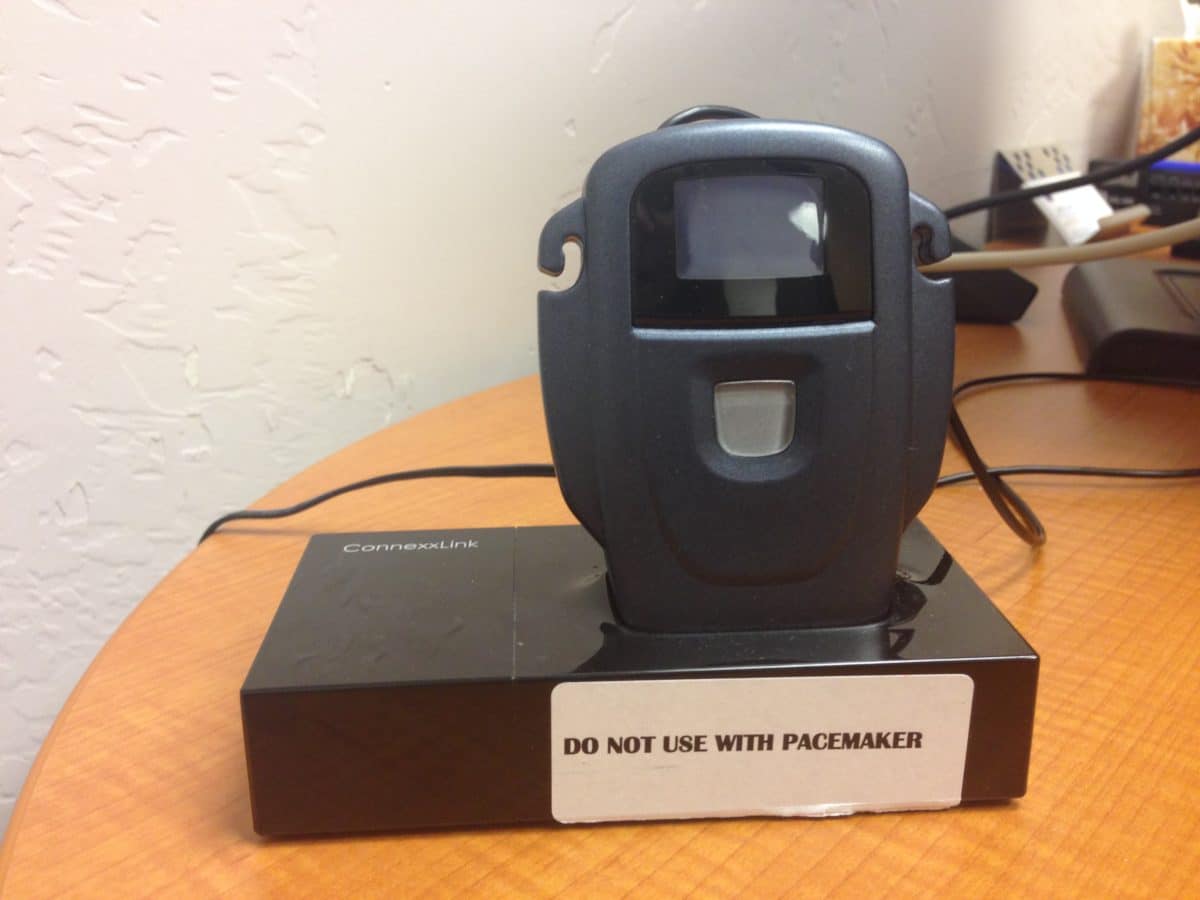
In our practice, we just popped a label onto the programmer on the desk to remind audiologists to ask every patient if they wear a pacemaker. We advise patients that we will probably ask them this question every time we see them just to be safe, and we ask them please not to get annoyed with us for repeating the question.
These are the manufacturers that supply wireless programmers to my office. We offer more brands when it comes to fittings. Please feel free to add information from any other companies to this knowledge base!