

What does it take to compete at the highest level of sport while growing up with hearing loss?
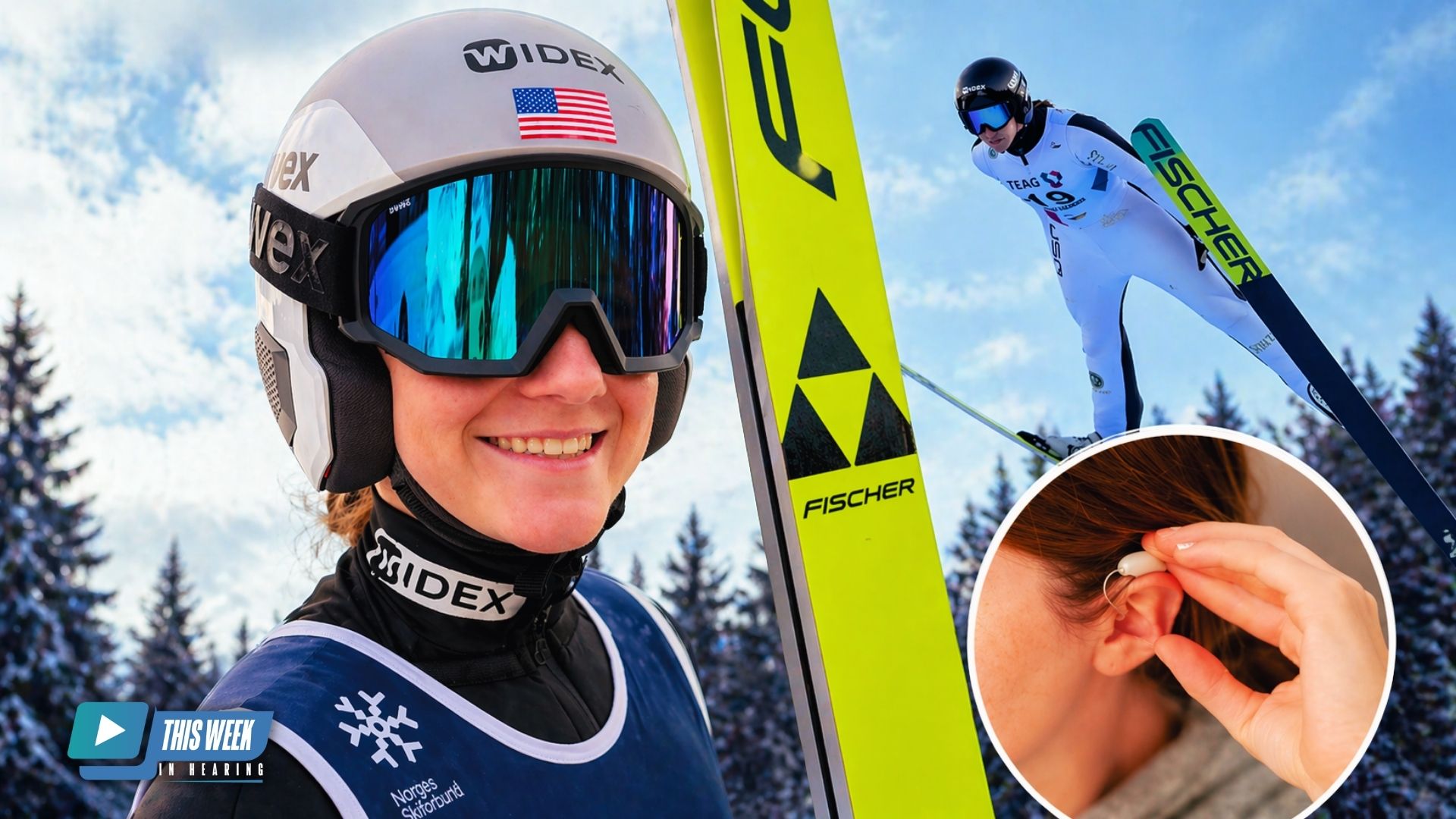
In this conversation, U.S. ski jumper Estella Hassrick shares her journey—from being diagnosed with hereditary cochlear dysplasia at age three to competing on the U.S. national team. She discusses the realities of hearing loss in high-performance sports, including the challenges of wearing hearing aids under a helmet, navigating school and training environments, and adapting along the way.
Estella also reflects on how hearing technology has evolved over her lifetime, her experience working with audiologists, and the role of support systems—including her partnership with Widex. Throughout the discussion, she offers perspective on resilience, identity, and what it means to pursue ambitious goals while managing hearing loss.
Her message is clear: hearing loss may change the path—but it doesn’t define the outcome.
Full Episode Transcript
Welcome to This Week in Hearing. Hi, I’m Bob Traynor, your host for this episode, and I’m honored to have with me today Estella Hassrik, a 19-year-old member of the United States Olympic ski team. Wow, that’s quite a lot for a young lady. And thanks for being with us today, Estella, and we really appreciate you joining us here at This Week in Hearing.
Yeah, thanks for having me. I’m excited to talk to you guys.
Great. Estella has spent more than half her life on ski slopes, and my guess is you spent a few of those slopes here in Colorado where I live. Pretty, pretty much as well. And, and beginning at just 4 years old in skiing, and she began ski jumping at 8 years old, and now an Olympic ski jumper. All this success, and Estella was born with a hereditary cochlear dysplasia that is shared with 3 generations in your family. And so can you tell us just a little bit about how was your hearing loss found? I know, I understand it wasn’t with newborn hearing screening, but can you give us a little idea of how mom and dad found out that Estella was not hearing the way she should?
Yeah, it wasn’t immediate. It wasn’t with the newborn screening. So I went the first 3 years of my life without any idea that I had hearing loss or my parents with any idea. And it was when my younger sister was born, she was born with Down syndrome. So I think hearing screening is pretty standard with that. So I think they were like, while we’re at it, might as well check Estella’s, see if anything’s up there. And lo and behold, because my dad has the same kind of hearing loss as me. So it was kind of always like a potential. And so I think they were just like, “Yeah, we’ll get it out of the way.” And yeah, discovered that. So since I was, yeah, 3, I’ve known and have worn hearing aids since then.
And what— tell us a little about now your journey into ski jumping. Now that had to be quite an interesting kind of a sport for a young lady to pick up. Well, I mean, why not volleyball? Why not baseball? Why not this or that? And you’re a ski jumper. So how did you get to become a ski jumper, number one? And then how about that journey into the Olympic ski team?
Yeah. Yeah, I was a very active kid. My parents just like would put me outside and I would find stuff to do. So I loved— I was on swim team. I played basketball, soccer, football, all that fun stuff. So I definitely did a lot of sports outside of ski jumping, which is always great because it keeps you, you know, injury-free and just like an all-around good athlete. But I found that I really enjoyed skiing after I started at 4 years old. So I don’t really have a lot of memory when I was first learning how because I was so young. But I think by the time I was more conscious, I was like decent enough to be like, oh, this is really fun. So I would spend every weekend going out and taking lessons at Blackhawk Ski Club. In Madison, Wisconsin for the first, probably until I started ski jumping, about 4 years. So skiing and just being in that area really became a part of my life early on as a kid. And then we had gotten this random email because Blackhawk has ski jumps. So they, the ski jumping program had basically sent my parents an email and they were like, “Hey members, come try this out. Like it’s open ski jumping, like maybe your kid would like it.” And so my mom had mentioned it to me and I was like, “Sure, nothing too crazy on it.” But I was like, “Yeah, sounds cool. I’ll try it.” So I did and it was cool. You start on these tiny little ski jumps, so it’s not as intimidating as the Olympic size looks to most people. So I was like, “Yeah, this is pretty fun, so I’ll do it every so often.” So I’d show up once a week for practice and just kind of do it for fun. Didn’t really take it seriously for the first couple of years. And then kind of started to realize that it was like more special than most of the other sports I did and kind of realized that’s what I would be looking forward to after school, going to ski jumping practice. So when I was probably around 11 or 12, that’s when I kind of started to be like, oh, maybe this is my thing. So kind of snowballed from there. And ski jumping is really cool because it’s a really small sport. There’s, you you know, not a lot of people in the US that know about it, let alone that also do it. So it turns into this really tight-knit community, which is something I’ve always loved being a part of. So, you know, you see the same people when you drive 4 hours to Minneapolis for a competition one weekend, and then you see them the next weekend when you’re driving down to near Chicago. So that kind of thing just kind of kept me hooked for a while. And then as I got better and better and you know, started to love the process and the technical aspect. I’m a sucker for technical sports. I haven’t really tried golf yet, but I’ve heard that’s pretty similar in that sense. So yeah, it’s just kind of kept me hooked and I look forward to jumping every single time I get to. And yeah, now I live in Norway, I’m on the US team, and it’s just kind of surreal where it’s gotten to from where I started.
I’ve actually seen that ski jump. That’s huge there. It’s in Oslo, right? The one outside of Oslo?
Yeah. Holmenkollen.
Yeah. I mean, I looked at that and said, wow, how do people ever think about jumping off of that place? It is for all of you out there as, as colleagues, that’s one huge jump. Now, it’s probably maybe tiny now compared to some of the ones that you’re involved in in other parts of the world, but I remember being there and looking at that and just couldn’t believe it. And now how has growing up with a congenital— first of all, let’s talk a little about your hearing loss. You mentioned that that was okay for us to talk about that, and so you said it was like a cookie bite kind of an audiogram. How severe is that impairment? So just give us a little bit of a thumbnail of what’s going on with that, okay?
Yeah, yeah. As you mentioned before, I have cochlear dysplasia. So as I’ve been explained to about it over the years, something in my cochlea is a little malformed. So yeah, it causes me to have this kind of unique looking cookie bite audiogram. So I can hear the best in the really high and the really low frequencies and not so well in the middle, which is where everybody talks. So that’s the thing that makes it a bit tricky for me. In terms of the severity, it’s not too, too crazy. Like compared to my sister and my dad, I definitely have better hearing than them. So I think it’s like in the, like between the, like the moderate mild kind of range, I guess, in the terms of loss. So I can get away without wearing hearing aids all the time, but it definitely takes a big toll on me. So I try to, it’s in my best interest to wear them every day if I can. So yeah, I think that’s—
How many times have we told our patients that it’s in their best interest to wear their hearing aids?
Oh, all the time, I’m sure.
Oh, absolutely. That’s one of the main things we talk about. So how has that, has the hearing loss had any real effect on kind of shaping life and shaping sports activities and those kinds of things for you?
Yeah, for sure. I mean, it’s been a part of me since I was so young, so I guess I don’t really know life without it. So I’ve just kind of, you know, taken the punches as they come and just kind of adapt in that sense. So yeah, I think I’ve just kind of had to learn how, you know, to get around some things like in school. I and we’d tell the teachers and I’d have to like be put up into the front of the class and, you know, ask for subtitles to be put on the videos they would put on the screen, little things like that. I, for sports, it’s a bit trickier just because it’s mostly auditory and at least for skiing, it’s pretty hard to wear hearing aids under a helmet. So I went without them for a really long time, which had its own difficulties and you just, that I learned to manage and then it didn’t end up working so well a couple years ago. So now I’ve got ’em back and it’s been way better. But yeah, I mean, it definitely shapes how I’ve grown up, but it’s also been, I think, just such an integral part of my journey that it doesn’t really feel like it’s like taken away from anything. It’s just kind of like supported, been like, been an element.
And so what with, with the, using hearing aids with your sport in the, under the ski helmets, was it mostly the feedback that created the issue for you or was it something else?
Yeah, because the helmets kind of like tend to push against your ears, you know, they have the pads. And so like I already get a good amount of feedback with hair. And so like after I haven’t worn my hearing aids for a while, I’m always really cognizant of it. But yeah, the helmets would push against it, it would get feedback and also the wire would get pressed and that would hurt my ear. So I, yeah. Yeah, my ears would just hurt in more ways than one after I’d wear them with a helmet.
Now, as the products have gotten smaller, has that really helped quite a bit?
Yeah, it’s been— it’s made a big difference. Like, they just fit under better. And also, the type of helmet I’m using now is different. We use the same helmets as Alpine Racers, so it’s like the hard shell by the ears, and then it’s like this— basically like this cup with the like padding around the ear. So my ears aren’t actually touching anything now when I’m jumping. So it makes it really easy to wear hearing aids under my helmet now, which has been a big difference. Yeah.
So part of, part of it is the improvement in the instrumentation and part of it’s the improvement in the helmets.
Mm-hmm.
Yeah.
Dual-sided.
Yeah. How cool is that? Now, let’s see here. What I imagine you’ve had quite a journey with hearing aids also. I mean, seems to me that, that there were probably some you started with and then some that got, oh, these are a whole lot better, oh, these wore out, or I lost this one because because a lot of kids lose hearing aids and things like that. Can you tell a little about the journey with, with the actual instrumentation itself?
Oh yeah. I definitely have had a lot of hearing aids over the years, although I’ve never lost one, which is one of my biggest fears. That’s rare. I know. My sister has lost, I think, 2 at this point. So I’m doing— yeah, I’ve always been nervous about losing them. But I started out with these like hot pink, like full ear mold. Like they had sparkles in the molds and like hot pink on the, on the top. And yeah, that was the first pair of hearing aids that I remember at least. And I remember like showing up with them to school and everybody saw them and some people liked them and some people didn’t. So that was a bit tricky to navigate. I got a little bit of some flack for having such flashy hearing aids on the bus. So after that, I don’t think I ever went quite back to the full hot pink molds, but I think they’re pretty awesome. And then, yeah, kind of went probably through I want to say like 3 or 4 pairs until more recently. So yeah, I think over the years it’s just like a little, little tweak here and there, a little like, oh, these are smaller or oh, these are bigger, but now I can connect them to my phone, which is really cool. So yeah, like now I’m in the— I’ve been wearing Widex since I was probably I want to say like 8. I’ve, I’ve had like 3 or 4 different models of them in the past. Okay. So I kind of am pretty comfortable with that kind of style and the fit and that’s what my audiologist has recommended to me for a while. So now I’m wearing the Allure ones and those have been great. The technology is super cool. So it’s been kind of crazy to see the evolution of hearing aids since I was a little kid when, I just turn them on and not do anything with them to like now I can customize. And I think I get a little bit overwhelmed sometimes, so I just tend to not even do all the fun features and I just put them in my ears and forget them.
And hopefully they do what you need to have them do.
Exactly.
That’s always been the goal, I think. Well, there’s always, there’s always a— have you worked pretty much with the same audiologist most of your lifetime, or have you had some people that were say, on the audiology side that were influential, so to speak?
For sure. Yeah, I had— I worked with an ENT for a while, like after my younger sister was born because she had— she needed ear tubes and a bunch of little stuff when she was younger. So I was kind of roped in with that and worked with her for a while at the Children’s Hospital down in UW-Madison. And then we switched to the audiologist that my dad has been working with for a long time now, Dr. Veronica Heide. And I’ve been working with her for probably like almost 8, like 5 to 8 years now. So she’s been like my steadfast audiologist. So I like to, I go to her office, you know, once or like once every 1 or 2 years when I’m home and I think I’ve gone through about 2 or 3 different hearing aids with her now, so I kind of have— I trust what she thinks will work for me at this point. She knows me really well as an individual, and she always tries to convince me to become an audiologist every time I visit her.
So, well, and that’s probably a good idea. I know there are a lot of audiologists that have had experiences like yourself throughout their lifetime, and And, and you guys know a lot more about some of the issues with hearing loss than many of us with normal hearing that, that are audiologists. So, well, and now we also want to recognize the fact that, that Widex is a sponsor for you in your skiing activities and So can you tell us a little bit about what they have you doing and and what they don’t want you to do and what kinds of— I mean, it’s just, tell us a little about what it’s like to have a sponsor for your, for your favorite thing to do.
Yeah, it’s, it’s really special. I’m so grateful that they have taken me on as an ambassador for the brand. And it’s like my, my, one of my first, like, bigger, like real sponsors for me and my ski jumping career. So that was a really big step for me. Just instead of it’s just something I get to do, but it’s something that somebody’s so interested in me doing that they want to support me. So that was really special to me. And they’ve been super supportive. They’ve, like I said before, I’ve been using Widex for a while, so I already was really comfortable with the brand. And I think it’s pretty cool that something I’ve used for so long now supports me and I get to support them likewise. I get to mention them in interviews like this and post about them on my social media and stuff like that. So it’s just been a super exciting time and I’m excited to keep working with them in the future.
And in some of the shots that will be going along with this discussion, Estela, there’s a very nice visible Widex right on the front part of your helmet.
Oh yeah, right smack in the middle.
Yes, ma’am. So, well, do you have some specific advice for young individuals, particularly those with maybe some hearing loss and sports ambitions and aspirations to do various things with their life? Because so far it looks like it’s coming along quite well for yourself.
Yeah, thank you. It’s been a journey for sure, but it’s an exciting time, and it’s an exciting, like, next 4 years. I didn’t make it to the Olympics on this cycle, but hopefully in 4 years I’ll be there. So yeah, I mean, for kids growing up with hearing loss and that want to get into sports or just have high ambitions, I mean, I think The main thing I would say is it’s not necessarily like this thing that’s going to like stop you altogether from doing something. It may change how you have to do it, but if anything, it’s going to make you stronger because it’s going to teach you that you have to approach a situation from maybe a few different angles. I always like to say when I’m having a tough time or, you know, like a little dip in the trajectory, that it’s for the plot. Like a book, you know, like no, no, like main character’s path is going to be just straight up exponential. So, you know, it’s for the plot. There’s got to be a little few like hardships in there. So, I mean, that’s kind of what I think of for my hearing loss when it has made things difficult in jumping and in life. And I’ve, yeah, just, it makes you stronger and makes you different, makes you, you know, not just like every average Joe on the street. And that’s something to be proud of and to embrace.
There’s always challenges, and your challenges are a little bit different, sometimes a little more of a climb than some others that are of your years. But the interesting thing is that you’ve done extremely well. Says a lot for yourself, says a lot for mom and dad, as well as also I think that, that audiologist has been working with you for all these last few years to facilitate some of that. And to those of you out there today, my guest has been Estella Hasrik, a member of the United States Olympic Ski Team and the big ski jumper on the team. So thanks for being with us and telling us your story here, Estella. And we really appreciate your time, energy, and effort that came— that took to just kind of come here and tell us all about this stuff. So as well as to Widex, who is your sponsor in your skiing activities.
Thank you so much for having me. I’m always happy to share my story. Hopefully it’ll inspire someone to go out and try ski jumping or just get into something cool.
And to those of you out there, thank you for being with us today at This Week in Hearing.
Be sure to subscribe to the TWIH YouTube channel for the latest episodes each week, and follow This Week in Hearing on LinkedIn, Instagram and X.
Prefer to listen on the go? Tune into the TWIH Podcast on your favorite podcast streaming service, including Apple, Spotify, Google and more.
About the Panel
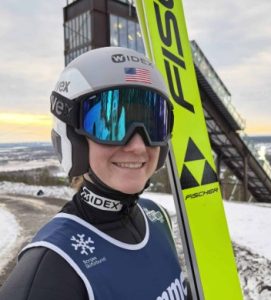 Estella Hassrick is a member of the United States National Ski Jumping Team who began skiing at age four and transitioned to ski jumping at eight, progressing to international competition and training in Europe. Born with hereditary cochlear dysplasia, she was diagnosed with hearing loss at age three and has worn hearing aids for most of her life, adapting to the demands of elite sport along the way. Hassrick is also an ambassador for Widex, using her platform to share her experiences with hearing loss and raise awareness about hearing health in athletics. She continues to compete internationally with the goal of representing the United States at future Olympic Games.
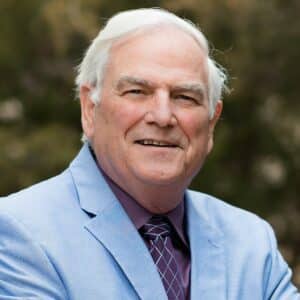 Robert M. Traynor, Ed.D., is a hearing industry consultant, trainer, professor, conference speaker, practice manager and author. He has decades of experience teaching courses and training clinicians within the field of audiology with specific emphasis in hearing and tinnitus rehabilitation. He serves as Adjunct Faculty in Audiology at the University of Florida, University of Northern Colorado, University of Colorado and The University of Arkansas for Medical Sciences.